Report: Five Iraqi Ministers Consider Resigning as Cabinet Stalemate Deepens
Local reports indicate that five Iraqi ministers are considering resigning over corruption and institutional obstacles as nine cabinet posts remain vacant and political negotiations drag on.
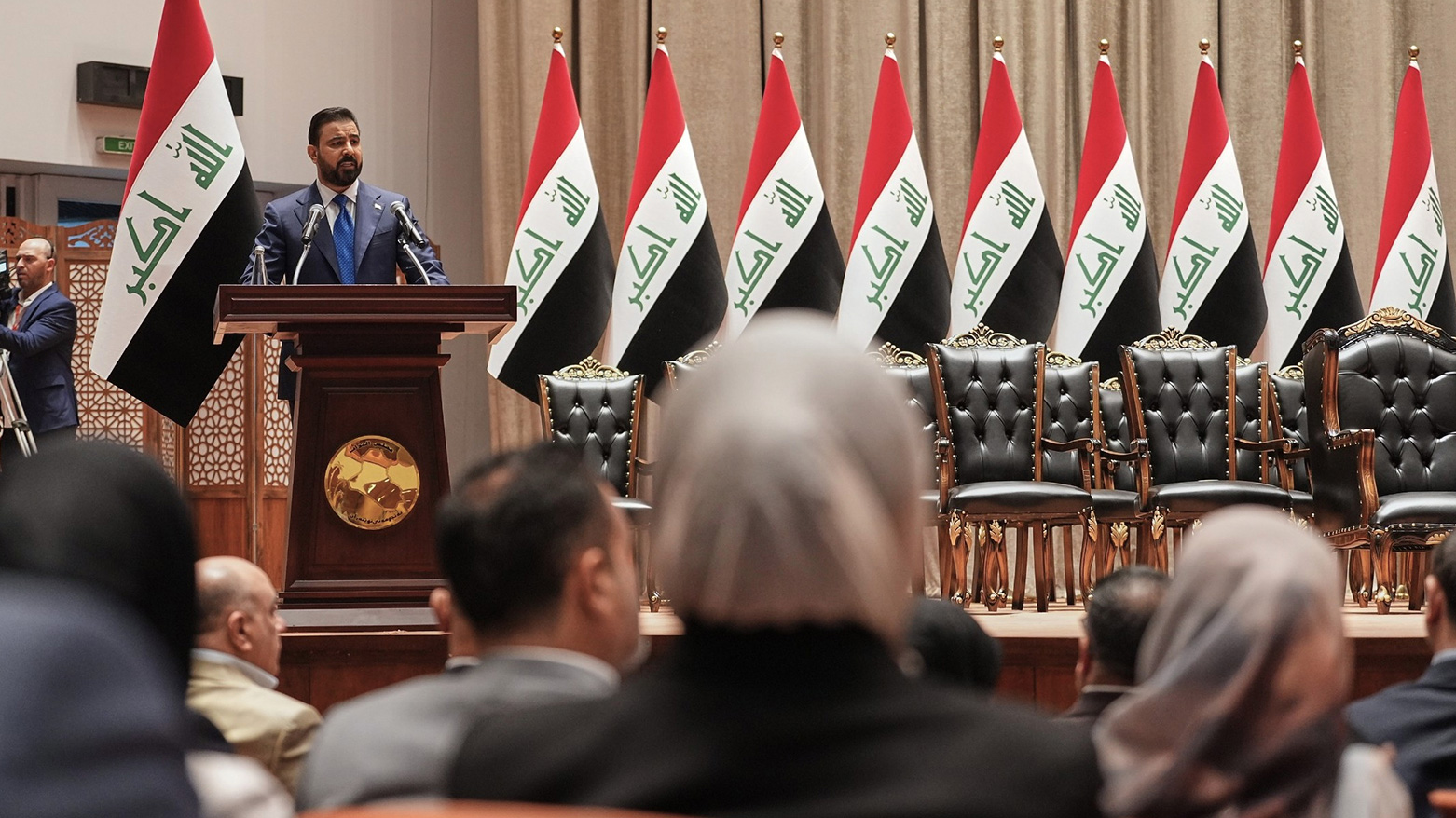
ERBIL (Kurdistan24) - Five ministers in Iraqi Prime Minister Ali al-Zaidi's government are considering resigning over institutional obstacles and the scale of corruption they say they have encountered inside their ministries, according to political sources cited by the Iraqi newspaper Al-Mada.
Among those reportedly weighing resignation is Health Minister Abdul Hussein al-Mousawi, who has repeatedly raised concerns in recent months over shortcomings in hospital administration.
No formal resignations had been announced as of Tuesday, and the report did not identify all five ministers said to be considering stepping down.
The potential departures would add another layer of uncertainty to a cabinet that remains incomplete more than four months after taking office.
Zaidi's government currently operates with 14 ministers, leaving nine cabinet portfolios vacant. The prime minister has also resisted demands from political blocs to appoint deputy prime ministers.
Cabinet vacancies tied to wider political disputes
The unresolved ministries are linked to a series of contentious issues extending well beyond administrative appointments.
Two political sources, including a member of parliament, told Al-Mada that negotiations had been affected by concerns over renewed regional warfare, Washington's position on some nominees, the future of the Popular Mobilization Forces and disputes surrounding armed factions.
A lawmaker speaking anonymously said ministers had encountered extensive corruption networks after taking office.
The legislator claimed that corrupt practices existed even at lower administrative levels, though stressed that the observation was not meant as an accusation against all ministry employees.
The reported frustration comes as the government pursues its Dawn anti-corruption campaign.
Baghdad says more than 1.3 trillion Iraqi dinars in cash, property, gold and other assets has been recovered for the state, while investigations and arrests have reached nearly 30 officials and lawmakers.
The campaign began in June with highly visible operations in Baghdad's Green Zone but subsequently slowed after some Shiite political leaders objected to what they regarded as excessive force.
Critics have also accused the campaign of selectivity, arguing that investigations have not reached the most powerful political figures.
U.S. objections complicate nominations
A Coordination Framework leader told Al-Mada that U.S. opposition to the participation of armed factions in government had contributed to the delay in filling the remaining portfolios.
According to the source, one proposed candidate for deputy prime minister is Laith al-Khazali, brother of Qais al-Khazali, whose name has previously appeared on a U.S. Treasury sanctions list.
Shibl al-Zaidi, leader of Kataib Imam Ali and a recent entrant into the Coordination Framework, is also reportedly seeking a cabinet share and could be offered either the Tourism Ministry or a newly established Ministry of Governance.
Those claims remain part of ongoing political negotiations and have not resulted in confirmed appointments.
Discussions are also continuing over legislation governing the PMF as Baghdad seeks arrangements under which armed groups would place their weapons under state authority.
Interior and Defense seen as less complicated
Despite the broader deadlock, a Coordination Framework source said the Interior and Defense ministries were among the portfolios presenting fewer political obstacles.
Former Prime Minister Nouri al-Maliki is reportedly continuing to support Qasim Atta for the Interior Ministry even though Atta failed to secure sufficient parliamentary votes during an earlier attempt in May.
The source said a pending court case could affect whether Atta is nominated again.
Naif al-Shammari is meanwhile described as the leading candidate for defense, although political disagreement continues over whether he represents the Hasm alliance or the Taqaddum alliance.
The source also said an agreement remains in place to allocate ministerial representation to the alliance of Muthanna al-Samarrai, who was detained during the past two months in connection with a corruption investigation.
Another cabinet deadline slips
Tuesday, Sept. 1, had been presented as the latest deadline for political blocs to submit ministerial nominees to parliament.
Fahd al-Jubouri of the Hikma Movement, however, said no practical steps had been taken and that discussion remained largely confined to media statements.
Mukhtar al-Mousawi, a Badr Organization lawmaker, similarly told Al-Mada that numerous deadlines for completing the government had already passed without a parliamentary vote.
The latest delay underscores the growing political cost of operating with nine vacant ministries while several serving ministers are reportedly questioning whether they can continue under current conditions.
For Zaidi, the immediate challenge is therefore twofold: completing the cabinet while preventing dissatisfaction among existing ministers from developing into an open resignation crisis.