Qalibaf: Strait of Hormuz Will Remain Closed Until US Fulfills Its Commitments
Iran’s parliament speaker says Tehran retains full control over the strategic waterway and will reopen it only after Washington implements its commitments under agreements.
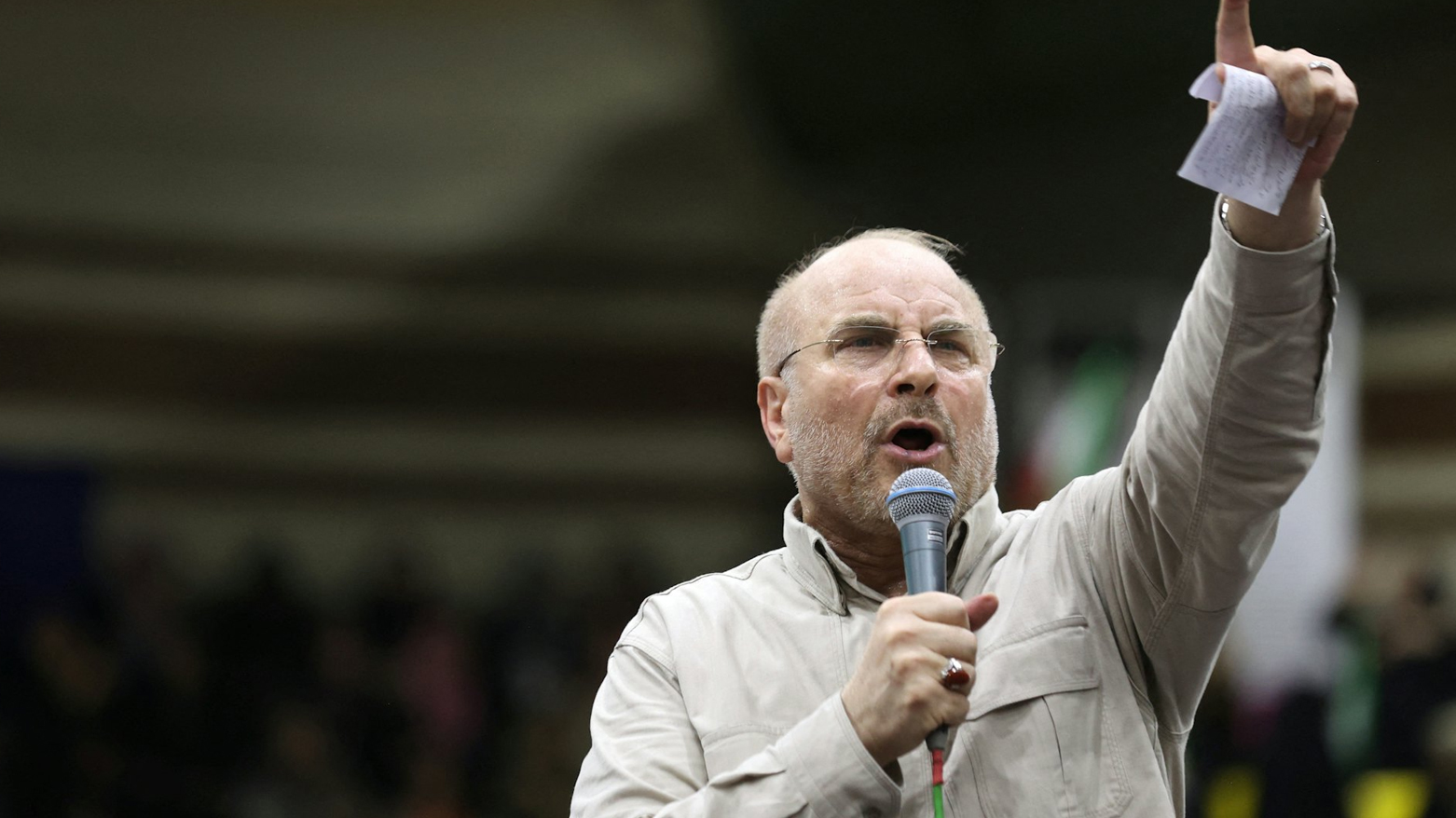
ERBIL (Kurdistan24) - Iran’s parliament speaker Mohammad Bagher Ghalibaf said Tuesday that Tehran retains full control over the Strait of Hormuz and will keep the waterway closed to shipping until the United States fulfills its commitments under agreements, as he also warned that Iran’s armed forces remain prepared to respond to any attack.
In a video address to the Iranian people on the latest developments in the country across military, diplomatic, economic and social fronts, Ghalibaf said Iran’s armed forces were fully prepared to respond to any attack.
He said that over the past 15 months, Iran had achieved what he described as a decade’s worth of progress in air defense, radar and missile systems using domestic technology.
“We have not extended our hand to the enemy, relying on our domestic capabilities, and at every stage of the war we delivered a crushing response,” Ghalibaf said.
Addressing the situation in the Strait of Hormuz, Ghalibaf rejected US statements about full control of the waterway and said Tehran had “absolute control” over the strait.
He said around 120 vessels had passed through the waterway daily before the war, but that only a few vessels were now attempting to pass through “like smugglers,” adding that they were coming under Iranian attacks.
Ghalibaf also said that following the US bombing of Lark Island, which he said killed two Iranian fighters, Tehran launched missile attacks on US bases within several hours.
He stressed that management of the Strait of Hormuz should take place only under Article Five of the understanding between Iran and Oman and after the United States fulfills its commitments.
“Otherwise, it will remain closed,” he said.
In another part of his address, Iran’s parliament speaker said the United States had turned to hybrid and economic warfare after what he described as a military defeat, with the aim of creating unrest inside Iran.
Regarding the gasoline crisis, Ghalibaf said the imbalance in fuel consumption was caused by the quality of the automotive industry rather than by the public.
He said the problem could be overcome through proper management and public cooperation.
Ghalibaf also said Tehran had exported more than 80 million barrels of oil during the period in which the agreement was in effect.
Ghalibaf called on all political forces and government officials to set aside disputes from recent months.
He warned that creating divisions and fractures within society at such a sensitive time would serve what he described as the enemy’s plans and undermine the security and national interests of the Islamic Republic of Iran.