Iraqi FM, U.S. Chargé d’Affaires Discuss Political and Security Developments in Baghdad
The two sides discussed developments in Iraq’s political landscape, government formation, and the security situation, including Baghdad’s efforts to place weapons under state control.
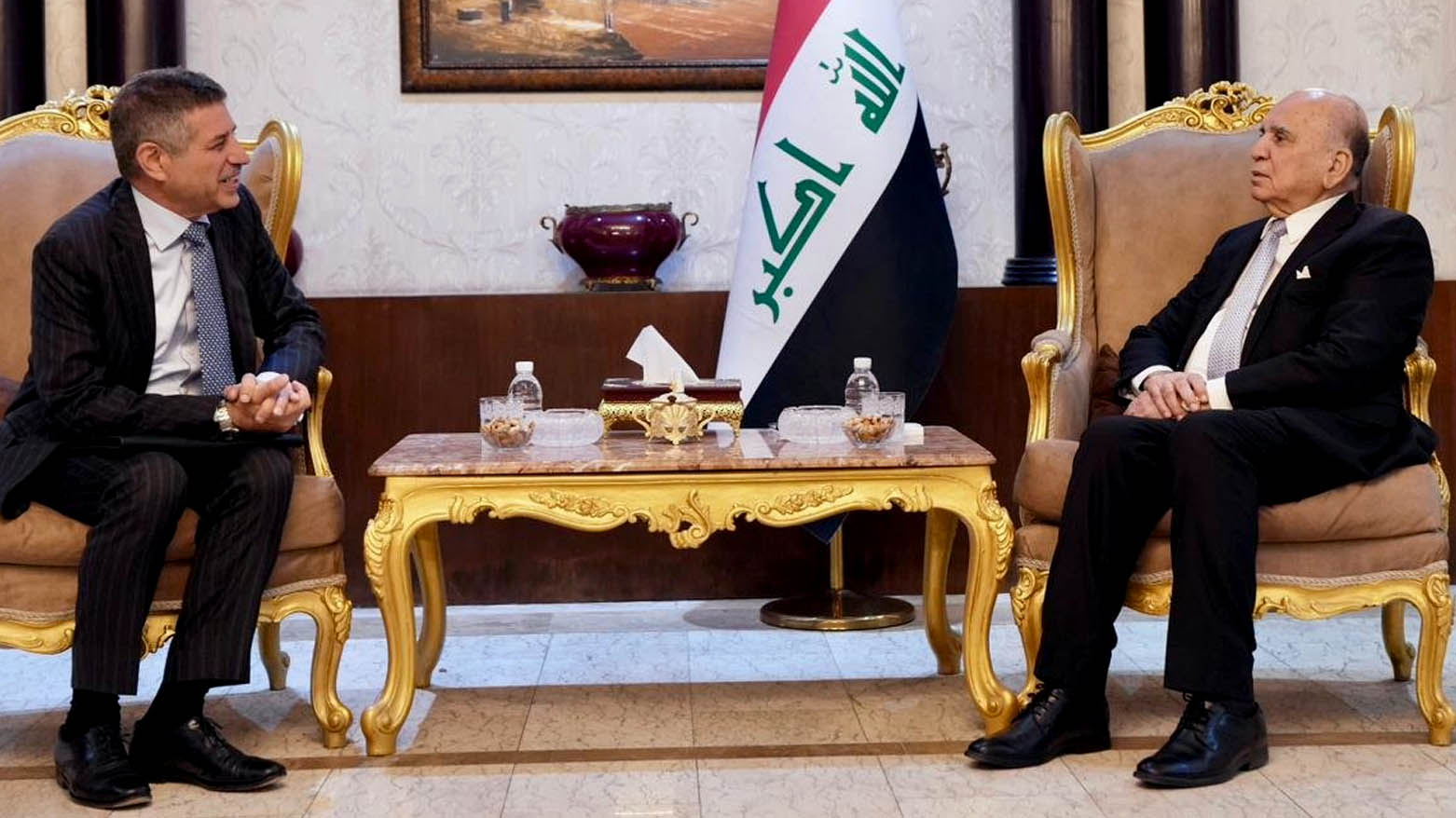
ERBIL (Kurdistan24) — Iraqi Foreign Minister Fuad Hussein met with U.S. Chargé d’Affaires Steven Fagin in Baghdad on Thursday to discuss the latest U.S. sanctions on Iran and their potential economic and regional repercussions for Iraq.
According to a statement carried by the Iraqi News Agency (INA), Hussein received Fagin, accompanied by U.S. Deputy Chief of Mission Aaron Nuutinen and Senior Advisor Ali Hassoun.
Hussein welcomed Fagin and wished him success in his new duties. The two sides discussed developments in Iraq’s political landscape, government formation, and the security situation, including Baghdad’s efforts to place weapons under state control.
They also reviewed Iraq’s foreign relations and the Iraqi prime minister’s upcoming foreign visits, as well as efforts to strengthen communication with regional and international partners.
Fagin expressed appreciation for the reception and congratulated Hussein on his reappointment as foreign minister in the new Iraqi government.
The discussions also covered Iraq’s relations with Gulf states and neighboring countries following the recent Iran-U.S. war, along with the conflict’s repercussions on regional security and diplomatic relations.
The two sides exchanged views on future regional coordination and possible mechanisms for communication among countries in the region to promote stability and address common challenges.
On the economic front, Hussein warned that Iraq remains particularly vulnerable to regional conflicts and any potential closure of the Strait of Hormuz.
He stressed that Iraq’s economy depends heavily on oil exports and related revenues, making the country’s financial stability highly exposed to disruptions caused by regional tensions.
The meeting also focused on the new and intensified U.S. economic sanctions against Iran and their potential impact on Iraq, particularly in light of the extensive trade and economic ties between the two neighboring countries.