Fox Commentary Urges Trump Not to Stop Iran Pressure 'Halfway'
A Fox News opinion argues Trump is degrading Iran's military capabilities but lacks a clear endgame, while U.S. intelligence reportedly sees Tehran growing more confident.
ERBIL (Kurdistan24) - A Fox News opinion article published Friday argues that President Donald Trump's military and economic campaign against Iran is degrading Tehran's ability to threaten U.S. forces and international shipping, but warns that Washington still lacks a clear political endgame for turning battlefield gains into a durable outcome.
The commentary, written by Erfan Fard, argues that the significance of the campaign lies less in any single strike than in Washington's willingness to repeatedly target military capabilities Tehran rebuilds.
He points to a Sept. 1 U.S. Central Command operation that, according to CENTCOM, struck Islamic Revolutionary Guard Corps air defenses, radar systems, maritime assets, mine-laying capabilities and communications sites after attempted Iranian attacks on commercial shipping and U.S. personnel.
Iran subsequently launched missiles and drones toward several regional states, according to the Fox News commentary.
From Deterrence to Sustained Pressure
Fard's central argument is that U.S. policy has shifted from containing Iranian escalation to imposing direct costs on the military infrastructure that enables it.
He describes the Strait of Hormuz as a particularly important arena because Iran can threaten global commerce without defeating the U.S. Navy outright. Missiles, drones, mines and fast boats, he argues, can still raise enough risk to force shipping companies, insurers and governments to reconsider using the waterway.
The Trump administration's response, in Fard's assessment, is to protect shipping while attacking Iranian surveillance and offensive systems and tightening pressure on oil exports.
But the article's central warning is that military superiority alone does not define victory.
Fard argues that destroying radar networks, naval capabilities and other assets would have limited long-term value if the Islamic Republic survives, rebuilds its military architecture and confronts a future U.S. administration with the same strategic problem.
Fox Argument: Pressure Needs a Political Objective
The Fox News article explicitly rejects a U.S. invasion, occupation or nation-building campaign.
Fard instead advocates an outcome in which Iran remains territorially intact while the Islamic Republic's clerical system and the security structures underpinning regional coercion are dismantled.
Under his preferred scenario, Washington would continue military, economic and intelligence pressure while seeking a political outcome that preserves the Iranian state and allows Iranians to determine a new political order.
That is an argument advanced in an opinion article, not an announced Trump administration policy.
U.S. Intelligence Reportedly Sees a More Confident Iran
A separate report published Friday by New York Times journalists Julian E. Barnes and Dustin Volz presents a significantly different assessment after six months of war.
Citing U.S. intelligence reports and current and former officials familiar with them, Barnes and Volz reported that Tehran has become more confident in its ability to attack targets across the Middle East and appears prepared to continue the conflict for months.
The assessments reportedly suggest Iran has gained a clearer understanding of both its own military strengths and the limits of American power.
Iran has attacked shipping in the Strait of Hormuz and U.S. forces around the region, while American forces have responded with new strikes inside Iran that killed military personnel and civilians.
The New York Times reported that U.S. officials believe Iran could undertake operations resembling its July attacks on American bases, regional infrastructure and commercial shipping. Officials also believe Tehran retains substantial stocks of missiles and drones.
Hormuz Remains Iran's Strongest Leverage
According to the Times report, U.S. officials and lawmakers briefed on intelligence assessments believe Iran has developed a more precise understanding of the leverage it can extract from the Strait of Hormuz.
Before the war, roughly one-fifth of global oil supplies moved through the strategic waterway.
Representative Jason Crow, a Democrat on the House Intelligence Committee, told the newspaper that Iranian leaders appear to recognize the strait’s bargaining value more clearly than before.
Iran may also calculate that prolonged conflict works against Washington politically.
The Times reported that some U.S. officials believe Tehran wants to drag out the confrontation through at least the American midterm elections, betting that high energy prices and an unpopular war will weaken Trump domestically.
Representative Josh Gottheimer, another Democrat on the Intelligence Committee, said Iran appears to believe it currently holds substantial leverage. Neither lawmaker disclosed classified assessments.
Cyber Operations Add Another Front
Barnes and Volz also reported that U.S. officials assess Iran-linked hackers were probably responsible for cyberattacks against more than 100 American water systems in late July.
The incidents did not make drinking water unsafe, according to the report, but some caused disruptions requiring manual intervention and precautionary measures.
Iran-linked hackers have also shown interest in U.S. oil and gas infrastructure, although the Times said it was unclear whether such systems had been successfully breached.
Former U.S. cybersecurity contractor Alex Orleans told the newspaper that Iranian operators may feel increasingly emboldened and could see cyber operations as a means of weakening American public support for the war.
Two Competing Pictures of the Same War
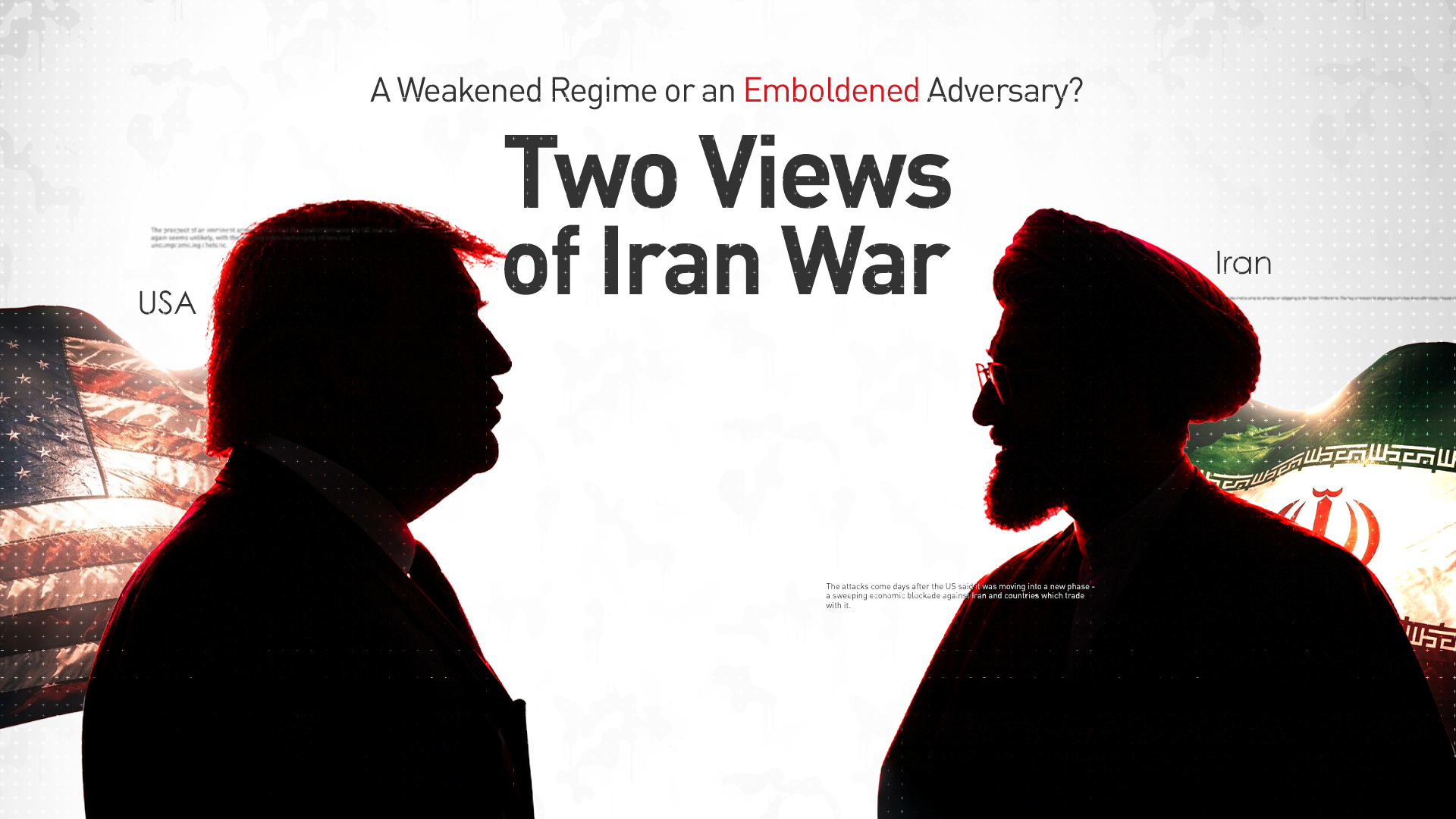
The Fox News commentary and the intelligence-based Times reporting therefore offer sharply different interpretations of the same conflict.
Fard sees an Iranian military system being steadily weakened and argues that the principal danger is Washington stopping before translating military superiority into political change.
The intelligence assessments described by Barnes and Volz suggest almost the opposite strategic risk: that Iran has absorbed severe damage, learned from the conflict, retained important offensive capabilities and concluded that time may work in its favor.
Both assessments nevertheless converge on one point: neither presents the current battlefield situation as a clear endpoint.
Whether Washington views Iran as a weakening adversary whose remaining capabilities should be dismantled or a resilient opponent increasingly confident in its leverage, the central strategic question remains unresolved, what political outcome would actually bring the war to a durable end?