Baghdad: No Justification for Armed Groups After Coalition Withdrawal
Sabah al-Numan says the Sept. 30 coalition withdrawal will remove any justification for armed groups to retain weapons outside Iraqi state institutions.
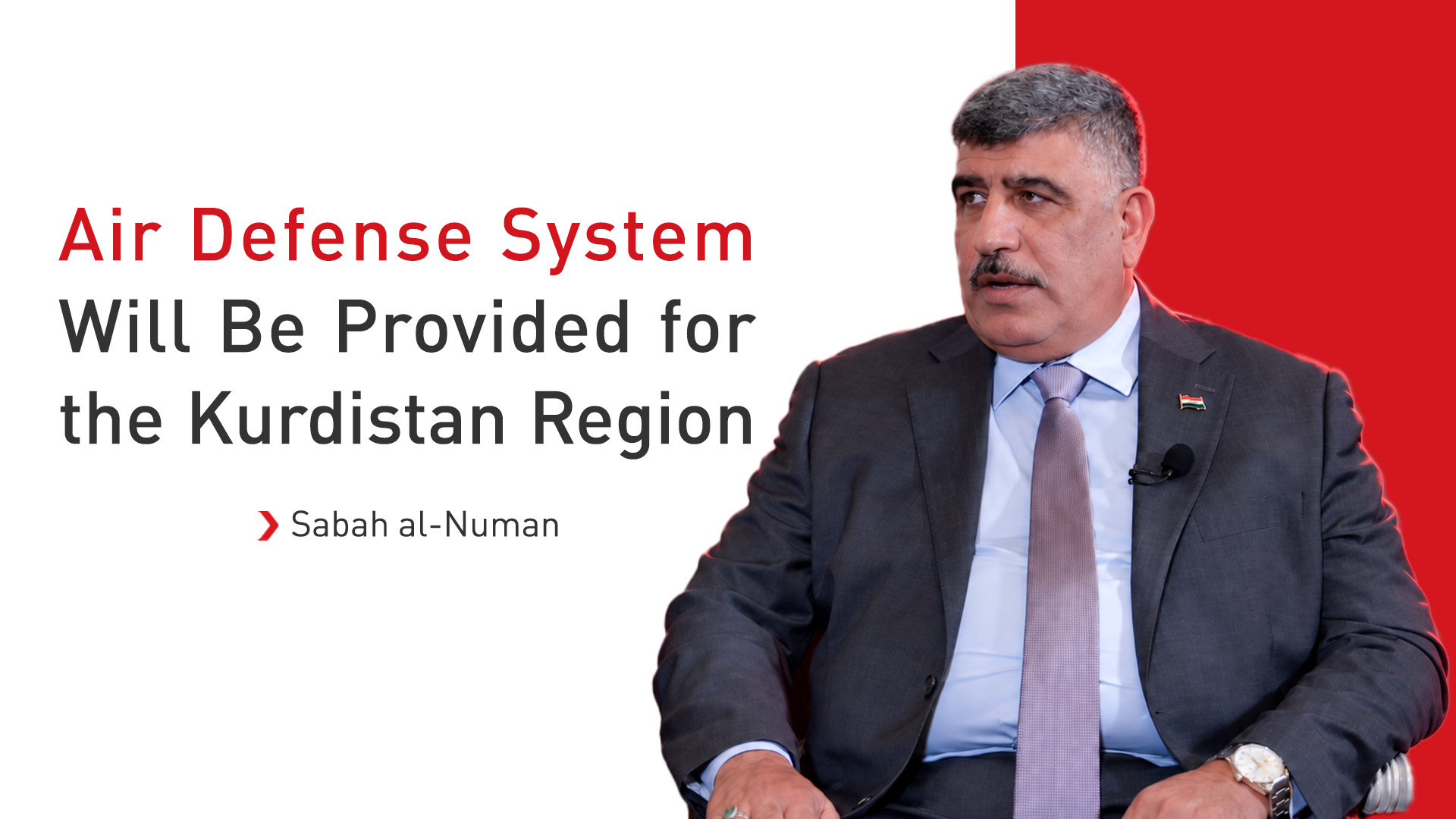
ERBIL (Kurdistan24) - The withdrawal of international coalition forces from Iraq will remove any remaining justification for armed groups to retain weapons outside official state institutions, the spokesperson for the commander-in-chief of the Iraqi Armed Forces said Tuesday, as Baghdad prepares for the coalition mission to formally end on Sept. 30.
Sabah al-Numan told Kurdistan24 that the withdrawal process was proceeding according to the agreement between Baghdad and Washington and would conclude with the evacuation of the coalition’s final base in Erbil.
He described Sept. 30 as a historic date for Iraqi sovereignty and said the country's security forces were fully prepared to assume responsibility for national security.
After the coalition mission ends, Numan said, Iraq's relations with coalition countries would move toward bilateral cooperation in areas including economic ties, investment, intelligence sharing and further equipping Iraqi security forces.
Weapons Under State Authority
Numan said dialogue with the leaders of armed groups over bringing weapons under state control was continuing and moving in what he described as a positive direction.
"Some groups are awaiting the coalition's withdrawal and security guarantees," he told Kurdistan24.
"Once no foreign soldiers remain in Iraq after Sept. 30, there will be no justification for weapons to remain outside state authority," he added.
He added that both the Iraqi government and the public were determined to ensure that weapons were held exclusively by official institutions.
His remarks reinforce a position articulated in recent days by other senior Iraqi officials.
Kurdistan24 reported last week that Lt. Gen. Saad Maan, head of Iraq's Security Media Cell, said Baghdad had moved beyond debating whether armed factions should be disarmed and was instead concentrating on how to implement that objective.
Maan said the government had "all options" available, while continuing to emphasize negotiation and security diplomacy.
Read More: Saad Maan: Iraq Has 'All Options' to Disarm Militias
The issue has become closely tied to the coalition withdrawal because several armed factions have historically cited the presence of foreign forces as justification for retaining independent military capabilities.
Numan's comments suggest Baghdad views the end of the coalition mission as removing that argument and strengthening its case for exclusive state control over arms.
Air Defense to Cover Kurdistan Region
Numan also said Prime Minister Ali al-Zaidi had authorized full funding for a three-year plan to expand Iraq's air defense capabilities.
Contracts have been signed with international companies for advanced air defense systems, he said.
"The system will operate under central supervision and will also cover the Kurdistan Region," Numan told Kurdistan24.
He said the objective was to protect Iraq's entire airspace and prevent renewed attacks on critical infrastructure, whether in the Kurdistan Region or elsewhere in the country.
His remarks come amid heightened concern over attacks on Iraqi and Kurdistan Region territory and growing calls for stronger air-defense capabilities.
Earlier Tuesday, Ammar al-Hakim, leader of Iraq's National Wisdom Movement, told Kurdistan24 that the security of the Kurdistan Region was inseparable from Iraq's broader stability and pledged continued efforts to end attacks on both.
Read More: Ammar al-Hakim: We Are Determined to End Attacks on the Kurdistan Region
Numan also addressed security gaps between federal forces and the Peshmerga.
He said the creation of two joint brigades had helped close those gaps and that coordination between Baghdad and Erbil remained strong.
On ISIS, he said the group's remnants no longer possessed the capability to pose a major threat, while Iraqi forces continued carrying out preemptive operations against remaining cells.
Sinjar and PKK File
The spokesperson also discussed Sinjar, saying Baghdad was working with the Kurdistan Regional Government to strengthen security there under the authority of official state forces.
He further addressed the presence of PKK fighters in Iraq.
"The Iraqi government will under no circumstances allow its territory to become a source of danger to neighboring countries, particularly Türkiye," Numan said.
He said Baghdad was coordinating with Ankara and the Kurdistan Regional Government on a framework to address the issue.
According to Numan, possible outcomes include the return of PKK fighters to Türkiye or their relocation to another country under United Nations supervision.
He did not provide further details about the status or timetable of those discussions.
Taken together, Numan's remarks outline Baghdad's vision for the period after Sept. 30: the formal end of the coalition's military mission, stronger bilateral relations with former coalition partners, broader air-defense coverage, deeper federal-Kurdistan Region security coordination and exclusive state control over weapons.
The central political test will be whether Baghdad can translate those objectives into enforceable arrangements with armed factions once the foreign troop presence they have cited as justification for retaining their weapons has ended.