KRG Labor Reforms Bring 350,000 Workers Into Social Security System
The KRG says 350,000 workers are now enrolled in social security as the Ninth Cabinet expands wage, pension, digital and disability protections.
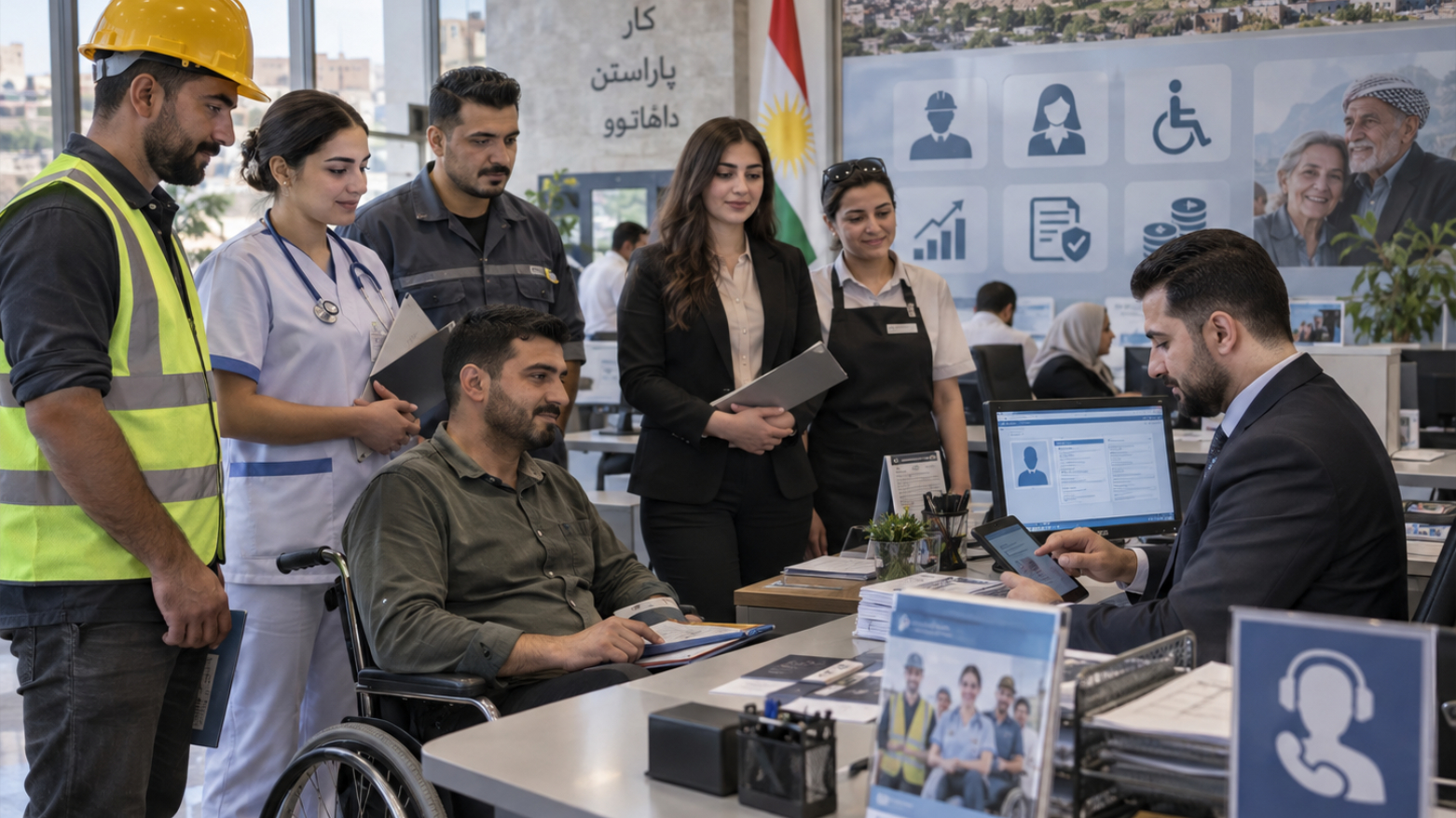
ERBIL (Kurdistan24) - The Kurdistan Regional Government has increased the number of workers enrolled in social security to 350,000 under the Ninth Cabinet, Labor and Social Affairs Minister Kwestan Mohamad Abdulla Maarouf said, as authorities pursue a broader program to formalize employment, strengthen wage protections and modernize the Region's labor system.
The Labor Minister said no more than 78,000 workers had been covered by social security under previous cabinets, describing the current figure as a substantial expansion of formal worker protection.
She also highlighted the introduction of a 450,000 Iraqi dinar minimum monthly wage, part of a wider effort by the Ninth Cabinet to establish a basic income floor for workers.
The latest figures build on labor reforms detailed by Kurdistan24 earlier this year.
During Kurdistan24's Basi Roj program, hosted by Zhino Mohammed in May, Ardalan Gezneiy, head of Labor Inspection at the General Directorate of Labor and Social Security, said fewer than 80,000 workers had been registered before 2019.
At the time of that interview, the directorate was managing approximately 305,000 registered worker files, including 205,000 active cases. The minister's latest figure of 350,000 indicates further expansion since then, although the supplied reporting does not specify how many of those registrations are currently active.
Bringing More Workers Into the Formal System
A central goal of the Ninth Cabinet's labor policy has been to extend legal and pension protections to workers outside the formal economy.
Gezneiy said a specialized committee established under a Council of Ministers mandate was working to bring daily wage earners and other informal workers into the social security system.
Under the applicable labor and social security framework, registered workers can obtain pension rights, end-of-service benefits and compensation for workplace injuries.
The government has also expanded enforcement capacity, deploying nearly 30 labor inspectors to monitor employers and workplace compliance.
Digitalization has become another major component of the reforms.
Of more than 300,000 previously paper-based worker files, around 100,000 had been transferred to an electronic system by May. Workers are being assigned a Unique Personnel Number, enabling them to check their employment history, registered wages and accumulated entitlements.
The directorate also operates the 5005 complaints hotline. Gezneiy said it received 1,600 calls in 2025, with more than 1,000 cases resolved under a system intended to settle complaints within 15 days.
Wage Protection Amid Economic Pressure
Labor representatives have broadly welcomed the expansion of formal protections while warning that workers continue to face inflation, limited employment opportunities and wider economic uncertainty.
Yusuf Karim, head of the Erbil branch of labor unions, told Basi Roj that the 450,000-dinar minimum wage introduced by decree on Aug. 3, 2025, was an important measure, but argued that wage policy must be accompanied by controls on rising living costs.
Karim and Gezneiy also agreed that many workers remain unaware of their legal rights or whether employers have registered them for social security.
The government's longer-term plans include a five-year social security strategy, public awareness programs and closer coordination with universities through Career Development Centers.
Officials are also examining how the Social Security Fund, which Gezneiy said held nearly 1.5 trillion dinars, could support occupational healthcare, including through agreements with private hospitals or a specialized hospital for workers.
Disability Support Added to Agenda
Kwestan Mohamad said the ministry is simultaneously seeking stronger financial protection for people with disabilities.
Two proposals have been submitted to the KRG Ministry of Finance and Economy: one to increase existing disability benefits and another to add new beneficiaries.
The minister said those proposals are intended to secure allocations through Iraq's forthcoming federal budget tables.
She also plans to travel to Baghdad to follow up directly with federal authorities and press for disability entitlements to be formally included in the budget.
Taken together, the measures show the Ninth Cabinet's labor policy moving on several tracks: registering previously uncovered workers, enforcing minimum wages, digitizing records, expanding access to pensions and benefits, and seeking greater protection for vulnerable groups.