Erbil Governor: Flood Risks Cut After Four Years of Projects
Erbil Governor Omed Xoshnaw says strategic projects have sharply cut flood risks, and kerosene distribution will begin in November, starting in mountain areas.
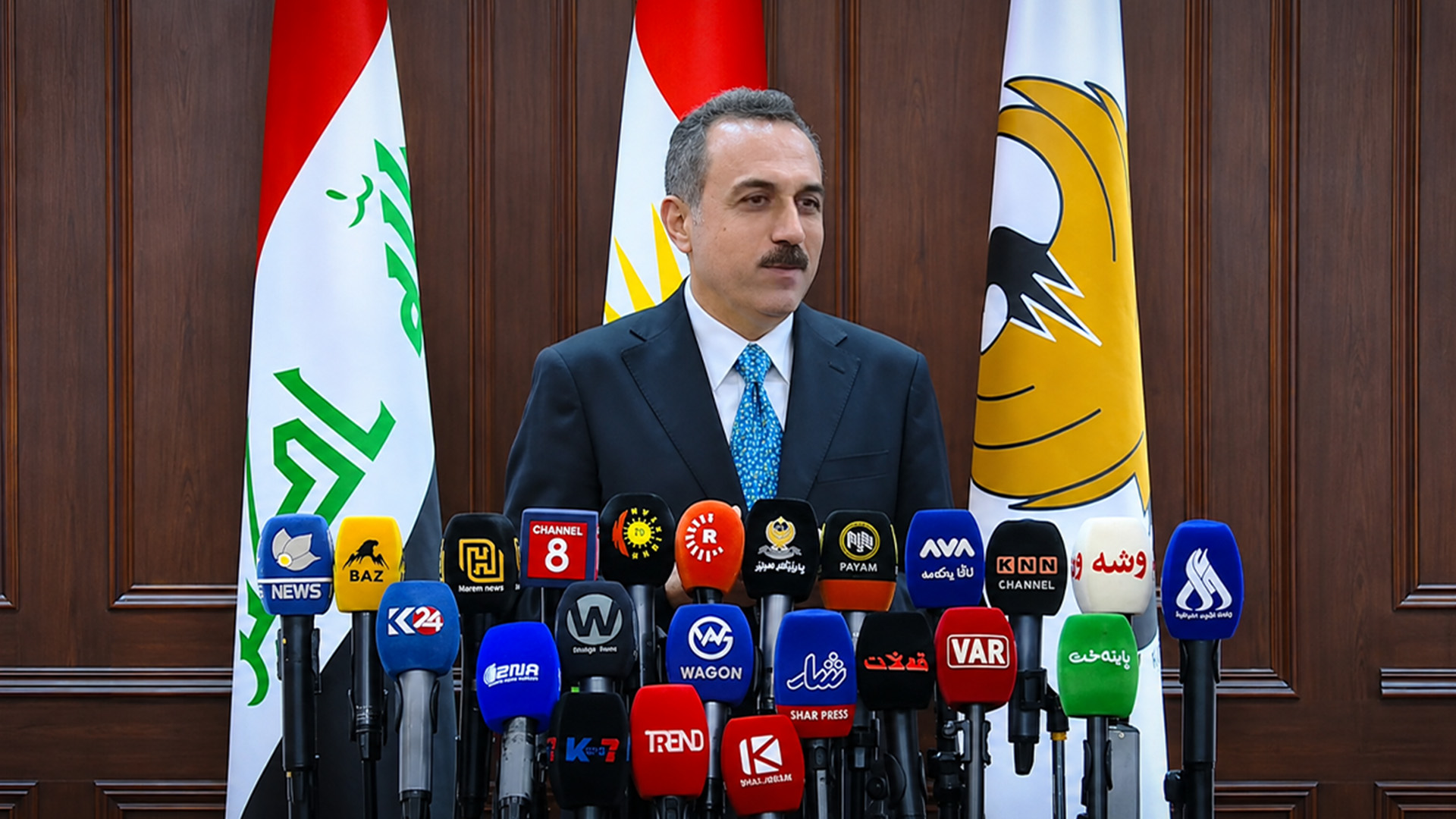
ERBIL (Kurdistan24) - Erbil Governor Omed Xoshnaw said on Wednesday that a series of strategic projects carried out over the past four years has significantly reduced flood risks in the city. He also announced that distribution of kerosene to citizens will begin next month, starting with the mountainous areas.
Speaking at a press conference on Wednesday, Xoshnaw outlined the outcome of a broad meeting held at the governorate office to discuss preparations for the winter season, ways of preventing flood risks, and the fuel issue.
The governor said that, on the order and approval of Kurdistan Region Prime Minister Masrour Barzani, a number of strategic projects have been carried out over the past four years.
These raised the capacity of the city center and its surroundings to control rainwater. They include building dams and ponds, rebuilding natural channels, and carrying out dozens of box and pipe drainage projects.
“Previously, if more than 10 millimeters of rain fell within an hour, flooding would occur. But last year, about 30 millimeters of rain fell in a single hour, and only in a few places was traffic disrupted for a few minutes, without any flooding,” Xoshnaw said.
On the danger points, he explained that the effects of climate change do not offer 100% guarantees, but that the risks have been greatly reduced.
Only three weak points remain in the center of Erbil, he said. Their projects have been approved, but implementation has been delayed because of the financial situation.
He also pointed to the success of the Teyrawa neighborhood project in reducing the risk of flooding. He asked citizens and shopkeepers in the Teyrawa popular market not to throw waste into manholes so that drainage channels are not blocked.
Xoshnaw stressed that full preparations have been made this year to prevent flooding.
“God willing, rainfall this year will be good. Also, last year all the meteorological forecasts about rainfall were very accurate and thorough, which was very helpful in knowing when it would rain,” he said.
On supplying kerosene to citizens, Xoshnaw criticized the federal government, saying: “Unfortunately, in recent years the Iraqi government has not been helpful. The Kurdistan Region needs about 280 million liters of kerosene annually, but Baghdad sent only 50 million liters last year, and the remainder was provided by the Kurdistan Regional Government.”
He said that in a meeting between a delegation from the Kurdistan Region’s Ministry of Natural Resources and Iraq’s Ministry of Oil, a promise was made to send the Region’s share.
He said distribution of kerosene will begin in November, starting with the mountainous areas.
He also asked Baghdad to take into account the cold climate of the Region’s mountainous areas and not treat them in the same way as the central and southern provinces.
On gasoline, Xoshnaw said Erbil’s daily quota was raised on the prime minister’s order from 20 tankers to 40, a doubling.
However, according to Ministry of Interior statistics, more than 54% of the Kurdistan Region’s vehicles are in Erbil, so the governorate needs a larger share of gasoline.
He stressed that the distribution of subsidized gasoline at 750 dinars prevented the price of commercial gasoline from doubling. He added that using the electronic card at gas stations has played a significant role in reducing crowding and gasoline queues and in ensuring fairness.