Saudi Arabia Intercepts Houthi Drone Near Mecca
Saudi coalition warns security of Islam’s holiest city and pilgrims is a “red line” as Houthis deny targeting Mecca
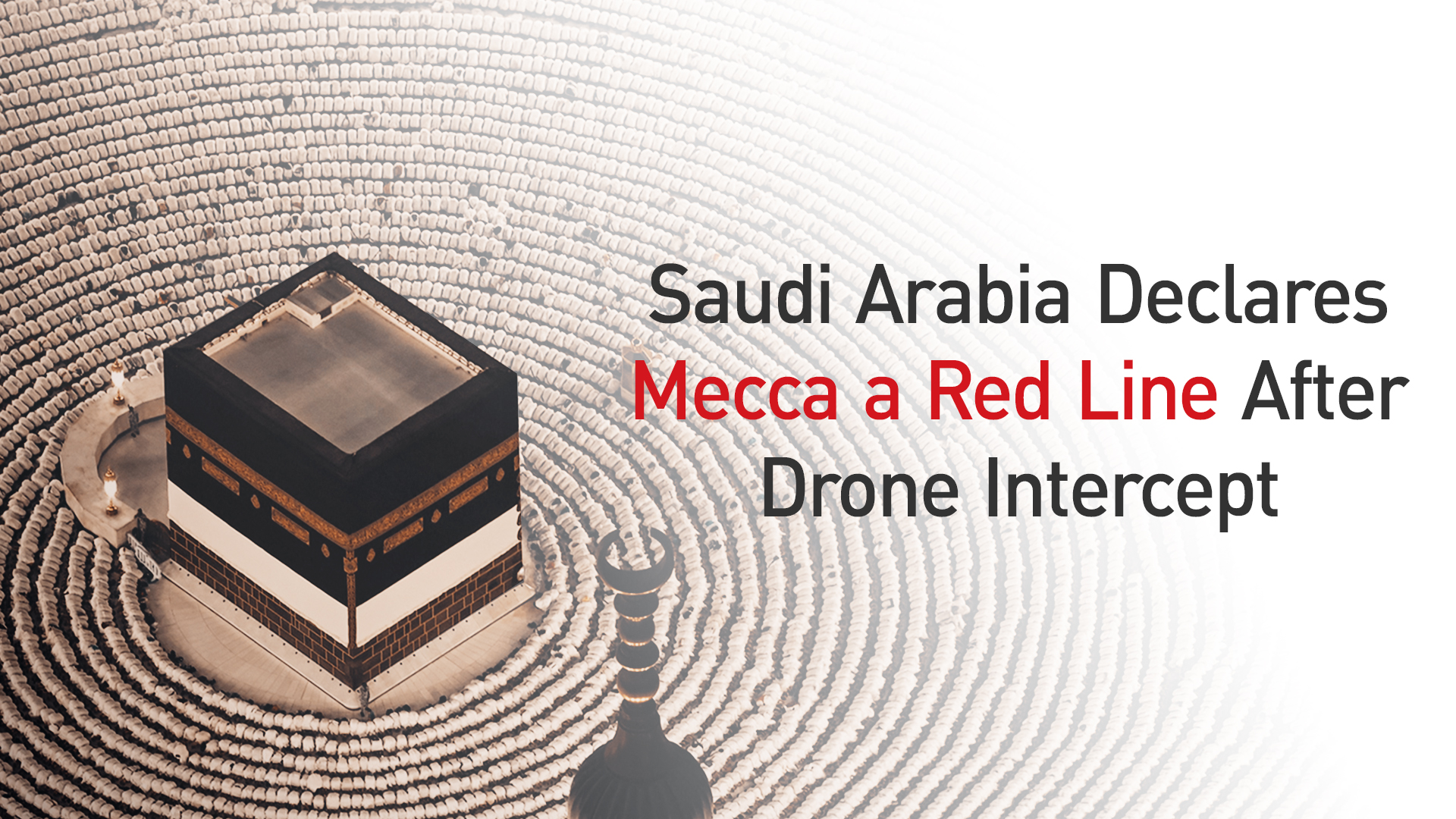
ERBIL (Kurdistan24) — Saudi air defenses intercepted and destroyed a drone launched by Yemen’s Houthis south of Mecca before it entered the restricted airspace of Islam’s holiest city, according to the Saudi-led coalition, in a major escalation of the widening conflict across the region.
Coalition spokesperson Turki al-Maliki said the drone was intercepted on Tuesday evening before reaching Mecca’s prohibited airspace. He described the incident as the second attempt by the Houthis to target the holy city, following a ballistic missile launch in 2017, according to Saudi and Reuters reports.
The reported incident has drawn particular attention because Mecca is home to the Grand Mosque and the Kaaba, Islam’s holiest site, and is the destination for millions of Muslim pilgrims each year for Hajj and Umrah.
“The security of the Two Holy Mosques and the pilgrims is a red line,” al-Maliki said, warning that the Saudi-led coalition would take necessary measures to deter further Houthi attacks.
The Houthis, however, rejected Saudi Arabia’s account. Hazem al-Assad, a member of the group’s political bureau, described the claim that the movement had targeted Mecca as a “lie” in a post on X, denying that the group had deliberately targeted the holy city.
The Organization of Islamic Cooperation (OIC), a 57-member bloc of Muslim countries, condemned what it described as an attack targeting the Mecca region and expressed support for Saudi Arabia, adding to the international reaction to the incident.
Saudi Arabia had already issued security alerts on Tuesday warning of potential aerial attacks in Mecca and other parts of the kingdom, including areas near the border with Yemen.
The alerts came after a series of Houthi missile and drone attacks on Saudi territory that Saudi authorities said wounded 13 people in the kingdom’s south.
The latest escalation comes as fighting between the Houthis and Saudi-backed Yemeni government forces has intensified after years of relative calm.
The Houthis, who control large parts of northern Yemen, have expanded their military operations along the country’s Red Sea coast and around the strategic Bab al-Mandab Strait.
The waterway connects the Red Sea with the Gulf of Aden and is a critical maritime route linking the Middle East and Europe.
The escalation has raised concerns over the security of Saudi oil shipments and international commercial shipping, particularly as disruptions around the Strait of Hormuz have already affected regional energy and maritime trade.
Saudi Crown Prince Mohammed bin Salman and Egyptian President Abdel Fattah al-Sisi on Tuesday also called for the protection of freedom and security of navigation through both the Strait of Hormuz and Bab al-Mandab during talks in Cairo, reflecting growing concern among regional powers over the widening disruption to key waterways.
The renewed fighting has also increased pressure on Saudi Arabia as it seeks to contain the Houthi advance. The Houthis have claimed responsibility for attacks on Saudi military and energy-related targets, while Saudi forces have continued airstrikes against Houthi positions in Yemen.
Houthi military spokesperson Yahya Saree said Tuesday that Saudi Arabia had carried out dozens of airstrikes against Yemen over a 24-hour period, accusing Riyadh of hitting civilian infrastructure.
Saudi Arabia has said its military operations are aimed at protecting its territory and deterring attacks by the Houthis.
The conflict also carries broader economic implications. Any sustained disruption around Bab al-Mandab could affect shipping through the Red Sea and the Suez Canal, a major source of revenue for Egypt and a key route for global trade.
Qatar has warned that a closure of Bab al-Mandab would have severe consequences for international trade and the global economy, underscoring the wider significance of the confrontation beyond the Saudi-Yemeni battlefield.
For Saudi Arabia, however, the reported interception near Mecca has added a highly sensitive religious dimension to an already rapidly escalating security crisis.
The coalition’s warning that the protection of the Two Holy Mosques constitutes a “red line” signals that any further incident involving the holy city could trigger a significant response from Riyadh.