Hakan Fidan: Türkiye’s Peace Process Will Also Benefit the Kurds
Türkiye’s foreign minister says the “Terror-Free Türkiye” process could bring stability and prosperity to Kurds outside Türkiye’s border, while stressing that the PKK has yet to take concrete steps toward disarmament.
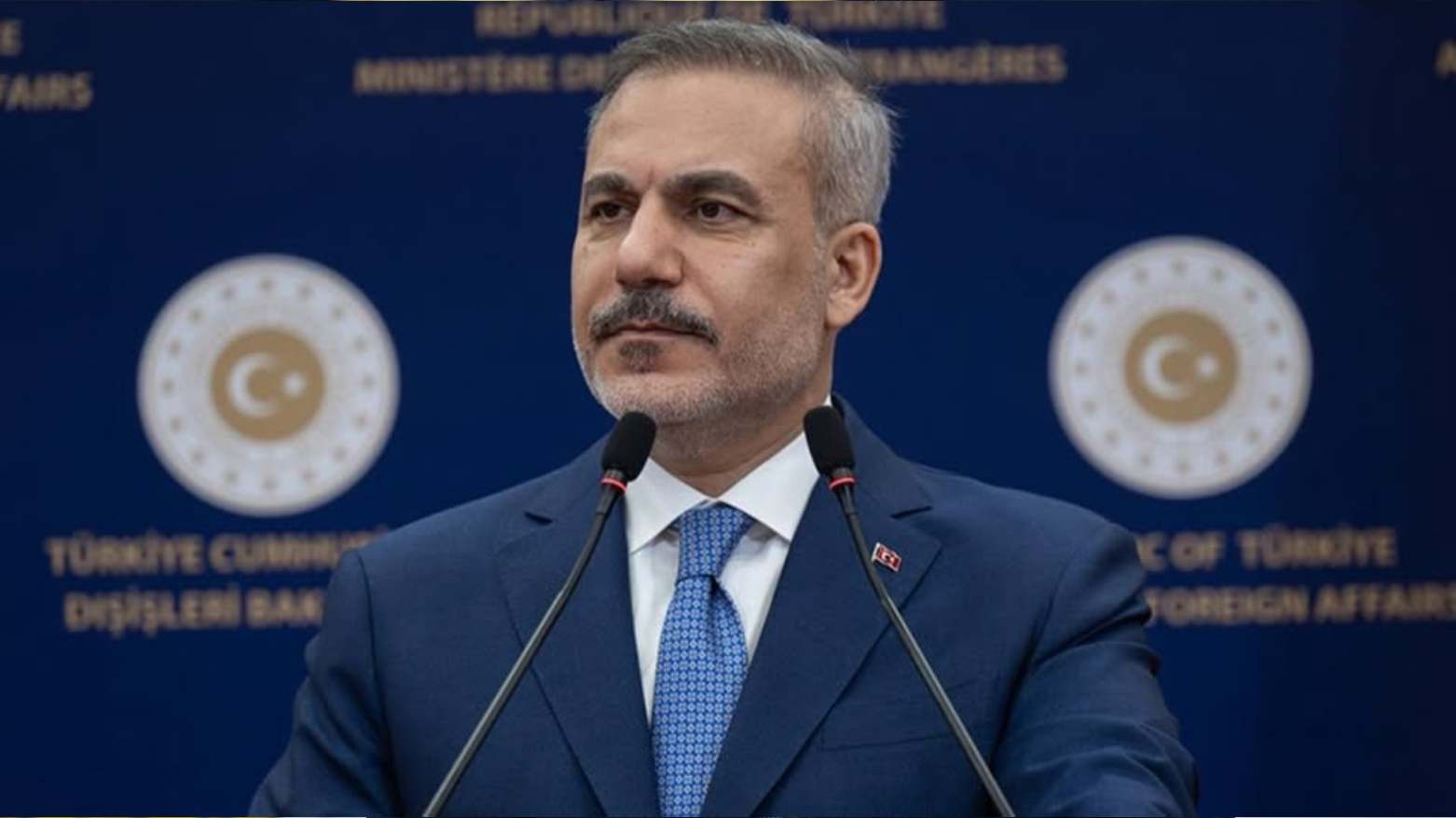
ERBIL (Kurdistan24) - Türkiye’s Foreign Minister Hakan Fidan said on Saturday, that the country’s ongoing peace process could bring stability and prosperity not only to Türkiye but also to Kurds in the Kurdistan Region and Syria, describing developments in Iraq and Syria as complementary to Ankara’s efforts to end the armed conflict.
Speaking in a television interview, Fidan said the process had received an “incredibly positive” response during his recent visit to Diyarbakir, adding that the removal of obstacles facing Kurdish identity was among the major political reforms undertaken by Türkiye.
Fidan said the benefits of the process could extend beyond Türkiye’s borders, arguing that stability and prosperity generated by Türkiye would also reach “Kurds living in Iraq and Syria.”
“The stability produced by Türkiye does not only benefit Türkiye itself; it also benefits the countries of the region,” Fidan said. “Not only our Kurdish brothers and sisters in Türkiye, but also Kurds beyond the border will receive their share of the stability and prosperity produced by Türkiye.”
Fidan said the PKK announced in May 2025 that it had dissolved itself and ended its armed struggle, but said more than a year later, concrete steps to surrender its weapons had still not taken place.
“I would like everything to move faster,” Fidan said, adding that mechanisms now needed to be put in place to advance the process.
He said statements of intent had been made, but that the practical elimination of the threat remained important and needed to be closely monitored.
“It is important that the threat itself practically abolishes itself and ceases to be a threat,” Fidan said.
The Kurdish Workers’ Party (PKK) announced in May 2025 that it was dissolving and ending its armed struggle. In February 2025, Abdullah Öcalan had called on the group to lay down its arms and end its armed struggle, while in July of the same year a number of PKK fighters symbolically burned their weapons and withdrew from several military positions.
Fidan said “developments in Iraq and Syria were now complementing Türkiye’s efforts to advance the Terror-Free Türkiye process.”
He said neither country had a political environment in which armed groups other than the official armed forces could operate, adding that both Baghdad and Damascus were determined to prevent armed groups or organizations from operating independently within their territories.
“These are complementary issues for a Terror-Free Türkiye,” Fidan said, referring to developments in Syria and Iraq.
According to Fidan, the changing circumstances in both countries mean that armed groups can no longer rely on those territories as places from which to operate against Türkiye.
He said anyone in Türkiye with political demands should pursue them through politics rather than armed struggle.
“If a person has a problem in Türkiye, there is only one thing to do: come here openly, engage in politics, take your cause to the people, seek support from the people, struggle, fall and rise, but do politics,” Fidan said.
Fidan also linked the peace process to economic development, saying that once political and identity-related issues are removed, discussions can shift toward prosperity, industrial development and infrastructure.
He cited demands for greater industrialization in Diyarbakir and better connectivity for transporting products, describing such discussions as the kind of economic debate that should follow the resolution of political problems.
Fidan also said irrigation canals and dam projects in the region, once completed, would provide additional irrigation opportunities for four million dönüms of land and could increase agricultural production by 2.5 times.
He said the objective was for people to live with greater prosperity, peace and opportunities once political and identity-related problems had been resolved.
A special framework law on the resolution process was approved by the Turkish Parliament on August 10, 2026. The law concerns the future of PKK members and supporters who are prepared to lay down their arms.
Under the law, the process requires security institutions to confirm that the PKK and affiliated organizations have ended their activities and surrendered their weapons and ammunition.
Efforts to revive Türkiye’s peace process began in October 2024, after Devlet Bahçeli, leader of the Nationalist Movement Party (MHP), proposed that Abdullah Öcalan appear in the Turkish Parliament and announce the PKK’s dissolution.
Öcalan subsequently called for the PKK to lay down its arms and end its armed struggle in February 2025.
Fidan said he hoped the process would move more quickly but stressed that it also needed to proceed carefully.
He described the political will behind the process as significant and said he believed its continuation was important not only for Türkiye’s future but also for regional peace and for Kurds living beyond Türkiye’s borders.
For Fidan, the central question now is whether the declared intentions will be followed by concrete steps that permanently remove the armed threat.