El Niño Turns Chile’s Atacama Desert Into a Rare Carpet of Flowers
Record rainfall linked to the El Niño climate phenomenon has revived the rare “flowering desert” phenomenon in Chile’s Atacama, transforming one of the world’s driest regions into a landscape covered with purple flowers.
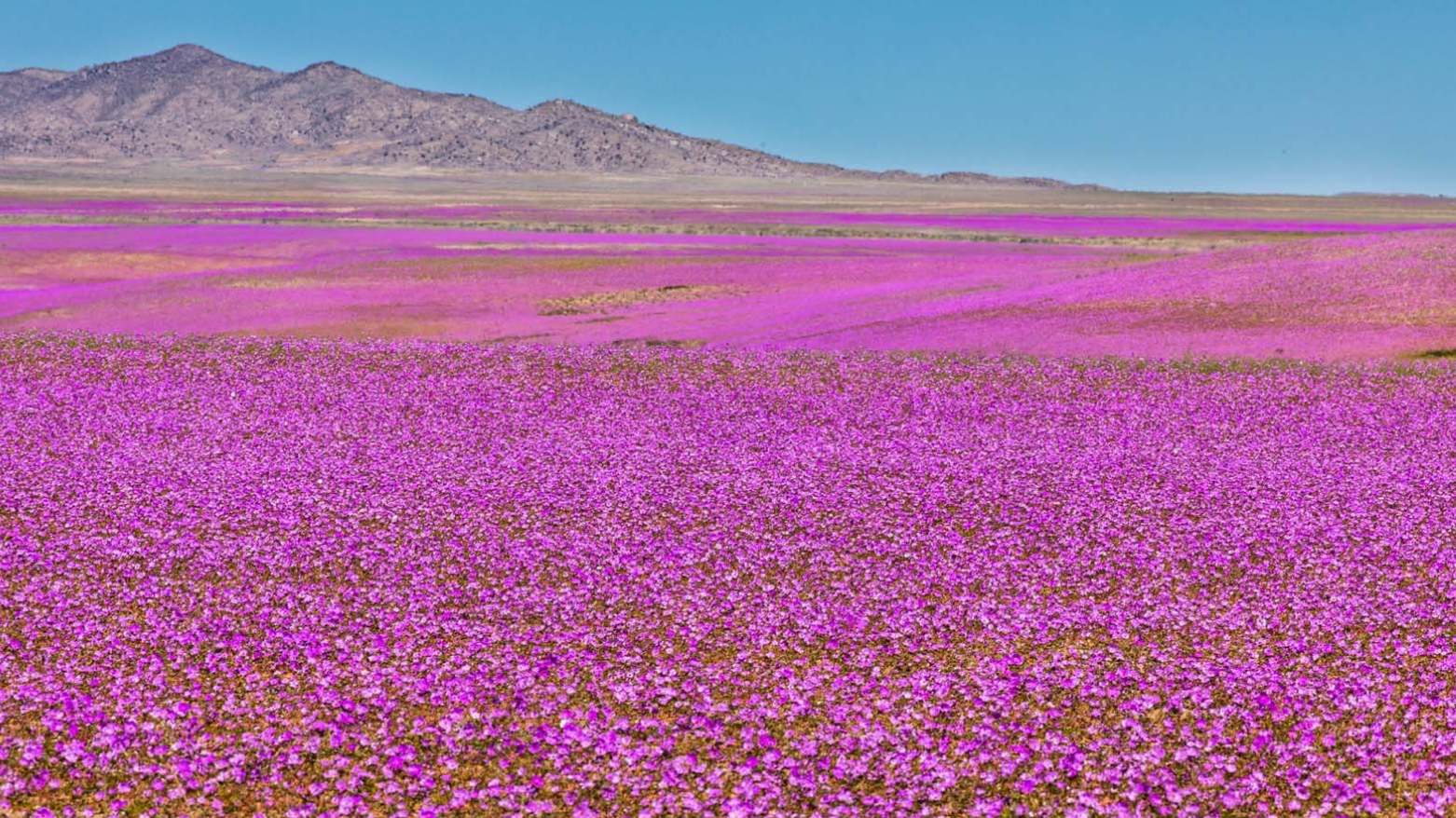
ERBIL (Kurdistan24) - Heavy and record rainfall attributed to the effects of the El Niño climate phenomenon has revived the rare “flowering desert” phenomenon in Chile’s Atacama Desert, transforming one of the driest regions on Earth into an expansive natural display of purple, white and pink flowers.
The exceptional rainfall, which reached 180 millimeters in some areas compared with a commonly recorded annual average of only 15 millimeters, triggered millions of dormant plant seeds buried beneath the dry soil for years to bloom again across the desert landscape stretching between the Andes Mountains and the Pacific Ocean.
Environmental scientists said many native plant species have developed unique biological adaptations that allow them to survive the extreme conditions of the Atacama Desert.
These adaptations include deep roots and waxy leaves, enabling the plants to remain dormant underground for more than a decade while awaiting sufficient moisture.
A study by the Catholic University of Chile found that the desert is home to around 1,893 rare plant species during the phenomenon, most of which grow exclusively in the region.
Chile’s authorities expect the green and flowering areas to expand as the blooming season reaches its peak in October.
The flowering landscape is expected to cover about 15,000 square kilometers, a development that is also expected to attract thousands of visitors, tourists and environmental specialists from around the world.