Kurdish Youth Release 400 Birds on Mount Maqloub
Young volunteers released around 400 wild birds on Mount Maqloub, carrying forward a long Kurdish tradition of wildlife and environmental protection.
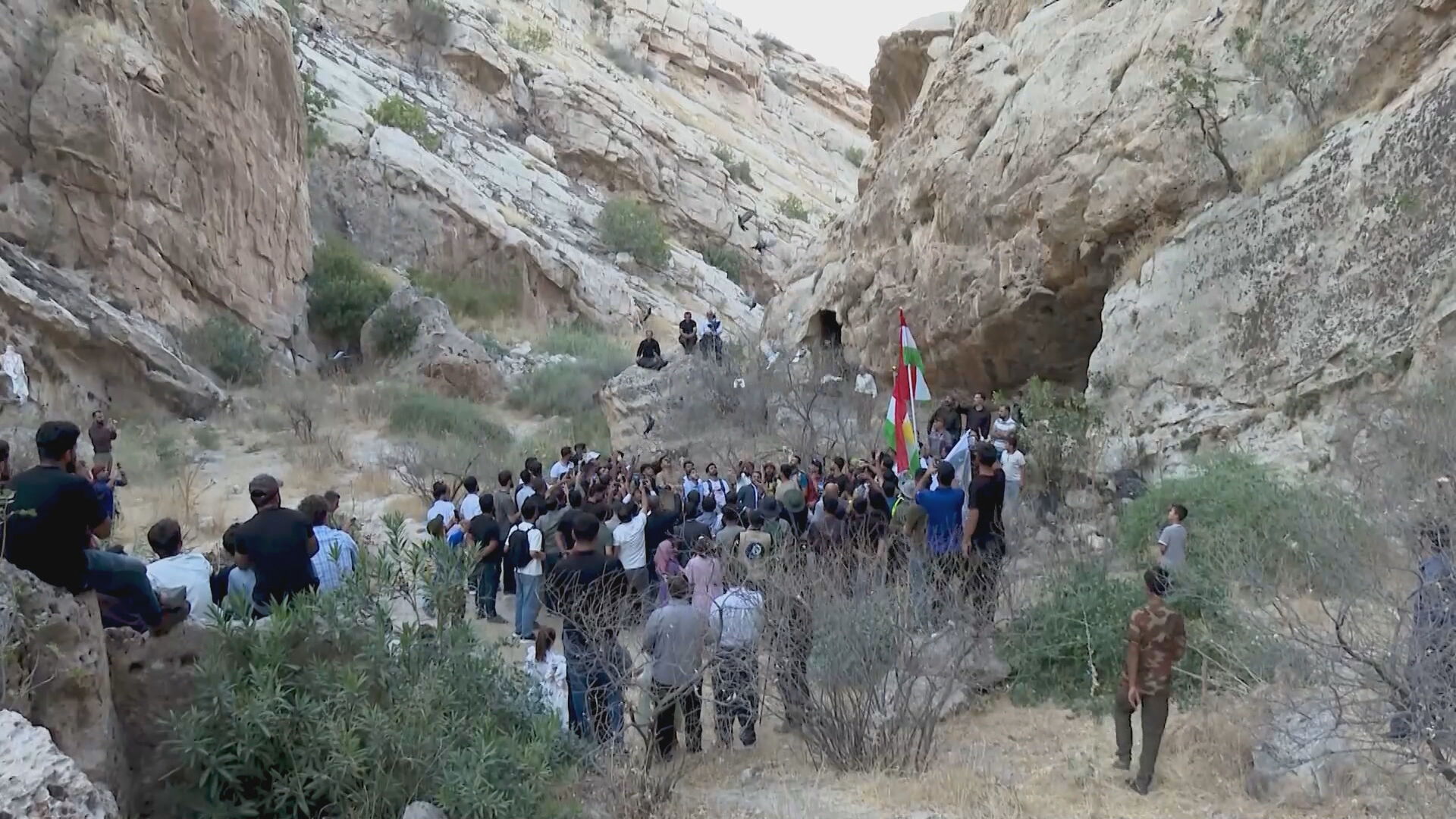
ERBIL (Kurdistan24) - With money collected from their own pockets, a group of young environmental volunteers has released around 400 wild birds on Mount Maqloub, turning a local conservation effort into another expression of an environmental tradition that has passed through generations in Kurdistan.
Members of the volunteer civil group told Kurdistan24 that they wanted to return birds native to the area after years of fires damaged habitats and killed wildlife on the mountain.
"We are a volunteer group, a civil group," one participant said. "We tried, truly with money from the pockets of those young people who are prepared to make sacrifices for a healthier and more beautiful environment, to return a number of wild birds to Mount Maqloub."
The volunteer said repeated fires had taken a heavy toll on the area.
"For several years now, year after year, Mount Maqloub has unfortunately been burned carelessly, and all the birds and animals are being destroyed," he said.
For the group, releasing the birds was not simply about replacing animals lost to fire. Their message also focused on what happens after the birds return to the mountain — and whether people allow them to remain there.
Another participant appealed directly to hunters.
"The responsibility for protecting these birds lies with all of us, with everyone who visits this place," he said. "This beauty and this nature cannot exist without these birds."
He urged hunters to abandon the killing of partridges and other wildlife, describing protection of the birds as a shared responsibility.
The release on Mount Maqloub reflects a broader pattern of grassroots environmental action that has appeared repeatedly across the Kurdistan Region.
Only days earlier, young people in Dore village in the Barzan area released two Chukar partridges into the wild. The bird, known in Kurdish as kew, is closely associated with Kurdistan's rocky mountains and also occupies a place in Kurdish songs, poetry and oral tradition.
The Chukar's presence in both culture and landscape illustrates how environmental protection in Kurdistan has often developed alongside a sense of attachment to place.
Read More: Young People Release Chukar Partridges Into Wild in Barzan
That relationship is particularly visible in Barzan, where conservation has been practiced across generations.
Kurdistan24 reported in March 2025 that local traditions of protecting forests and wildlife stretch back more than a century, when Sheikh Abdul Salam Barzani and Sheikh Ahmad Barzani established strict prohibitions on practices that damaged the natural environment.
Those traditions included restrictions on cutting trees and hunting wildlife. Over time, environmental protection became not simply a rule imposed from above but a local cultural practice.
Hersh Rashidi, an environmentalist in Barzan, told Kurdistan24 that protecting the environment, animals and birds had become part of community life over successive generations.
"Since then until now, protecting the environment and wild animals and birds has become a cultural practice in the region," he said.
Read More: Barzan Area: A Century of Environmental Protection, Wildlife Conservation
That legacy remains visible today in the work of younger people who rescue, rehabilitate and release wildlife.
In Barzan, environmental guards have confiscated hunted partridges and cared for injured birds until they were able to return to nature. Local residents also alert protection teams when wild animals require assistance.
The approach combines formal enforcement with community responsibility.
Muhammad Amin Ahmadi, another environmentalist, described conservation as both a "national and humanitarian duty," saying residents had come to regard protection of their surroundings as a collective obligation rather than an imposed burden.
The tradition has deeper historical roots as well.
Kurdistan24's reporting on Barzan and Sherwan has traced environmental stewardship there to Sheikh Ahmad Barzani's conservation philosophy in the early 20th century. His rules prohibited the cutting of living trees, restricted hunting during breeding seasons and banned destructive fishing methods.
Read More: The Sanctuaries of Spring: Ecology and Memory in the Mountains of Kurdistan
Those practices endured through periods of war and displacement.
During the Baathist campaigns against Kurdish areas in the 1980s, villages and forests were destroyed alongside communities. In Barzan and Sherwan, the protection and restoration of the land after families returned became closely connected with rebuilding community life itself.
Today's younger generation is inheriting that legacy at a time when the environmental threats have changed but remain serious.
Kurdistan24 reported earlier this month that wildlife across the Kurdistan Region is increasingly threatened by rising temperatures, drought, forest fires, habitat degradation and unauthorized hunting.
Read More: Wildlife in Kurdistan Region Faces Growing Threats from Climate Change, Hunting
The Region is home to species including the Kurdish leopard, brown bear, Bezoar ibex, wolves, wildcats, jackals and numerous bird species.
Environmental experts have stressed that birds and animals are not ornamental additions to the landscape. Each has a function within the ecosystem. Birds help spread seeds and regenerate vegetation, while predators regulate animal populations and help maintain ecological balance.
The Kurdistan Regional Government is also seeking to strengthen protection through formal conservation policy.
The Kurdistan Region plans to register 45 natural protected areas with the International Union for Conservation of Nature. According to Environmental Board figures reported by Kurdistan24, 45 of Iraq's 82 identified protected areas are located in the Region, and international registration could eventually place more than 30 percent of Kurdistan's land under protected status.
Read More: Kurdistan Region Moves to Register 45 Protected Areas
The policy effort and the community tradition increasingly meet at the same point: conservation cannot depend solely on government institutions.
Protected areas, hunting regulations and international recognition can provide a framework, but the survival of wildlife also depends on the behavior of people living in and visiting those landscapes.
That was the message from the volunteers on Mount Maqloub.
Their release of 400 birds was a relatively small intervention in a much larger environmental challenge, particularly after years of fires and habitat loss.
Yet it also demonstrated how an older conservation ethic continues to find new guardians.
A century after environmental protection became embedded in parts of Kurdistan as a cultural and moral responsibility, young volunteers are expressing the same idea in their own way — collecting money themselves, returning wildlife to damaged landscapes and asking the public to protect what has been restored.
For them, the birds belong not in cages or hunters' hands, but back among the mountains.