Twelve Million Students Return as Iraq Opens New School Year
Around 12 million students returned to schools across Iraq on Oct. 4 as the 2026-2027 academic year began after repeated changes to the opening date.
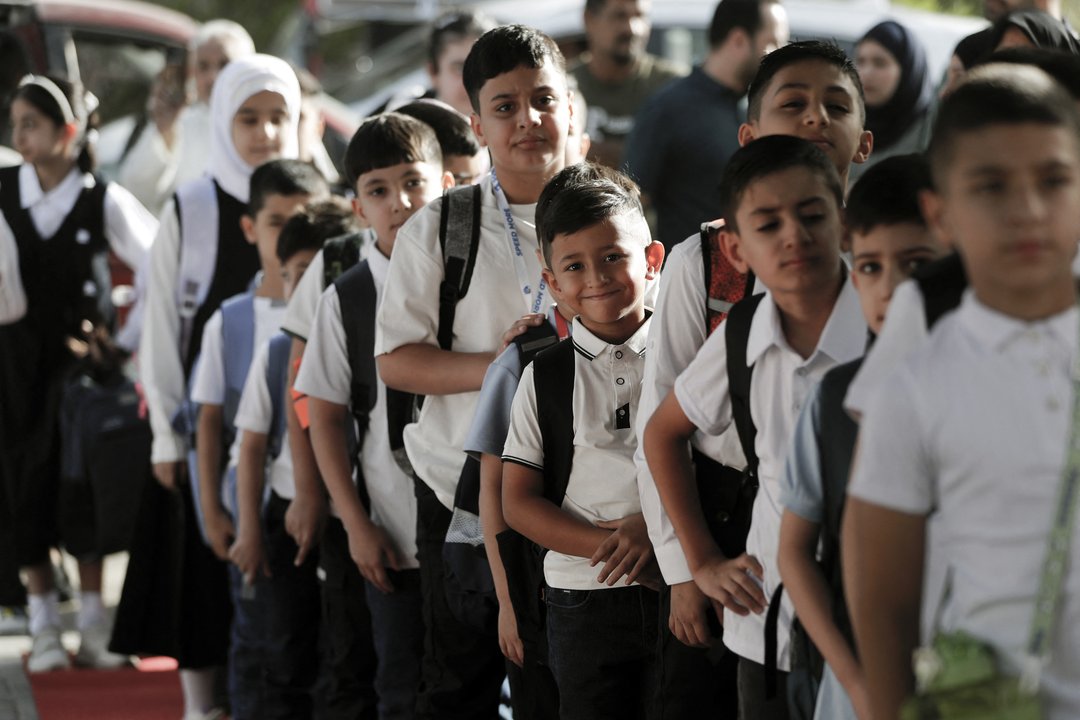
ERBIL (Kurdistan24) - Around 12 million students returned to classrooms across Iraq on Sunday, Oct. 4, marking the beginning of the 2026-2027 academic year after a series of changes to the school calendar and amid continuing pressure on the country's education infrastructure.
Haider Farooq, Director of Media and Communications at Iraq's Ministry of Education, said more than 1.2 million first-grade primary students are among those beginning classes this year.
He also said Iraq has more than 124,000 schools, reflecting the scale of an education system serving millions of children across the country.
Sunday's reopening comes after several changes to the planned start of the academic year.
The Education Ministry had initially postponed the beginning of classes until Oct. 11, citing high temperatures, unfinished second-round examinations and the need for additional preparations.
An official directive issued in mid-September moved the start from the previously planned Sept. 20 date to Oct. 11.

Read More: Iraq Delays School Year to Oct. 11 as Extreme Heat Persists
Two days later, however, the ministry announced that preparations had advanced sufficiently to bring the opening forward to Oct. 1, saying schools and administrative requirements were ready earlier than expected.
That date was subsequently affected by Iraq's Sovereignty Day holiday period associated with the end of the international Coalition's military mission, leaving Sunday, Oct. 4, as the practical beginning of classes.
The earlier report also explained delays in newly printed textbooks as one of the factors that had affected the original school calendar.
The changing dates illustrate the logistical challenge of reopening an education system of Iraq's size.
Beyond the calendar, the country continues to face long-standing shortages of appropriate school buildings and classroom space.
Earlier Kurdistan24 reporting, citing the Eco Iraq Observatory, found that nearly 200 mud-brick schools and approximately 800 caravan schools remain in Salahuddin and Dhi Qar.
The observatory said thousands of additional school buildings are needed to reduce overcrowding and eliminate the practice of multiple schools or shifts operating from the same facility.
Its estimate put the number of schools above 40,000, while other government datasets use different figures depending on whether they count educational institutions, physical buildings or multiple school administrations operating inside a single building.
Read More: Iraq Still Has Mud-Brick Schools as Building Shortage Persists
Those definitions help explain why the latest Education Ministry figure of more than 124,000 schools should not necessarily be read as directly conflicting with lower estimates of school buildings.
Other official assessments have similarly shown the scale of the infrastructure gap.
The Iraq Fund for Development has estimated that the country needs thousands of additional schools across all educational levels, while government ministries continue construction programs intended to reduce double and triple shifts.

Population growth, deteriorating buildings and years of accumulated shortages have made it difficult for construction to keep pace with student numbers.
Sunday's reopening therefore brings millions of students back not only to newly prepared classrooms but also to an education system still dealing with uneven infrastructure.
The start of the school year also extends to Kurdish-language education in Kirkuk.
Kamaran Ali, Director of Kurdish Education in Kirkuk, told Kurdistan24 that more than 104,000 students are beginning classes in 562 schools and kindergartens, supported by around 8,200 teachers and employees.
The Kurdistan Regional Government has provided 1.2 million textbooks and other educational requirements for the new term, according to Ali.
The directorate has also received support including student desks and classroom materials intended to create a suitable learning environment.
Ali said demand for Kurdish-language education has increased, with students transferring from Arabic-language schools following strong examination results last year.
Kurdish-language students recorded an overall 82 percent pass rate at the primary level, while students also achieved first and second place at the Iraqi level, according to the directorate.
In the first examination round, 140 students achieved distinction, followed by another 50 in the second round.
Eighty-nine schools recorded a 100 percent pass rate in the first round.
Read More: More Than 104,000 Students Start Kurdish Classes in Kirkuk

For education officials in Kirkuk, those results have strengthened confidence in Kurdish-language schooling and contributed to increasing enrollment.
Across Iraq more broadly, however, the beginning of the academic year brings attention back to the balance between the enormous scale of the system and the resources available to sustain it.
With 12 million students returning and more than 1.2 million entering first grade, pressures on classrooms, teaching staff, textbooks, electricity and school buildings remain substantial.
Government construction programs and new school projects are gradually adding capacity, but mud-brick classrooms, caravans, overcrowding and multiple shifts remain part of the educational reality in some provinces.
Sunday nevertheless marks the point at which the delays and changing dates give way to the academic year itself.
From federal schools across Iraq to Kurdish-language classrooms in Kirkuk, millions of students are now back at their desks for the 2026-2027 school year.