NATO Commander Warns Russia Any Attack on Alliance Would Be ‘Utterly Futile’
Grynkewich vows to “block, blunt, and break” aggression as Germany’s intelligence chief warns Russian hybrid threats will persist beyond the Ukraine war
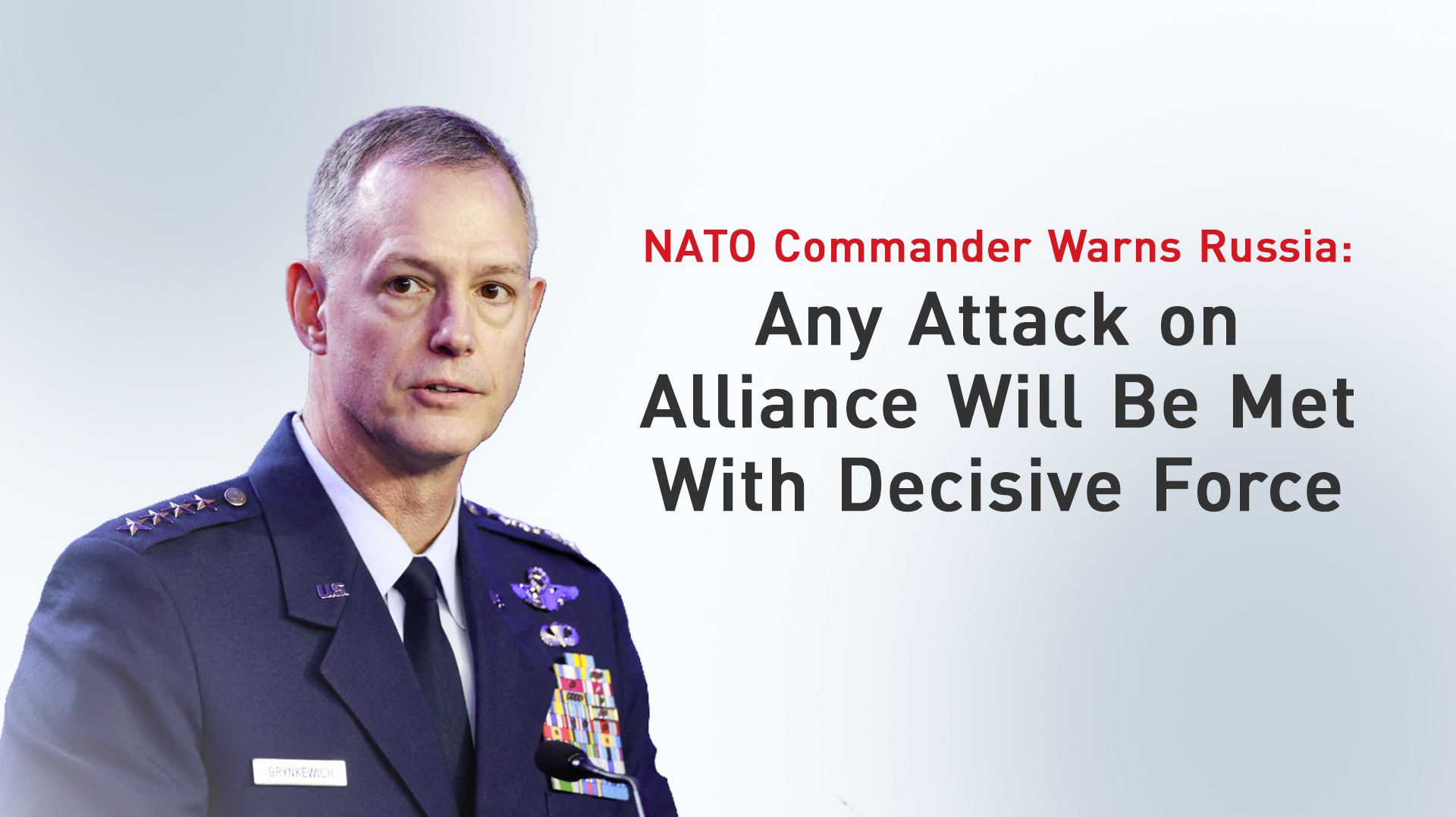
ERBIL (Kurdistan24) — NATO’s top military commander warned Russia on Monday that any attack on a member of the alliance would be met with a decisive military response, pledging to “block, blunt, and break” aggression as European security officials raised concerns over alleged Russian sabotage, cyberattacks, and interference.
US Air Force General Alexus Grynkewich, NATO’s Supreme Allied Commander Europe, outlined the alliance’s approach to defeating a potential attack during a speech at the Warsaw Security Forum in Poland, stressing that NATO would prevent an adversary from achieving its military objectives.
“If someone is foolish enough to attack us, we will fight. We will stop the attack and deny them the ability to achieve their objectives, whatever those may be,” Grynkewich said.
“We will, in short, ensure any attack against any ally proves utterly futile.”
Grynkewich described his strategy as a “theory of victory,” under which NATO would first prevent an attack from succeeding, then halt any further advance, and, if necessary, dismantle the enemy’s ability to continue fighting.
“My theory of victory is simple: we will block the initial attack. If the attack persists, we will blunt it and prevent enemy advance,” he said.
“And if required, we will break the enemy’s forces and the operational warfighting system that is arrayed against us.”
The commander emphasized, however, that he did not consider a conflict between Russia and NATO imminent or inevitable, while urging allies to establish clear red lines and communicate the consequences of crossing them.
“Let me make one point very clear: I do not assess that conflict is imminent or inevitable. It isn’t,” he said.
He also argued that NATO should avoid being seen as the party escalating a confrontation, saying responsibility for any further escalation would rest with the aggressor.
“The burden of escalation would rest squarely upon the aggressor; they and they alone would bear the full moral, political, and strategic weight of deciding whether to do so,” Grynkewich said.
His remarks came amid growing concern among European governments over what they describe as an intensifying Russian campaign of hybrid operations, including sabotage, cyberattacks, espionage, and drone incursions.
Moscow has rejected accusations of orchestrating hostile operations against European countries.
Germany Warns of Long-Term Russian Hybrid Threat
Separately, Sinan Selen, president of Germany’s Federal Office for the Protection of the Constitution (BfV), warned on Monday that Russia would continue pursuing operations aimed at destabilizing Europe, regardless of how the war in Ukraine develops.
Speaking at a BfV conference in Berlin, Selen said the threat had become a long-term challenge extending beyond the battlefield in Ukraine.
“The hybrid threat is here, and it has long been decoupled from the situation in Ukraine,” he said.
He added that Moscow sought to reshape Europe’s political and security order, describing its ambitions as an attempt to establish “a fundamentally new map of Europe and of its role within Europe and in geopolitics.”
German authorities use the term “hybrid warfare” to describe hostile activities that fall short of conventional military attacks, including espionage, sabotage, arson, cyber operations, and disinformation campaigns.
According to German police, nearly 1,000 suspicious drone flights were recorded over critical infrastructure sites in the country last year, underscoring concerns about potential surveillance and security vulnerabilities.
Berlin has also blamed Russia for an attempted attack in August involving an explosive-laden drone discovered at Leipzig airport, a major transport hub for military goods destined for Ukraine.
Moscow has denied the accusations.
The warnings reflect wider European concerns that Russia could continue targeting infrastructure and political stability even if the fighting in Ukraine eventually subsides.
NATO Faces Pressure to Strengthen European Defenses
The security warnings come as European NATO members accelerate efforts to strengthen their armed forces amid uncertainty over the future scale of the US military presence on the continent.
The Trump administration is reviewing American force deployments in Europe, with the results expected toward the end of the year.
The prospect of potential reductions has prompted European governments to place greater emphasis on developing their own defense capabilities.
Grynkewich rejected doubts about Washington’s commitment to NATO’s collective-defense pledge, which requires allies to assist a member subjected to an armed attack.
“I think no one should question the commitment of the United States to this alliance,” he said.
He also welcomed European efforts to assume greater responsibility for their own security, arguing that the process was strengthening the alliance.
“We’re in the implementation phase, and that is driving a stronger and more united alliance than I’ve seen in a long, long time,” he said.
NATO maintains that it is a defensive alliance and has no intention of invading Russia. Moscow, meanwhile, has repeatedly portrayed the US-led alliance as a threat to its security and has opposed its expansion eastward.
The alliance’s 2022 Strategic Concept identifies Russia as the most significant and direct threat to the security of NATO members. Against that backdrop, Grynkewich’s warning underscores the alliance’s effort to reinforce deterrence while signaling that a direct military confrontation is neither inevitable nor its stated objective.