Vance: US Seeks Final And Decisive Iranian Commitment To Never Rebuild Nuclear Programme
Vice President says fuel prices will fall when the conflict with Iran ends, in the clearest statement yet of what Washington requires from Tehran before any deal can be concluded
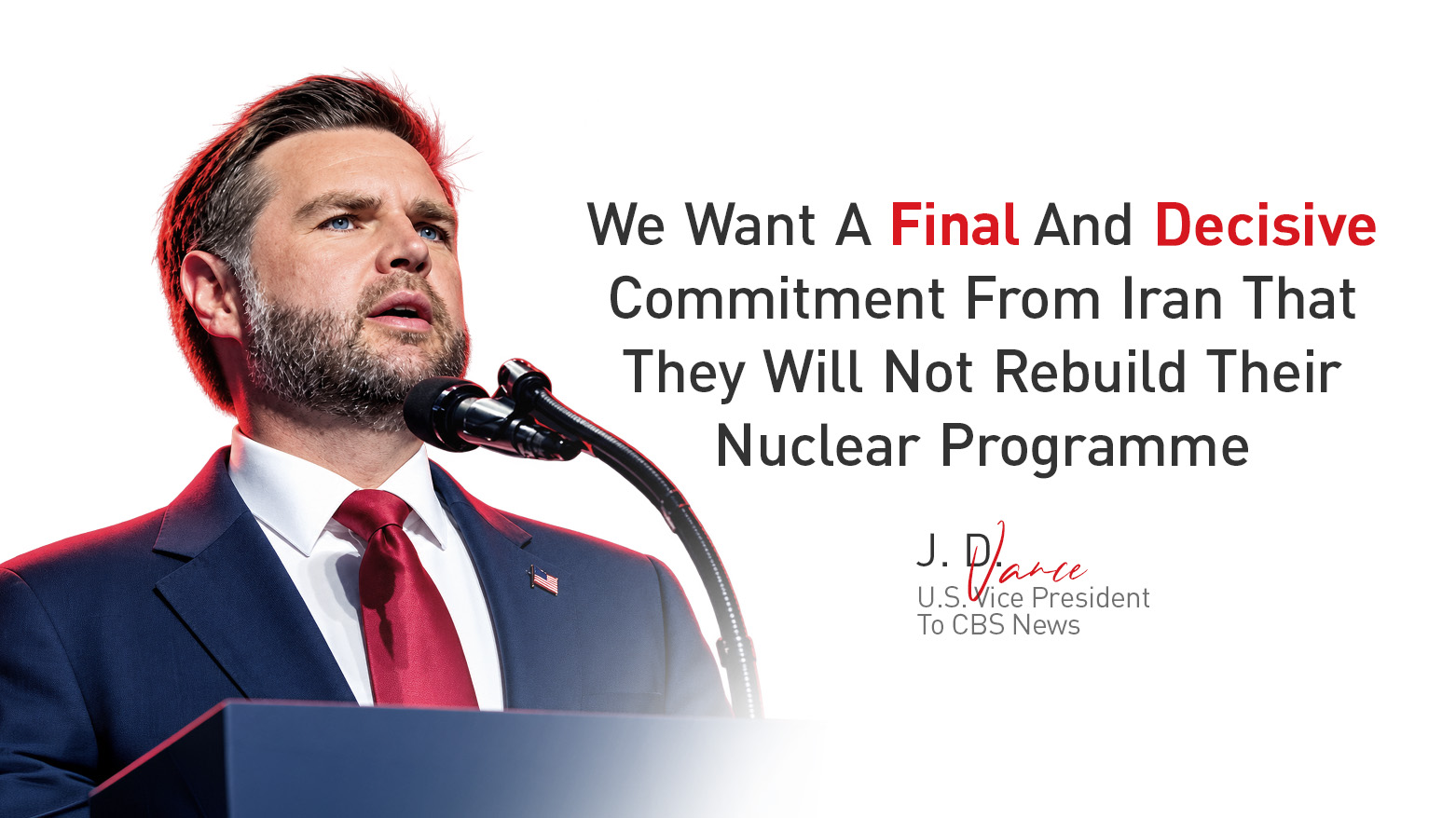
ERBIL (Kurdistan 24) - US Vice President JD Vance told CBS News on Sunday that the United States is seeking a final and decisive commitment from Iran that it will not rebuild its nuclear programme, and that fuel prices will fall once the conflict with Iran ends, in the clearest and most senior American articulation yet of Washington's non-negotiable condition for any settlement.
"We are seeking a final and decisive commitment from the Iranians that they will not rebuild their nuclear programme," Vance said.
With the end of the conflict with Iran, we will see fuel prices fall.
Vance added.
The Nuclear Condition
Vance's statement defines Washington's core demand with a precision and finality that goes beyond previous American formulations. The requirement is not simply nuclear talks, inspections, or a return to the June memorandum of understanding. It is a final and decisive commitment, language that implies a permanent and verifiable renunciation of nuclear weapons capability rather than a temporary freeze or a negotiated cap with sunset clauses of the kind that characterized the Obama-era JCPOA.
This formulation is consistent with what a US official told Al Jazeera and Axios journalist Barak Ravid on September 28, 2026, that Trump is willing to give Iran sanctions relief and release frozen funds in exchange for concrete nuclear progress, but that Washington doubts Iranian promises after the June MOU was violated and demands guarantees of Iranian seriousness. Vance's Sunday statement takes that position one step further by specifying that the commitment must be final and decisive, not interim or confidence-building.
Iranian President Pezeshkian told CBS News on September 25 that Iran would allow UN nuclear inspectors if an agreement framework is established and that developing nuclear weapons is forbidden under Islamic law. Iranian FM Araghchi has consistently said Iran's conditions are clear and non-negotiable and that Iran is waiting for Washington's formal response through the mediators. The gap between Vance's demand for a final and decisive commitment and Iran's insistence on sequenced steps beginning with Hormuz reopening remains the central unresolved question of the entire negotiation.
Fuel Prices And The Economic Case For A Deal
Vance's statement linking the end of the Iran conflict to falling fuel prices places the economic case for a settlement directly before the American public three weeks before November 3 midterm elections. US pump prices above $6 a gallon, driven primarily by the Strait of Hormuz disruption, have been the most politically damaging domestic consequence of the conflict for the Trump administration. Vance's explicit promise that fuel prices will fall when the conflict ends is both a policy statement and a campaign message, framing the Iran nuclear deal not as a foreign policy achievement but as relief for American families at the gas station.
This framing is consistent with Trump's own repeated statements throughout the conflict, including his September declaration that gas prices will fall and his acknowledgment that Iran wants a deal and he likes making deals. The combination of Trump's desire for a deal and Vance's explicit linkage of a deal to lower fuel prices suggests the administration is building a domestic political case for whatever agreement eventually emerges from the Qatari and Pakistani mediation track.