Iraq, Iran Reaffirm Commitment to Diplomacy in Baghdad Talks
In a statement posted on his official X account, Hussein said the two ministers reviewed relations between Baghdad and Tehran, the latest political and security developments in the region, and prospects for advancing peace.
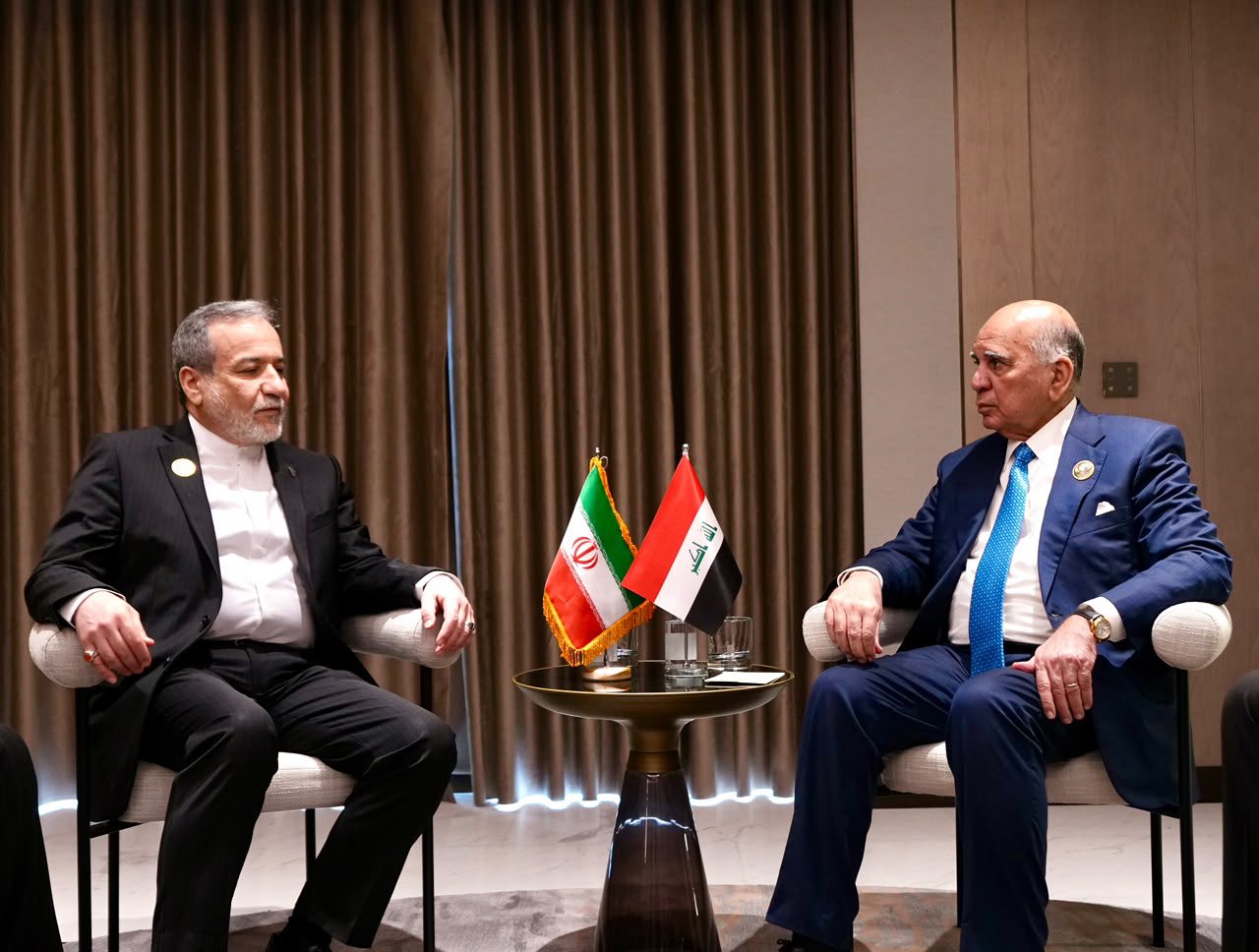
ERBIL (Kurdistan24) — Iraqi Foreign Minister Fuad Hussein and his Iranian counterpart, Abbas Araghchi, discussed bilateral relations, regional security developments, and diplomatic efforts to promote peace during a meeting in Baghdad on Sunday, as Hussein reaffirmed Iraq’s commitment to resolving regional crises through dialogue and diplomacy.
The meeting took place on the sidelines of the 52nd Session of the Council of Foreign Ministers (CFM) of the Organization of Islamic Cooperation (OIC), hosted in the Iraqi capital.
In a statement posted on his official X account, Hussein said the two ministers reviewed relations between Baghdad and Tehran, the latest political and security developments in the region, and prospects for advancing peace.
Hussein reiterated Iraq’s position that dialogue and diplomatic initiatives remain the appropriate means of resolving regional crises, reducing tensions, and maintaining stability.
The two sides also discussed strengthening the OIC’s role in addressing regional and international challenges, emphasizing greater cooperation and solidarity among member states to promote regional security and stability.
According to a separate statement from Iran’s Foreign Ministry, the discussions covered economic, trade, and security cooperation between Iran and Iraq, alongside diplomatic initiatives concerning regional peace and security.
Araghchi said Iran remained determined to defend its sovereignty and national security while continuing to pursue diplomatic solutions to prevent further escalation.
Regarding the Strait of Hormuz, the Iranian foreign minister attributed the current insecurity and its economic consequences for the region and the wider world to what he described as US and Israeli military aggression against Iran.
He said Tehran was prepared to help restore security and stability in the strategic waterway under a seven-stage roadmap proposed by Iran, provided that US attacks and interventions ceased.
The Strait of Hormuz is a critical route for global energy supplies, making security in the waterway a major concern for regional countries and international markets.
The ministers also addressed developments on the Arabian Peninsula and efforts to end the war in Yemen.
Araghchi argued that the Yemeni crisis could not be resolved through military force or blockades. Instead, he called for a solution based on United Nations provisions, respect for Yemen’s territorial integrity and sovereignty, and the rights of its people. He also expressed Iran’s readiness to help establish conditions conducive to dialogue between the conflicting parties.
The Iranian foreign minister further emphasized the need to safeguard the sanctity of Muslim holy sites, including Mecca and Medina.
Citing the Yemeni army’s categorical denial of allegations that it had threatened to attack the two holy cities, Araghchi warned that repeating what he described as false accusations could fuel divisions within the Muslim world. He said such allegations should not become a source of discord among OIC member states.
The meeting came amid heightened regional tensions and ongoing diplomatic efforts to address security challenges, underscoring the importance of dialogue among regional countries and multilateral institutions.