Kurdistan Police Reform to Expand Women's Role and Leadership
KRG Interior Minister Reber Ahmed says Kurdistan's police reform has entered implementation, focusing on model stations, training, women and public trust.
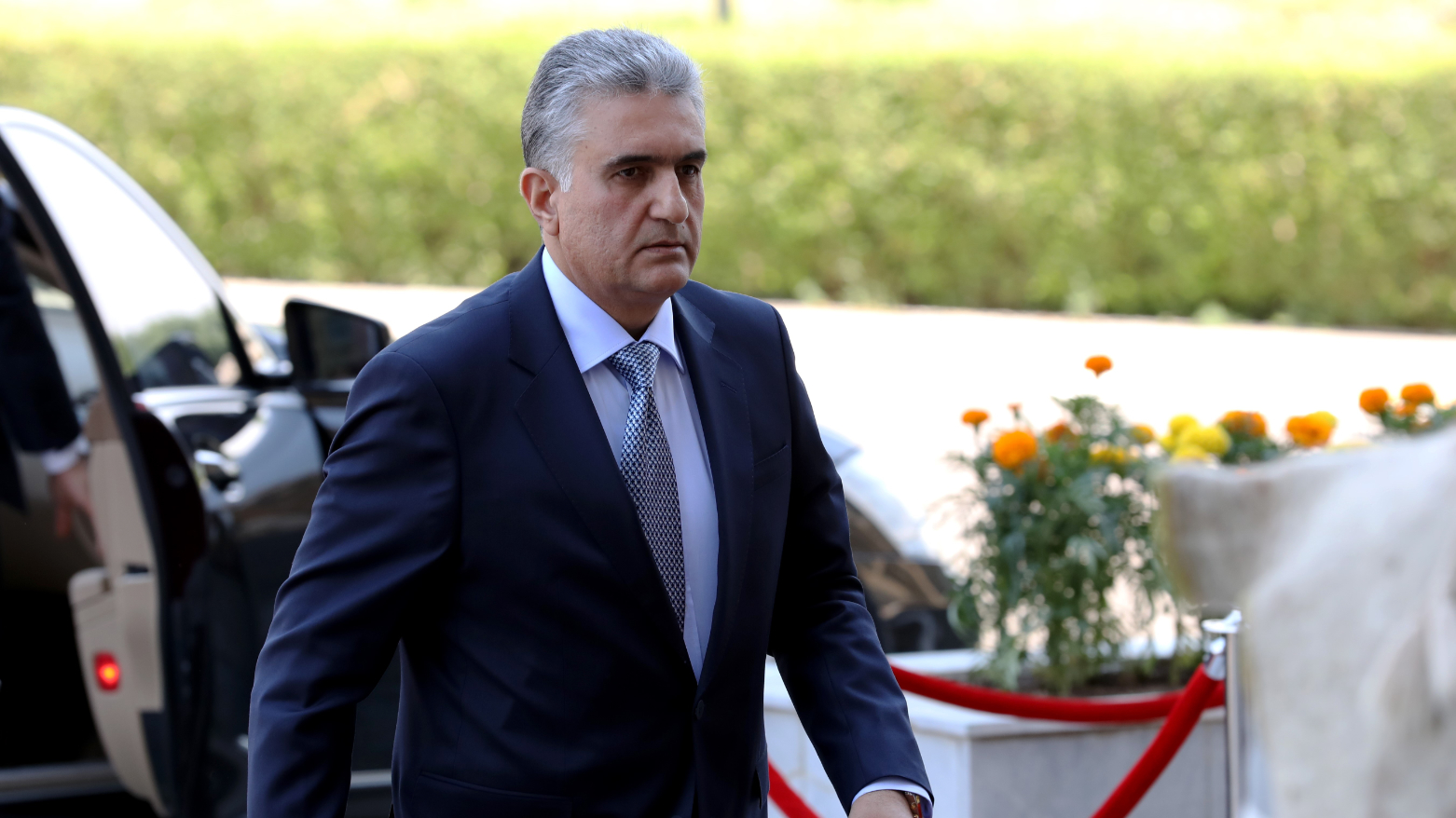
ERBIL (Kurdistan24) - The Kurdistan Region's police reform program has entered an implementation phase, with the Interior Ministry moving from strategic planning toward model police stations, revamped training institutions and a stronger role for women in policing, Interior Minister Reber Ahmed said on Tuesday.
Speaking on Oct. 20 during work by the Interior Ministry and the United Nations Development Programme (UNDP) to develop an implementation plan for police reform, Ahmed said the central objective is to build a modern and professional police institution capable of earning public trust.
He placed the initiative within the Kurdistan Regional Government's Ninth Cabinet reform program under Prime Minister Masrour Barzani, saying the process is intended to strengthen institutional capacity, reinforce the rule of law and improve services to citizens.
Ahmed said the challenge now is to translate the principles already laid out in the Kurdistan Police Reform Strategy 2026-2030 into changes that can be seen in everyday policing.
"These steps are not merely technical discussions or training programs, but the beginning of an institutional partnership to translate reform priorities into plans, responsibilities and tangible results," he said, referring to cooperation with UNDP and the European Union Advisory Mission in Iraq.
The Interior Minister said one of the wider problems facing Iraq and the region is not a shortage of strategies, but the gap between drafting them and ensuring that citizens experience their effects.
For that reason, he said the Interior Ministry does not want the reform strategy to remain only an official document.
Instead, Ahmed described the goal as turning it into a "service covenant" between police institutions and the public.
Two practical projects are being prioritized in the first phase.
The first is the establishment of what Ahmed called a "model police station," intended to demonstrate how reform principles can work in daily policing.
The second is the reform of police colleges, with the aim of developing them into police academies built around scientific training and merit.
Ahmed said those institutions should translate professional values into better conduct and higher-quality services.
The new implementation phase builds on work already carried out under the 2026-2030 police reform strategy.
In August, the KRG said four police stations had been selected as pilot locations: Kasnazan in Erbil, Saiwan in Sulaimani, Nizarke in Duhok and the Central Police Station in Halabja.
Read More: KRG Details 2026-2030 Police Reform Strategy Built Around Public Trust
Those pilot stations are intended to test changes in organization and service delivery, improve interaction with citizens and strengthen professional and institutional capabilities before broader implementation.
The KRG has also said that 35 local master trainers have been developed since July 2025 with strategic advisory support from the European Union Advisory Mission in Iraq.
Their training has focused on service-oriented policing, human rights and what the government describes as the "Blue Concept," which emphasizes service, respect, integrity and public confidence.
More than 10,000 police officers and other personnel have subsequently participated in reform-related professional development programs, according to the KRG.
The government has presented that training as part of an effort to build internal capacity so that reform can increasingly be sustained by Kurdistan Region institutions themselves.
Ahmed also identified the participation of women as a core part of the next phase.
He said strengthening the role and leadership of women within police ranks is a fundamental priority, placing gender participation alongside professional training and institutional restructuring rather than treating it as a separate initiative.
The reform program is also examining police leadership and management.
High-level reform committees have been working on police roles and responsibilities, organizational arrangements, institutional effectiveness and the way services are delivered.
The process therefore extends beyond individual training courses and seeks to address how the police institution itself operates.
European advisers have supported the program, but EUAM Iraq has previously stressed that the reform is locally owned.
Mission chief Ralf Schroeder said in August that the initiative was being run by the Interior Ministry and Kurdish police, with European advisers providing strategic and technical assistance at their request.
EUAM's role has included support for strategy development, change management, workshops, expert exchanges and specialized security issues.
Ahmed's latest remarks also placed citizens more directly within the reform process.
He said people should not be viewed simply as recipients of police services.
Instead, their experiences and views should become an important measure of whether the reforms are working.
That approach reflects the broader emphasis of the 2026-2030 strategy on public confidence.
The government has said the purpose of reform is not merely to strengthen the ability of police to enforce the law, but to create a more service-oriented institution that is accountable, professional and closely connected to the communities it serves.
That means the eventual test of the program will lie not only in the number of officers trained or institutions reorganized, but in whether citizens see improvements in their encounters with the police.
Ahmed said the Interior Ministry now wants to move from policy language to implementation with defined responsibilities and measurable results.
The model police-station project, reform of police colleges, expansion of women's participation and use of public feedback are intended to provide the first practical measures of that transition.
For the Interior Ministry, the next stage of the reform effort will therefore focus on whether the principles set out in the 2026-2030 strategy can be embedded in everyday police work and translated into stronger public confidence across the Kurdistan Region.