Kurdish Historian Najati Abdullah Calls for Kurdish National Digital Library, AI Institute
“Our history has either not been written or has been documented very little, and even what has been written has not developed into a continuous accumulation of knowledge,” he said.
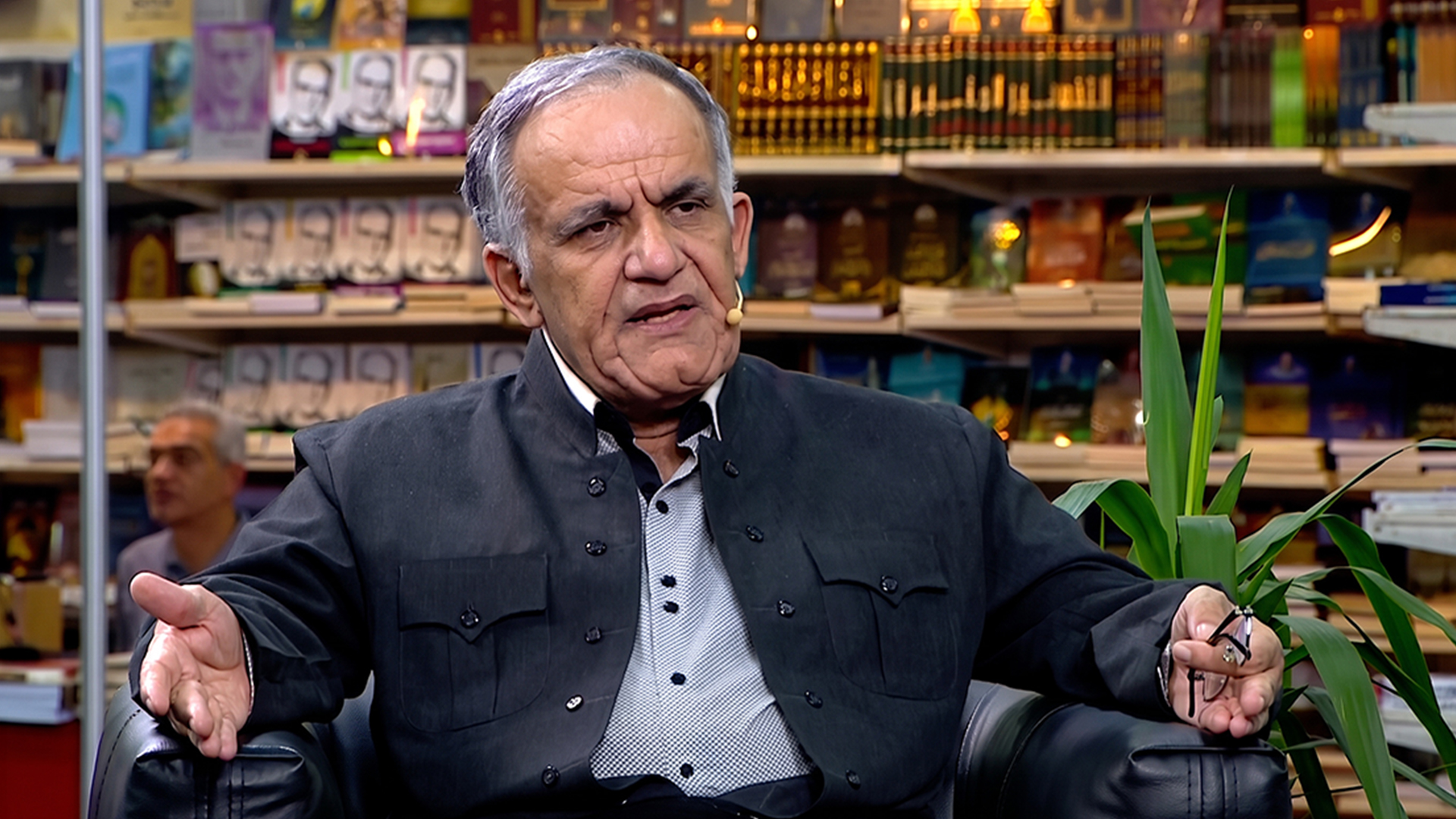
ERBIL (Kurdistan24) — Najati Abdullah, a writer, historian, and former president of the Kurdish Academy, has called for the establishment of a national digital library and a specialized artificial intelligence (AI) institute in the Kurdistan Region, emphasizing the role of culture and technology in preserving Kurdish history and strengthening national identity.
In an exclusive interview with Kurdistan24 on Friday, on the sidelines of the 18th Erbil International Book Fair, Abdullah discussed the challenges facing Kurdish historiography, the importance of cultural unity, the value of historical accounts by foreign travelers, and the opportunities presented by AI.
Abdullah described the book fair as an important cultural event and a civilizational necessity for the Kurdistan Region, arguing that culture and the written word could help unite Kurds despite the geographical and political divisions separating them across four states.
“Our history has either not been written or has been documented very little, and even what has been written has not developed into a continuous accumulation of knowledge,” he said.
He noted that modern Kurdish historiography had developed relatively recently, with Kurdish history books beginning to appear in 1925. He described the period from 1925 to 1991 as one marked by fragmentation, suppression, and restrictions, adding that the 1991 uprising ushered in a period of significant progress in publishing and library development.
Calls for a National Digital Library
Abdullah stressed that digital platforms were particularly important for Kurds because they could overcome geographical and political borders, connecting Kurdish communities and making historical and intellectual works accessible worldwide.
“We should already have had a national digital library, bringing together all Kurdish intellectual works, sources, and manuscripts from across the world, accessible to Kurds wherever they live,” he said, describing the absence of such a project as a significant gap requiring urgent attention.
He also urged Kurdish historians to critically examine accounts written by foreign travelers, missionaries, diplomats, intelligence agents, and military personnel who visited Kurdistan. While these records offer valuable observations about Kurdish society, he said, they should not be accepted as unquestionable historical truths.
“They are not sacred texts or verses of the Quran; they are raw materials for history,” Abdullah said, calling for their translation into Kurdish and scientific analysis to help reconstruct Kurdish history from the perspective of Kurdish researchers.
AI Offers Opportunities for Kurdish Development
Addressing artificial intelligence, Abdullah said Kurds should embrace the technology and direct it toward scientific advancement and their own needs rather than fear its development.
“If we deal with artificial intelligence wisely, there is nothing to fear,” he said, warning that those who failed to keep pace with technological advances risked being left behind.
He proposed establishing a specialized university or institute for AI in the Kurdistan Region to help develop local expertise and ensure Kurds benefit from emerging technologies.
About Najati Abdullah
Born near Erbil on July 1, 1966, Abdullah studied history in France, earning a bachelor's degree from the University of Poitiers in 1997, a master's degree from Paris-X University in 1998, and a doctorate in contemporary history in 2006.
His doctoral dissertation examined tribes, borders, empires, and the Kurdish-Turkish-Iranian border question between 1843 and 1932.
Abdullah has served as editor-in-chief of the Kurdology journal and secretary of the Kurdish Academy. He has authored more than 90 works in Kurdish and French.