Kurdish Party Leader Criticizes Two-Year Parliament Paralysis
Mohammed Haji Mahmoud criticized the prolonged inactivity of the Kurdistan Parliament and called for its swift reactivation, political unity and stronger institutions.
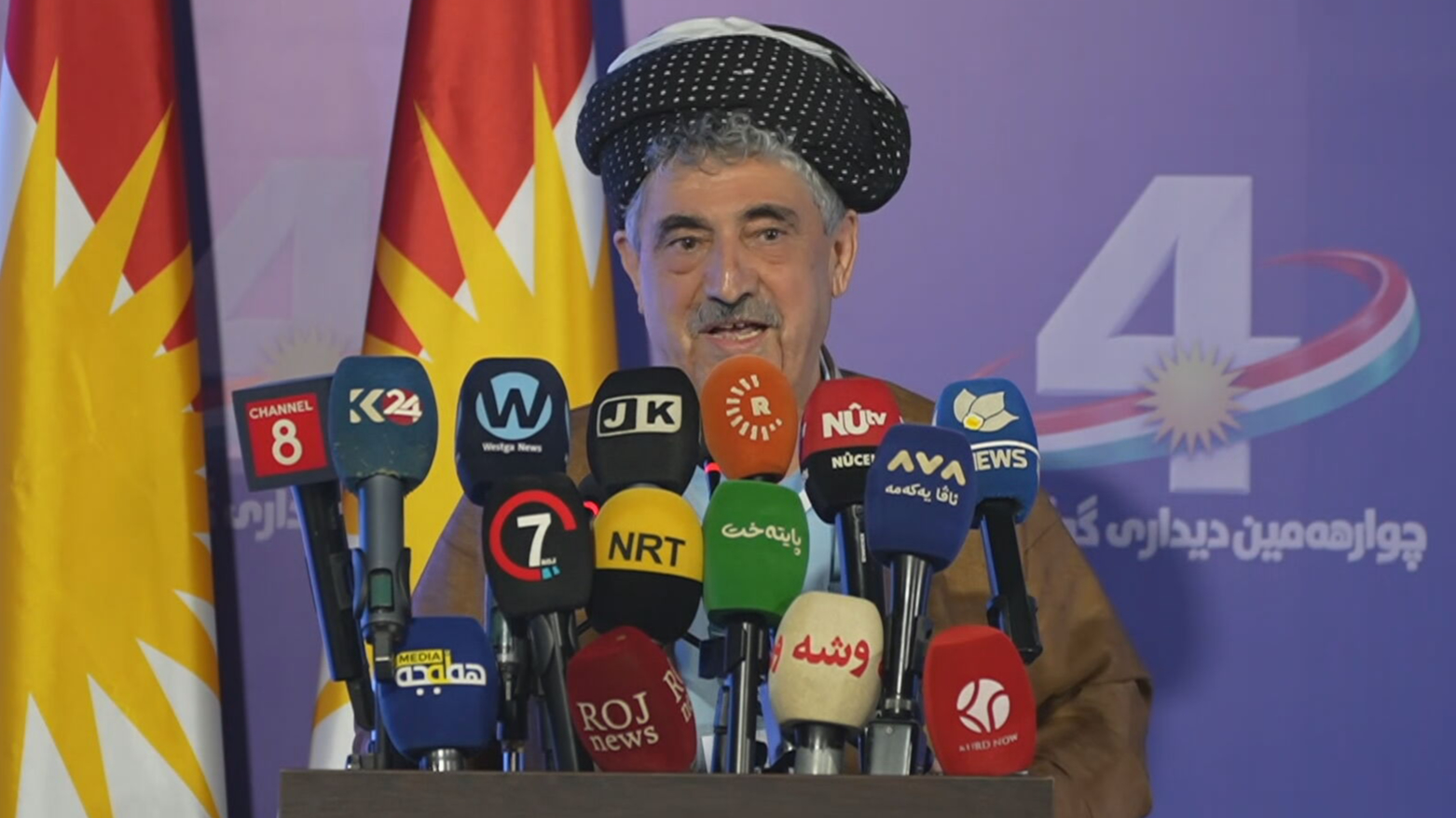
ERBIL (Kurdistan24) - Mohammed Haji Mahmoud, Secretary-General of the Kurdistan Socialist Democratic Party, on Saturday sharply criticized the prolonged inactivity of the Kurdistan Parliament, saying its immediate reactivation is necessary to protect public interests and the constitutional standing of the Kurdistan Region.
Speaking during the Fourth Gulakhana Meeting on Oct. 24, Haji Mahmoud said parliament had remained inactive for "two years and several days," leaving the legislature unable to carry out duties that could have directly affected the lives of citizens.
He argued that during that period lawmakers could have passed dozens of laws serving the interests of people in the Kurdistan Region, amended outdated legislation and addressed laws passed in Baghdad that he said were detrimental to Kurdish interests.
Instead, he said, the parliamentary chambers had remained empty.
Haji Mahmoud presented the issue as more than a dispute among political parties, saying an active parliament was needed to defend both the interests of citizens and the Kurdistan Region's constitutional entity.
He also called for greater cooperation among political forces and the Kurdistan Regional Government to address outstanding challenges.
His remarks extended beyond domestic politics to the wider security environment in the Middle East.
"I hope the Kurdistan Regional Government and all sides will work together on these issues, because everyone in the region is preparing for war and no one is moving toward peace," he said.
Haji Mahmoud said Kurdish leaders had so far acted carefully to avoid being drawn into regional conflicts and argued that the Kurdistan Region should continue protecting itself from wars in which it is not directly involved.
"If a war is not the Kurds' war, they must protect themselves from it," he said.
Against that backdrop, he stressed the importance of Kurdish national unity and a common political position.
Haji Mahmoud said he remained optimistic that there were no major differences among the people of Kurdistan over the need to reactivate parliament and expressed hope that political forces could work together to address the Region's wider problems.
His comments come as calls for the Kurdistan Parliament to resume its work have intensified across the political spectrum.
For Haji Mahmoud, however, the central issue is the institutional cost of continued paralysis: legislation has remained stalled while the Region faces both domestic challenges and an increasingly uncertain regional security environment.
He urged political actors to overcome their differences and restore parliamentary activity as soon as possible, linking the legislature's return to broader efforts to rebuild institutions, resolve outstanding problems and defend the Kurdistan Region's interests.