ADNOC Partners with OpenAI to Deploy AI Across UAE's Energy Sector
The agreement will integrate advanced artificial intelligence into oil production, investment and government services as the UAE accelerates efforts to strengthen its position in the global AI industry
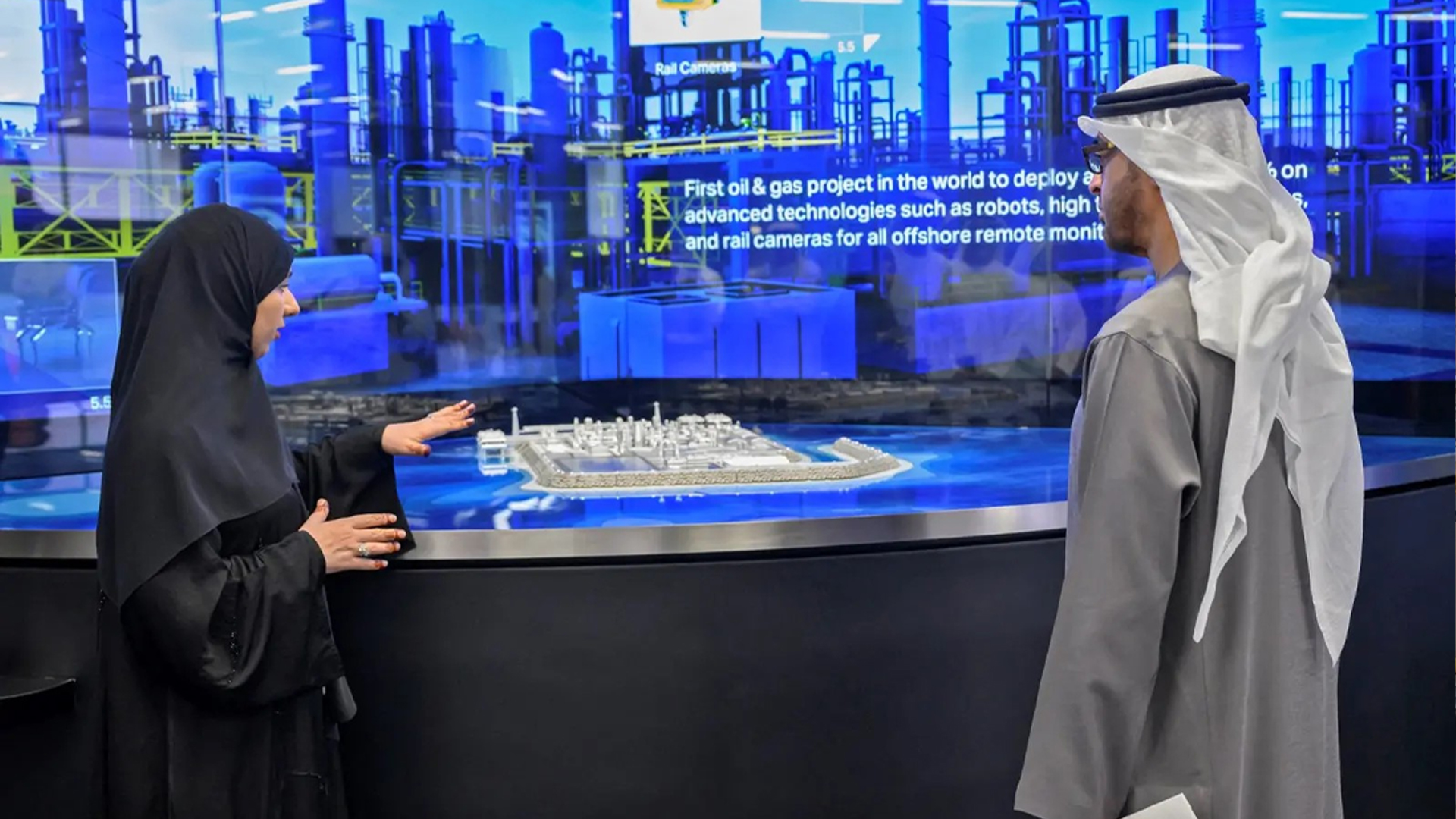
ERBIL (Kurdistan24) — Abu Dhabi National Oil Company (ADNOC) announced on Monday a partnership with OpenAI to deploy advanced artificial intelligence across its operations, becoming the first energy company globally to adopt OpenAI's Frontier platform, as the United Arab Emirates expands its ambitions to become a major global centre for artificial intelligence.
The agreement was announced during the Abu Dhabi International Petroleum Exhibition and Conference (ADIPEC), where OpenAI Chief Executive Sam Altman met with Abu Dhabi Crown Prince Khaled bin Mohamed bin Zayed Al Nahyan and participated in a series of agreements aimed at integrating AI into the UAE's energy industry, government institutions and investment sector.
ADNOC said OpenAI's models would allow it to become "the first energy company in the world to use this technology to value every barrel while it is still in the ground."
The partnership will also involve G42, the UAE-based artificial intelligence company chaired by Sheikh Tahnoon bin Zayed Al Nahyan, the brother of UAE President Sheikh Mohamed bin Zayed Al Nahyan.
Financial details of the agreement were not disclosed.
According to ADNOC, interconnected AI agents will continuously analyse crude oil supply, demand, prices and profit margins, forecast potential market developments and assess the commercial and operational consequences of decisions across the company's business.
Speaking at ADIPEC, ADNOC Managing Director and CEO Sultan Al Jaber said the partnership would help demonstrate the role artificial intelligence can play in the energy industry.
"From the moment ChatGPT was born, the world has asked what energy can do for AI, and now together we will find out what AI can do for energy," Al Jaber said.
The technology will initially be applied to complex field development planning, bringing together decades of geological, operational and financial data from thousands of wells, multiple reservoirs and hundreds of facilities.
ADNOC said the system could help prepare and optimise development plans in hours rather than months. The agreement also forms part of a broader series of partnerships between OpenAI and Abu Dhabi entities.
The Abu Dhabi government and OpenAI announced what they described as the world's first AI-native Machine-Readable Government initiative, designed to allow AI systems to interpret regulations and assist officials with routine procedures, including issuing permits and certificates.
A pilot project is already underway with the Abu Dhabi Agriculture and Food Safety Authority, focusing on food imports.
Separately, sovereign wealth fund Mubadala, OpenAI and G42 subsidiary Inception42 agreed to apply advanced AI to investment analysis, identifying opportunities and assessing financial risks.
Another five-year agreement will support the adoption of advanced AI across government, businesses and education.
AI ambitions amid energy security challenges
The partnership comes as the UAE seeks to strengthen its position in the global artificial intelligence industry while facing growing pressure on traditional energy supply chains.
Disruptions to shipping through the Strait of Hormuz have highlighted the vulnerability of Gulf energy exports to regional conflict, contributing to higher oil prices and increased transportation costs.
ADNOC CEO Al Jaber said the disruption had drained nearly one billion barrels from global oil inventories, while shipping and logistics costs had risen from less than five percent to more than 30 percent of the cost of a barrel.
The developments have reinforced the importance of technology, supply-chain resilience and operational efficiency for major energy producers.
The UAE has invested heavily in artificial intelligence since 2017, when it appointed the world's first minister dedicated to AI and introduced a national strategy to develop the sector.
G42, established in 2018 with backing from Abu Dhabi's sovereign wealth fund Mubadala, has become a central player in the country's ambitions.
OpenAI CEO Altman praised the UAE's approach, describing it as "consistently been the most forward-looking country in the world for AI adoption."
The partnership also reflects a broader regional competition to combine energy wealth with advanced computing capabilities.
On Sunday, Saudi Aramco completed its acquisition of a 49 percent stake in Saudi AI company Humain, with a commitment of approximately 9.9 billion Saudi riyals ($2.6 billion) in cash during 2026, alongside AI, computing and digital assets.
The transaction supports Humain's plans to expand its data-centre capacity to three gigawatts by 2030.
For the UAE, the ADNOC agreement represents more than the introduction of another digital tool into the oil industry. It signals an effort to use artificial intelligence to improve how energy resources are discovered, produced, priced and marketed, while developing technological capabilities that could become an important part of the country's economy beyond hydrocarbons.
The wider significance is that Gulf energy producers are increasingly positioning themselves not only as suppliers of oil and gas but also as major investors and operators in the technologies expected to shape the next phase of the global economy.