Kurdistan’s oldest Craftsman Makes Wood Stoves for 35 Years in Erbil
In Rmawzhi village of Khalifan, Erbil, Kurdistan Region, Uncle Khalid has made wood stoves for 35 years, and sellers now use his name in Kurdistan markets.
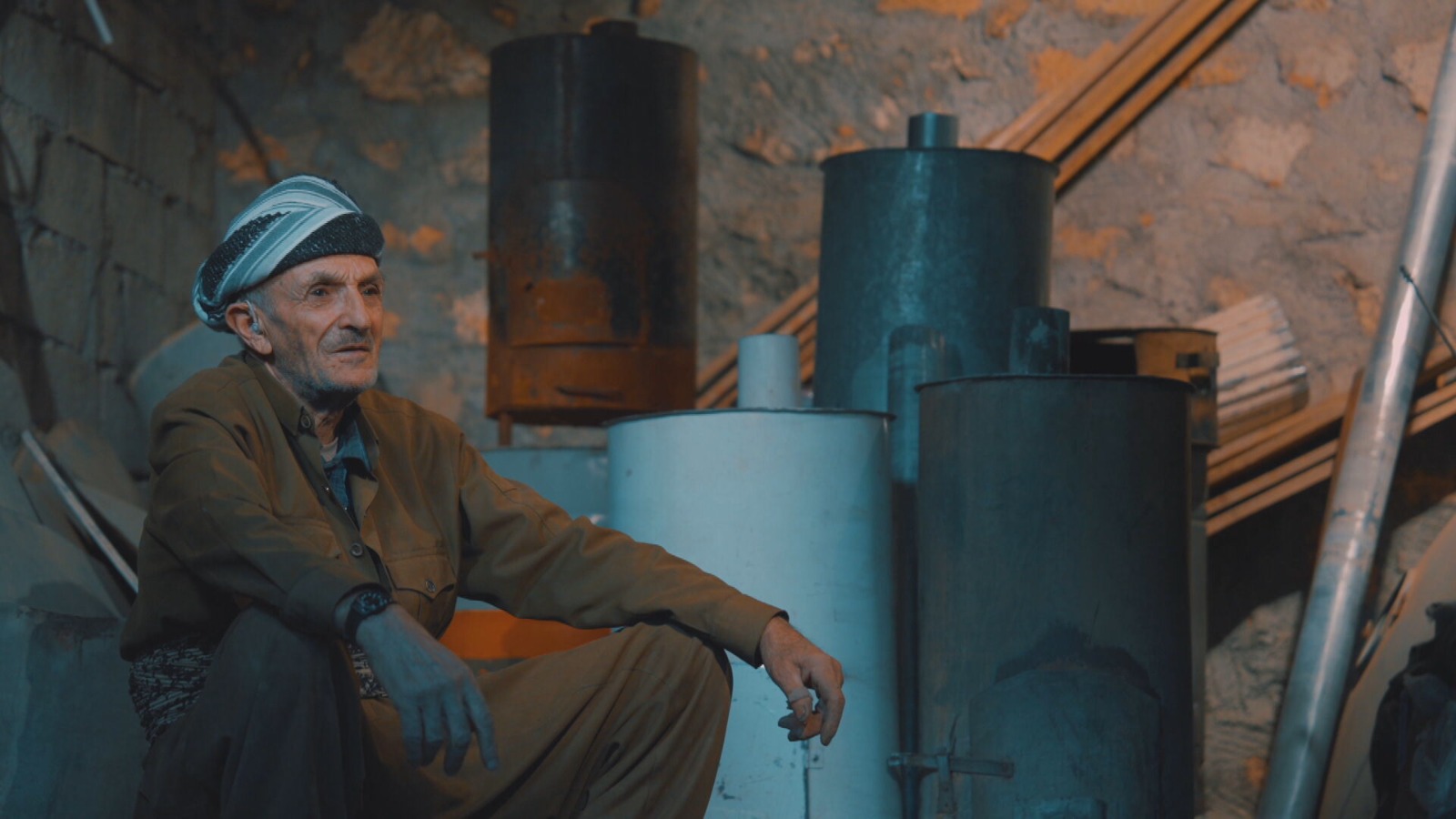
ERBIL (Kurdistan24) - In Rmawzhi village, in the Khalifan district of Erbil, Khalid has spent 35 years making wood stoves. Known to his customers as Mam Khalid (uncle Khalid), he holds fast to his craft despite his advancing age, and his products have become a favorite among a wide segment of the area’s residents.
Mam Khalid’s stoves enjoy strong demand and notable trust among residents of Soran, Jomaan, Haji Omaran, and Hajiawa. Most people in those areas buy them for their high quality, which has tied the name “Mam Khalid” to mastery of the trade.
His fame has reached the point that some sellers exploit his name in the markets. Mam Khalid says a number of them load poor-quality stoves onto their pickup trucks in Soran market and call out to shoppers: “Come and buy Mam Khalid’s stoves... Come to Mam Khalid’s stoves.”
He adds that when he confronts one of them and asks, “Why are you promoting poor-quality stoves in my name?” the seller simply replies, “It’s fine, Mam Khalid.” The seller then steps toward him, kisses him, and goes on his way.
Why wood stoves matter in the mountains

Wood stoves are among the most effective means of heating in mountainous and border areas with long, harsh winters, such as Soran, Jomaan, Haji Omaran, and Khalifan. They generate strong, steady heat capable of warming rural homes and large spaces, even when temperatures fall below zero and snow falls heavily.
They also give families considerable independence during power cuts, rising fuel prices (kerosene and gas), and fuel shortages. They are an affordable, economical option in villages, farming areas, and wooded regions, where residents often rely on firewood from pruned trees and dry branches, or stock up before snow closes the mountain roads.
Despite the simplicity of the idea, a wood stove’s efficiency and safety depend decisively on the quality of its construction. That explains why residents turn to seasoned craftsmen and reject poor-quality commercial products. Quality means the thickness of the metal (sheet steel or iron), the strength of the welds, a tight seal, and well-regulated draft and ventilation, along with versatility in daily use.
The stove’s role in rural and mountain life is not limited to heating. Its flat metal surfaces are widely used to prepare tea and coffee, heat water, and cook some traditional foods, as well as to dry clothes soaked by rain and snow.
The wood stove also carries deep-rooted cultural and social symbolism in mountain communities. Families and guests gather around it on long winter nights, making it part of the memory of family warmth and traditional hospitality.
