Chris Wright: New U.S.-Iraq Deals Extend From Kurdistan Region to Southern Iraq
U.S. Energy Secretary Chris Wright says newly signed U.S.-Iraq agreements span the Kurdistan Region and the rest of Iraq, underscoring a strategy centered on trade, energy cooperation, investment, and long-term economic partnership rather than regional conflict.
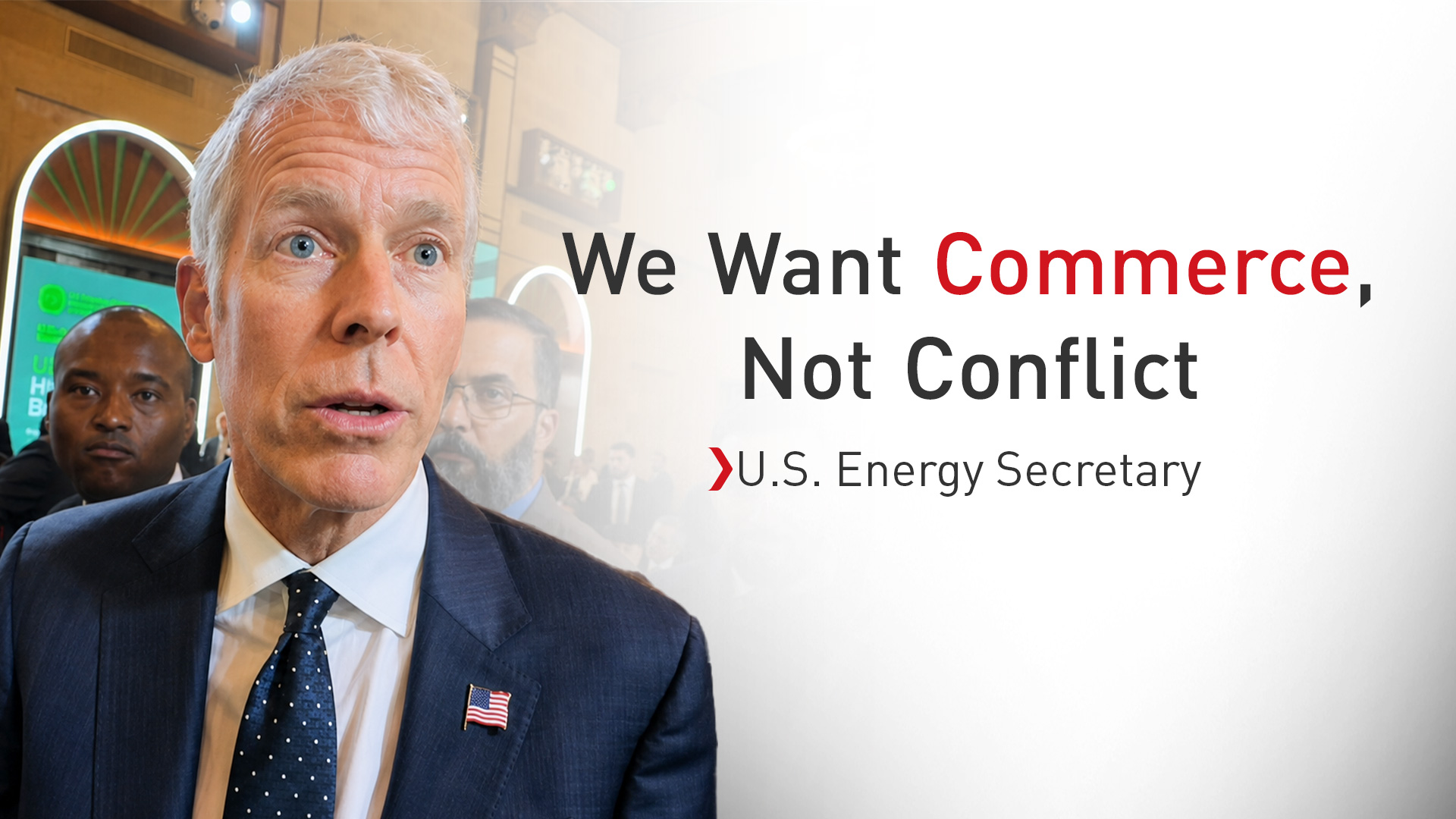
ERBIL (Kurdistan24) - U.S. Energy Secretary Chris Wright has cast the latest package of American-Iraqi agreements as evidence that Washington intends to build its relationship with Iraq around investment, trade and long-term economic cooperation, arguing that commercial partnerships, not regional confrontation, should define the future of U.S. engagement in the Middle East.
Speaking to Kurdistan24's Washington Burea Chief Rahim Rashidi ob Tuesday, Secretary Wright said the agreements signed between American companies and Iraqi partners extend across the country, including the Kurdistan Region, illustrating the breadth of a partnership designed to reach beyond traditional energy cooperation.
"Great day today," Wright said. "A number of business deals between the United States businesses in Iraq, from the north in Kurdistan to central Iraq to southern Iraq."
His remarks placed particular emphasis on the geographic scope of the agreements, portraying them as investments intended to support projects throughout Iraq rather than concentrating on a single region or sector.
That nationwide approach, he suggested, reflects an increasingly comprehensive economic relationship linking government institutions with private industry.
Wright also framed the agreements within a broader vision for U.S. policy in the region, arguing that economic opportunity provides a stronger foundation for lasting stability than continued confrontation.
"We want commerce, not conflict, in Iraq and throughout the Middle East. Prosperity for the people of Iraq, prosperity for the United States. It was a great day," he said.
The message came as Iraq's Prime Minister Ali al-Zaidi pursued an agenda in Washington focused largely on expanding commercial cooperation.
Iraqi officials have repeatedly presented the visit as part of a broader effort to strengthen economic ties with the United States, positioning investment and institutional cooperation alongside longstanding political and security relations.
Wright reinforced that objective by stressing that closer ties require engagement beyond diplomacy alone.
"We need a partnership at the political level and at the commercial level," he said, underscoring the importance of sustained cooperation between governments while encouraging deeper involvement by private-sector investors.
His comments coincided with the announcement that Iraqi and American public and private institutions had concluded 48 agreements and memorandums of understanding spanning a wide range of sectors.
According to Iraq's Prime Minister's Office, the package covers energy, electricity, telecommunications, technology, education, pharmaceuticals, agriculture and industrial development, reflecting Baghdad's effort to broaden its economic relationship with Washington beyond its historic focus on security cooperation.
Read More: Iraq, U.S. Sign 48 Agreements as Iraqi PM Advances Broad Economic Agenda
Energy remains at the heart of that partnership, with agreements involving major international companies supporting Iraq's plans to expand production, modernize infrastructure and strengthen long-term energy security.
At the same time, the breadth of the newly signed agreements signals an effort to diversify economic cooperation by encouraging investment in emerging industries and strategic infrastructure.
That broader agenda is also evident in Iraq's growing emphasis on digital transformation.
Among the agreements announced during the Washington visit was cooperation involving Starlink, complementing parallel discussions in the Kurdistan Region, where SpaceX is completing regulatory procedures for the possible launch of its satellite internet service.
Read More: SpaceX Moves Closer to Launching Starlink in the Kurdistan Region
Kurdistan Regional Government officials have described the licensing process as part of a wider strategy to modernize telecommunications infrastructure while ensuring compliance with local legal and technical standards.
The evolving partnership also extends into financial governance.
During his Washington visit, al-Zaidi described a new understanding between the Central Bank of Iraq and the U.S. Treasury Department as another milestone in Iraq's reform program.
Iraqi officials say the initiative supports banking modernization, strengthens regulatory standards and improves the conditions needed to attract sustained international investment by enhancing confidence in the country's financial institutions.
Read More: CBI-U.S. Treasury Understanding Signals New Phase in Iraq's Financial Modernization
Taken together, the agreements signed in Washington, planned digital infrastructure projects and continuing financial reforms point to an increasingly multidimensional relationship between Baghdad and Washington.
While energy continues to anchor bilateral cooperation, both governments are placing greater emphasis on technology, finance, communications and private-sector investment as pillars of long-term economic development.
Against that backdrop, Wright's remarks offered a concise summary of the direction U.S. officials say they hope to pursue.
By emphasizing trade over confrontation and highlighting projects stretching from the Kurdistan Region to southern Iraq, he portrayed the latest agreements not simply as individual commercial transactions, but as part of a broader effort to strengthen economic ties capable of supporting prosperity and deeper institutional cooperation between the two countries.
|
Summary U.S. Energy Secretary Chris Wright said newly signed agreements spanning the Kurdistan Region and the rest of Iraq reflect Washington's focus on trade, energy and investment. The broader package, alongside banking reforms and digital projects, highlights expanding U.S.-Iraq economic cooperation. |