Kirkuk, other territories no longer ‘disputed’, but part of Iraq: Militia leader
A Shia militia leader on Monday stated that Kirkuk and other disputed regions are no longer called ‘disputed territories’ but an essential part of Iraq.
ERBIL (Kurdistan 24) – A Shia militia leader on Monday stated that Kirkuk and other disputed regions are no longer called ‘disputed territories’ but an essential part of Iraq.
Disputed territories remain one of the key issues between the Federal government of Iraq and the Kurdistan Regional Government (KRG), including land stretching from the border of Iran to Syria, such as the towns of Khanaqin and Sinjar (Shingal) and the province of Kirkuk.
“Be sure that there is no way to divide Iraq again as long as Iraqis stay true to their love of this homeland,” said Qais al-Khazali, leader of Asaib Ahl al-Haq, an Iran-sponsored militia operating in Iraq within the Hashd al-Shaabi forces, also known as the Popular Mobilization Forces (PMF).
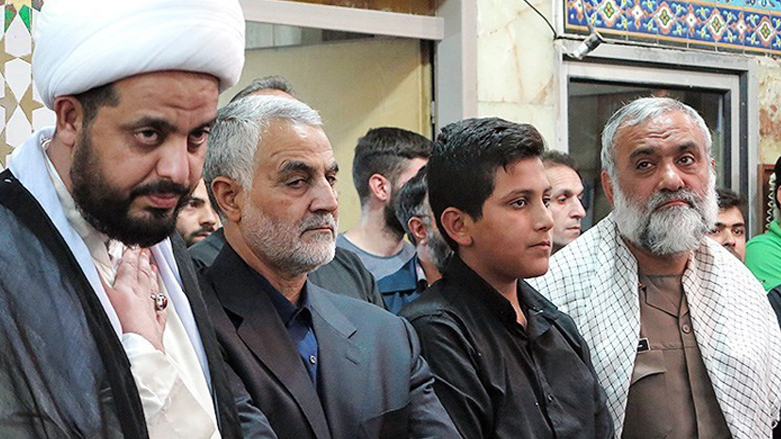
Khazali’s speech came during his participation in an electoral campaign while standing next to former Iraqi Transport Minister Hadi al-Amri, one of the most popular and powerful leaders of the Hashd al-Shaabi and one who maintains close ties to Iran.
Iraqi forces and the militias attacked and took over Kirkuk and other disputed territories on Oct. 16, driving Kurdish Peshmerga from them.
“Kirkuk and all the other regions which have been called 'disputed territories,' will remain an essential part of Iraq,” Khazali said, directing his message to the Kurds.
Many Iraqi officials and Shia militia leaders use the term “separatists” refer it to Kurds, especially after the last year’s September referendum on independence in the Kurdistan Region in which 93 percent of those who voted favored future secession from Iraq. Many disputed territories were also included in the vote.
Several officials in Baghdad contend that Article 140 of the Iraqi Constitution, which provides a legal mechanism for resolving the outcome of the disputed territories, is outdated. However, for the Kurds, the article is considered still in force.
According to the article, the future of Kirkuk and other disputed regions were to be decided in three stages.
The article sets out a normalization process, part of which is the return of the indigenous people to their areas, including those forcefully transferred in the systematic Arabization campaign carried out by the former government of Iraq. The next step would be a local referendum to determine whether a majority of the populations in the areas want to be under the federal government of Iraq or the KRG.
The deadline for the implementation of the article was Dec. 2007, but due to political differences between Erbil and Baghdad, it has yet to come to fruition.
Editing by John J. Catherine