Kurdistan puts moratorium on tomato imports amid backlash from local farmers
The Kurdistan Region’s Ministry of Agriculture will halt tomato imports as of September following strong concerns raised by local farmers about governmental policies failing to protect local producers.
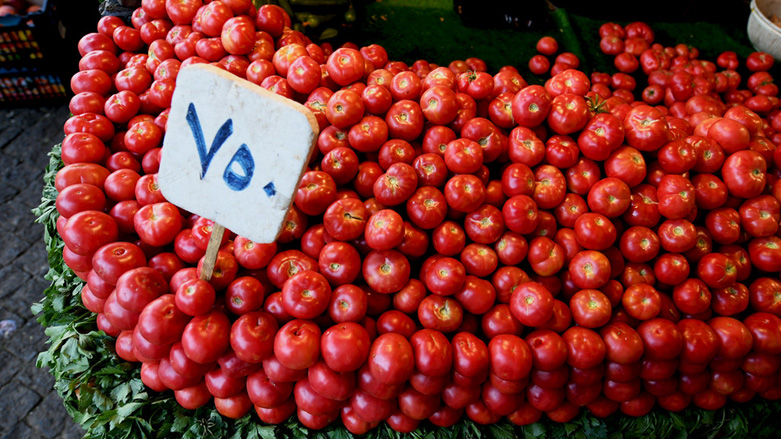
ERBIL (Kurdistan 24) – The Kurdistan Region’s Ministry of Agriculture will halt tomato imports as of September following strong concerns raised by local farmers about governmental policies failing to protect local producers.
The decision will be effective starting from Sep. 1, the ministry’s spokesperson, Hussein Hama-Karim, told reporters in Erbil.
“A decision was made to protect homegrown products from the competition of imported tomatoes,” he said, adding the policy would remain in effect as long as local tomato production is able to fulfill the needs of domestic consumers.
“Should the availability of locally-produced tomatoes decrease and prices rise, we will take measures to ensure the rights of consumers are also protected.”
His comments came days after several videos circulating on Kurdish social media networks showed local farmers disappointingly dumping tons of their inventory — tomatoes, cucumbers, etc. — because of aggressively low market prices that barely cover the cost of production.
Farmers in the past few years have repeatedly called on the KRG to block the flow of foreign products that are already produced or grown at home into the Kurdistan Region, and argue they are capable of fulfilling the needs of the domestic demand.
The spokesperson also noted that the ministry might issue similar decisions regarding the import of other agricultural products, permanently throughout the year, should the consumers’ needs be fulfilled by local producers.
He mentioned that the ministry is planning to industrialize the sector in the future, helping open local factories, for example, to maximize any high-yield production and maintain a surplus to benefit the farmers.
The Kurdistan Region’s geography offers arable lands and ample agricultural opportunities, according to local economists.
Editing by Nadia Riva