Syrian-Kurdish-led administration extends partial curfew in northeast Syria
The Kurdish-led Autonomous Administration of North and East Syria (AANES) on Sunday imposed a partial curfew on all areas of northeast Syria for 15 days starting from Nov. 9 to curb the recent spread of COVID-19 in the region.
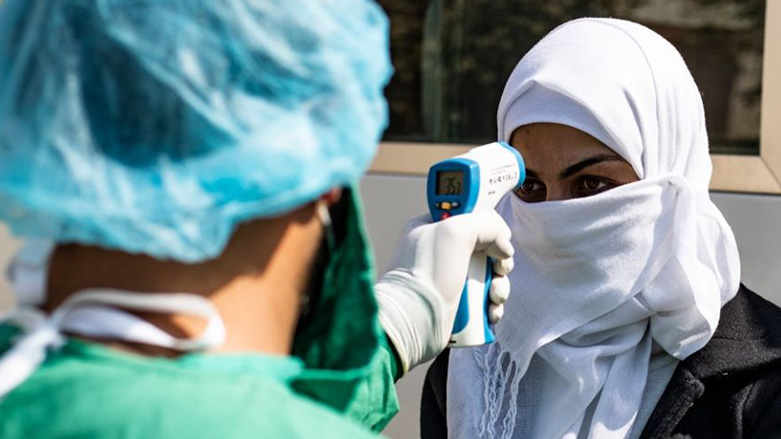
ERBIL (Kurdistan 24) – The Kurdish-led Autonomous Administration of North and East Syria (AANES) on Sunday imposed a partial curfew on all areas of northeast Syria for 15 days starting from Nov. 9 to curb the recent spread of COVID-19 in the region.
“All major markets (bazaars, Friday market, Sunday market, and others) are closed during the period of the curfew, except shops and stores selling food and vegetables, provided that they are closed at three in the afternoon, and restaurants are limited to take-out orders,” the new ruling from the Executive Council of North and East Syria said.
Moreover, all places of worship are closed except for Friday prayers and Sunday mass, with all necessary preventive measures taken. The AANES also banned all major gatherings, which include wedding halls, funeral tents, meetings, and conferences.
According to a humanitarian report by an international NGO, as of Nov. 3, there have been 4,978 confirmed cases of COVID-19 in northeast Syria in areas under the control of the Syrian Democratic Forces (SDF). “Of these, 4,087 are currently recorded as active, 758 have recovered, and there have been 133 deaths.”
Dr. Sherwan Berry, Co-chair of the Kurdish Red Crescent (KRC), told Kurdistan 24 that the situation is not critical yet. “We are prepared, but the biggest problem is the (lack) of awareness of the people.”
Thomas McClure, a Syria-based researcher at the Rojava Information Centre (RIC), told Kurdistan 24 that the number of COVID-19 cases is increasing in the northeast, but it is difficult to impose a full lockdown due to the bad economic situation in Syria.
“We are still seeing massive under testing. Although there are now thousands of cases that have been reported, the true figure is likely far higher, with many people who have symptoms,” he said.
Furthermore, many people who have symptoms do not go to the doctor nor seek medical attention because they fear the virus will spread and also due to locals’ need to continue to work to earn a living, he added.
“With local people needing to go to work so they can afford bread and daily essentials, [a total lockdown] is unfortunately not possible in the context of the present crisis.”
McClure noted that the lockdown is “an essential measure” as northeast Syria prepares for “several hard months ahead.”
Editing by Karzan Sulaivany and Khrush Najari