Putin Calls for Iran Nuclear Agreement, Warns Against Further Escalation
Russian president says continued confrontation would harm all sides as Moscow maintains ties with both Iran and Gulf states
ERBIL (Kurdistan 24) - Russian President Vladimir Putin said Saturday that Moscow hopes the ongoing confrontation surrounding Iran’s nuclear program and regional tensions will end as soon as possible, warning that further escalation would only deepen instability across the Middle East.
Speaking from the Kremlin following Russia’s Victory Day events on May 9, Putin said the conflict places Moscow in a difficult diplomatic position because Russia maintains close relations with both Iran and Gulf countries.
“It’s a Gulf conflict, and it’s also putting us in a difficult position because we have good relations with Iran and we have good, friendly relations with the Persian Gulf nations,” Putin said during the event.
Putin stressed that Russia remains in contact with all sides involved and believes no regional actor benefits from continued confrontation.
“I hope that this conflict will be brought to an end as soon as possible. I believe no one is interested in keeping this conflict going,” he added.
The Russian president also emphasized the need for a broader regional agreement capable of satisfying all parties involved, saying there are “several possible options” still available for diplomacy.
Putin referenced Russia’s role in the 2015 Iran nuclear agreement negotiations, arguing that Moscow had previously played a constructive role in helping facilitate understandings between Tehran and Western powers.
“We did that once in 2015,” Putin said, referring to earlier negotiations surrounding Iran’s nuclear program. “Iran trusted us fully because we had never broken any agreements.”
He also pointed to Russia’s continued civilian nuclear cooperation with Iran, including work related to the Bushehr nuclear facility, stressing that Moscow’s peaceful nuclear cooperation with Tehran remains ongoing despite current tensions.
According to Putin, one of the earlier proposals supported by Russia involved transferring Iranian uranium under international supervision, an idea that initially received broad support from the United States, Iran, and Israel before disagreements later emerged.
Putin claimed that Washington later hardened its position by demanding that uranium be transferred only to U.S. territory, after which Iran changed its own position and proposed alternative joint processing mechanisms inside Iran.
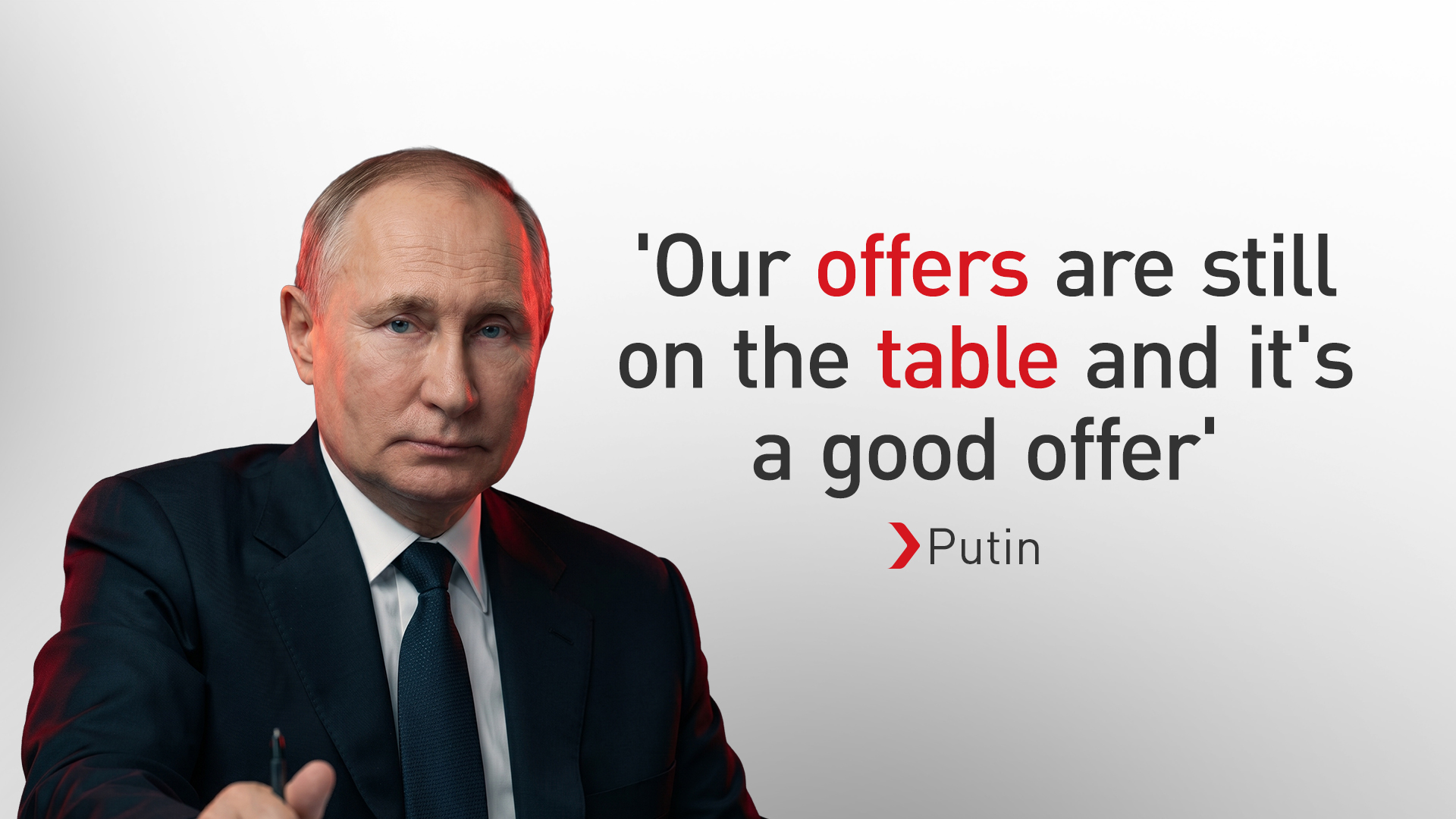
“Our offers are still on the table,” Putin said. “Our offer is good.”
Putin explained that Russia’s proposal for resolving the Iran nuclear dispute is based on reviving diplomatic mechanisms similar to those discussed during the 2015 nuclear agreement. According to him, Moscow proposed arrangements involving international oversight of Iran’s uranium activities, continued peaceful civilian nuclear cooperation, and compromise solutions acceptable to Iran, the United States, Israel, and Gulf countries. Putin said one earlier proposal involved transferring and supervising Iranian uranium under international frameworks, while a later Iranian proposal suggested joint uranium-processing cooperation inside Iran. He stressed that Russia’s offers “are still on the table” and argued that diplomacy remains possible if all sides seek de-escalation rather than confrontation.
The remarks come amid growing international efforts to prevent wider regional escalation following months of conflict involving the United States, Iran, Israel, and Iran-backed armed groups across the Middle East.
Russia has increasingly attempted to position itself as a potential mediator in regional diplomacy while simultaneously maintaining strategic relations with Tehran and Gulf states.
Putin’s comments also coincided with renewed discussion surrounding the war in Ukraine. During the same appearance, he said he believes the Ukraine conflict is approaching an end after more than four years of fighting.
“I think that the matter is coming to an end,” Putin told reporters regarding the war in Ukraine.
The Russian president’s remarks came after Russia held its annual Victory Day parade commemorating the Soviet Union’s victory in World War II. Observers noted this year’s ceremony appeared more limited than in previous years amid the prolonged war in Ukraine and continued military and economic pressure on Moscow.
Putin’s statements on both Iran and Ukraine reflect Russia’s broader effort to present itself as both a military power and a diplomatic actor during a period of expanding geopolitical instability stretching from Eastern Europe to the Middle East.