Iran Vows Stronger Retaliation as Israeli Strikes Deepen, Killing Dozens and Crippling Key Facilities
“The continuation of Zionist aggression will be met with a more severe and powerful response from the Iranian armed forces,” Iranian President Masoud Pezeshkian warned.
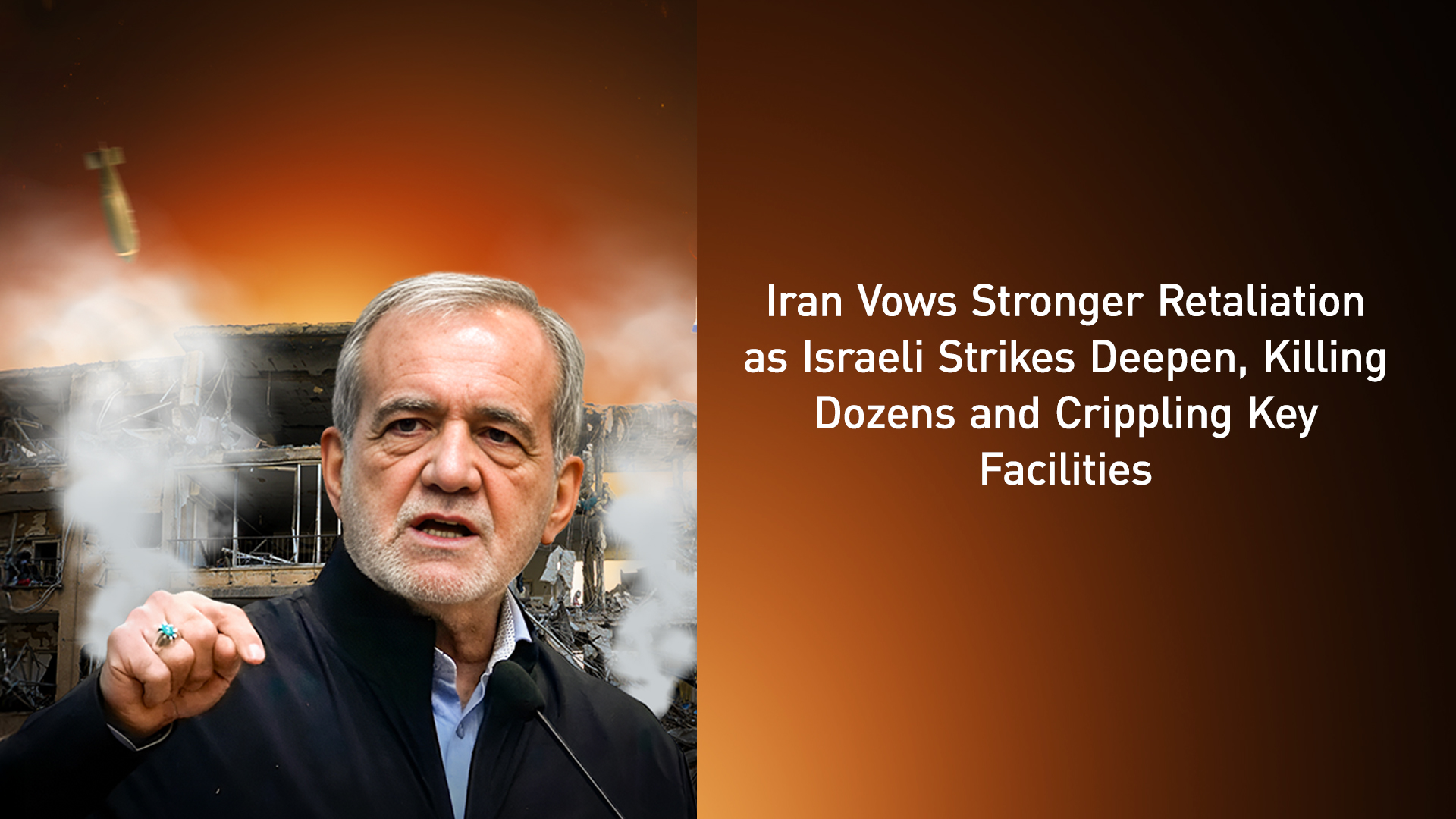
ERBIL (Kurdistan24) — Iranian President Masoud Pezeshkian warned on Saturday that any continuation of Israeli aggression would prompt a "more severe and powerful response" from Iran's armed forces, amid escalating hostilities between the two regional powers.
According to AFP, Pezeshkian made the remarks during a phone call with Pakistani Prime Minister Shehbaz Sharif, saying, “The continuation of Zionist aggression will be met with a more severe and powerful response from the Iranian armed forces.”
The warning came just hours after a deadly Israeli air campaign continued into its second day. Per AFP, the Iranian news agency Tasnim reported that three members of the Islamic Revolutionary Guard Corps (IRGC) were killed in Iran’s northwest. “In a brutal attack by the Zionist regime, three proud and courageous Guard members of Zanjan province... were martyred,” Tasnim said, identifying the victims as Hamid Toomari, Akbar Azizi, and Amir Khani.
According to the Associated Press (AP), Israel warned of more attacks on Saturday, following Iran’s overnight retaliatory strikes that left three people dead and dozens wounded in Israel. The Israeli campaign, dubbed Operation “Rising Lion,” began Friday with a series of precision strikes targeting Iran’s nuclear program and military assets.
The AP reports that Israel deployed warplanes and drones—some allegedly smuggled into Iran in advance—to hit nuclear sites, missile facilities, and senior military officials. Iran’s UN ambassador said the attacks killed 78 people and injured over 320. Among the dead were more than 20 senior Iranian commanders, including top intelligence and missile officials, according to Israeli military sources.
Israeli army spokesperson Effie Defrin described the operation as the “deepest ever carried out by the Israeli Air Force,” claiming that “the road to Tehran is now open.” The Israeli military said over 400 targets were hit within a 24-hour period, including dozens of missile bases and air defense systems in and around Tehran.
The offensive also caused significant damage to Iran’s Natanz nuclear facility, according to satellite imagery analyzed by AP. The images, captured Saturday by Planet Labs PBC, show multiple structures—reportedly including the site’s power supply systems—either damaged or destroyed. While the enrichment halls beneath ground appear to remain intact, experts say they may now be without electricity, crippling Iran’s uranium enrichment capabilities. Natanz had been enriching uranium to 60% purity, close to weapons-grade levels.
Israel insists the strikes were necessary to prevent Iran from getting closer to building an atomic weapon. Meanwhile, international leaders have begun calling for calm. British Prime Minister Keir Starmer and Saudi Crown Prince Mohammed bin Salman held a phone call on Saturday, according to Downing Street. “They discussed the gravely concerning situation in the Middle East and agreed on the need to de-escalate,” the statement said. The UK also expressed readiness to work with allies to pursue a diplomatic resolution.
Kurdistan24 English will continue to provide instant coverage and up-to-date news on developments in the ongoing conflict between Israel and Iran.