Sardasht’s Beyt and Heyran Festival Marks Its 11th Year as Cross-Border Cultural Bridge
In Eastern Kurdistan, Sardasht’s 11th Beyt and Heyran Festival concluded with 226 works from 20 provinces and contributions from artists of diverse ethnic backgrounds, celebrating authentic music and cultural unity.
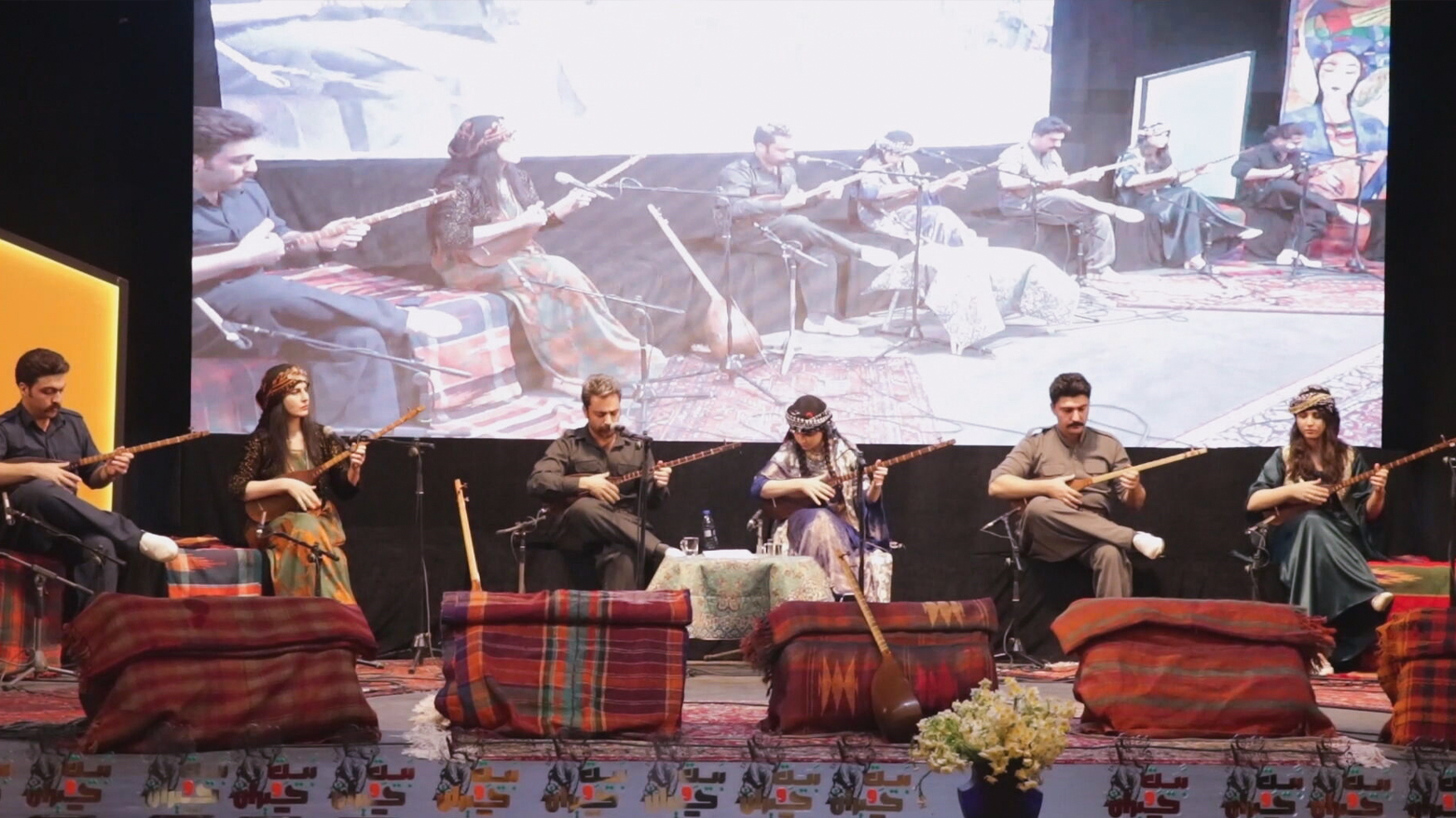
ERBIL (Kurdistan24) – In the mountainous heart of Eastern Kurdistan, the city of Sardasht has once again asserted itself as a vibrant epicenter of cultural preservation and artistic dialogue, concluding a landmark event that transcended the traditional boundaries of local folklore. The 11th edition of the Beyt and Heyran Festival came to a triumphant close this week, marking a significant evolution in the history of the gathering by transforming from a purely regional showcase into a sprawling, multi-ethnic celebration of authentic heritage.
For the first time in its decade-long history, the festival expanded its horizons to include the participation of artists from various ethnic nations across Iran, creating a unique platform where the diverse sonic landscapes of the region converged in a display of unity and artistic excellence.
The event, which drew hundreds of participants and thousands of spectators, highlighted the enduring power of traditional music to serve as a bridge between communities, culminating in an awards ceremony that recognized the mastery of musicians who have dedicated their lives to keeping these ancient auditory traditions alive.
The scale of this year's festival was unprecedented, reflecting a growing enthusiasm for the preservation of oral history and musical lineage. Organizers reported a massive influx of interest, with a total of 406 works submitted for consideration by the festival's selection committee.
From this vast pool of talent, 226 works were meticulously selected for participation in both the competitive and sideline sections of the event. These entries represented a staggering geographical spread, hailing from 20 different provinces across Iran and Eastern Kurdistan.
This wide-ranging participation ensured that the festival was not merely a local echo chamber but a true representation of the diverse cultural mosaic that defines the broader region.
By gathering the authentic voices, sights, and cultures of diverse nations under one roof, the festival succeeded in creating a rare environment where the distinct dialects, costumes, and melodies of different communities could be appreciated side-by-side.
The competitive nature of the festival was fierce, underpinned by a rigorous evaluation process that participants described as academically exacting. Farhad Mahmoudzadeh, a participant who experienced the scrutiny of the judges firsthand, offered a glowing assessment of the standards maintained throughout the event.
Speaking to Kurdistan24, Mahmoudzadeh emphasized the high caliber of the adjudication, noting that the competence and expertise of the evaluation committee members were at a level that demanded absolute excellence from the performers.
He drew a powerful parallel between the artistic validation received at the festival and formal higher education, stating his belief that anyone who achieves a rank in this festival is effectively obtaining a distinction comparable to a high academic degree from a university.
This sentiment underscores the seriousness with which the artists approach the genres of Beyt and Heyran, viewing them not as casual folk pastimes but as complex disciplines requiring mastery and deep knowledge.
Mahmoudzadeh further expressed his optimism regarding the trajectory of such activities, suggesting that with continued prioritization, this festival has the potential to expand even further and establish itself as a truly international event.
The festival’s distinct atmosphere was defined by the visible and audible diversity of its attendees.
Participants from various regions of Kurdistan and beyond viewed the gathering as a vital opportunity to introduce their specific local art forms and unique instruments to a wider audience. For many, the stage in Sardasht served as a bridge of connection, linking isolated artistic communities through a shared appreciation for heritage.
Osman Sadeghi, a participant competing in the Lawk section—a traditional form of Kurdish melodic storytelling—traveled from the Qasimlu district of Urmia to share his craft. Sadeghi highlighted the visual splendor that accompanied the musical performances, expressing pride in the fact that all artists participated in the festival wearing their own authentic costumes and performing in their specific local dialects.
This adherence to authenticity turned the festival into a living museum of cultural identity, where every performance was a testament to the survival and vibrancy of regional traditions.
The artistic success of the event was also attributed to the careful curation and management by the organizers.
Dunya Kakayi, a musician who took part in the activities, described the event as beautiful and impactful, noting that the touch of the supervisors and artists was evident in every detail of the production. She emphasized that the efforts and work of those behind the scenes were worthy of high praise, acknowledging that creating such a cohesive environment from such diverse elements required significant dedication.
Similarly, Shahin Fattahi, a skilled player of the Divan instrument who traveled from Javanrud in Kermanshah to participate, noted the dual purpose of the gathering. For Fattahi, the festival was a crucial platform to introduce unique talents and instruments that might otherwise remain obscure, but it was also a deeply social activity. He described the event as a valuable space to meet new artists, friends, and loved ones, reinforcing the idea that the preservation of culture is intrinsically linked to the strengthening of community bonds.
A defining feature of this 11th edition was its inclusivity regarding the non-Kurdish nations of Iran, a move that fostered a spirit of cross-cultural appreciation.
The presence of artists from other ethnic backgrounds provided a fresh perspective on the region's artistic output. Ghafoor Amanian, a Turkmen artist who traveled from Golestan Province to participate, offered a warm validation of the host culture.
Speaking to Kurdistan24, Amanian stated unequivocally that Kurdish music is authentic music. He reflected on his experience watching the group performances, noting that it became evident to him just how authentic and truly beautiful the music of the region is.
This interaction between a Turkmen artist and Kurdish cultural expression exemplifies the festival's success in breaking down cultural silos and fostering mutual respect through the universal language of art.
The culmination of the festival saw the distribution of awards to those who had demonstrated exceptional skill in their respective categories.
The winners' list was a testament to the variety of musical forms celebrated in Sardasht. In the category of musical groups, seven distinct ensembles secured the top honors of first, second, and third places, recognized for their collective harmony and performance dynamics.
The individual categories were equally competitive, celebrating mastery over specific traditional instruments and vocal styles. Among Tanbur players, five individuals were awarded for their dexterity and expression.
The Dutar, another traditional string instrument, saw five virtuosos recognized for their performances. The rhythm section was well-represented, with four Drum (Tapl) players and six Daf players achieving ranks for their percussion skills. Furthermore, four Oud players were honored for their melodic contributions.
Finally, the vocal heart of the festival—the singers who carry the stories and emotions of the Beyt and Heyran traditions—saw seven individuals achieve first, second, and third places, cementing their status as the voices of their generation.
As the curtains fell on the 11th Beyt and Heyran Festival, the sentiment in Sardasht was one of accomplishment and forward-looking ambition. By successfully integrating artists from 20 provinces and opening its doors to various nations, the festival has established a new benchmark for cultural events in Eastern Kurdistan.
The validation felt by participants like Mahmoudzadeh, the pride expressed by Sadeghi, and the cross-cultural bridges built by artists like Amanian suggest that Sardasht is not merely preserving the past, but actively curating a future where traditional music remains a vital, evolving, and unifying force in the region.