DEM Party Spokesperson Criticizes Lack of Progress in Turkey–Kurdish Peace Efforts
In an interview with Kurdistan24 correspondent Murat Akinci, Dogan said the prolonged slowdown has deepened public uncertainty and concern.
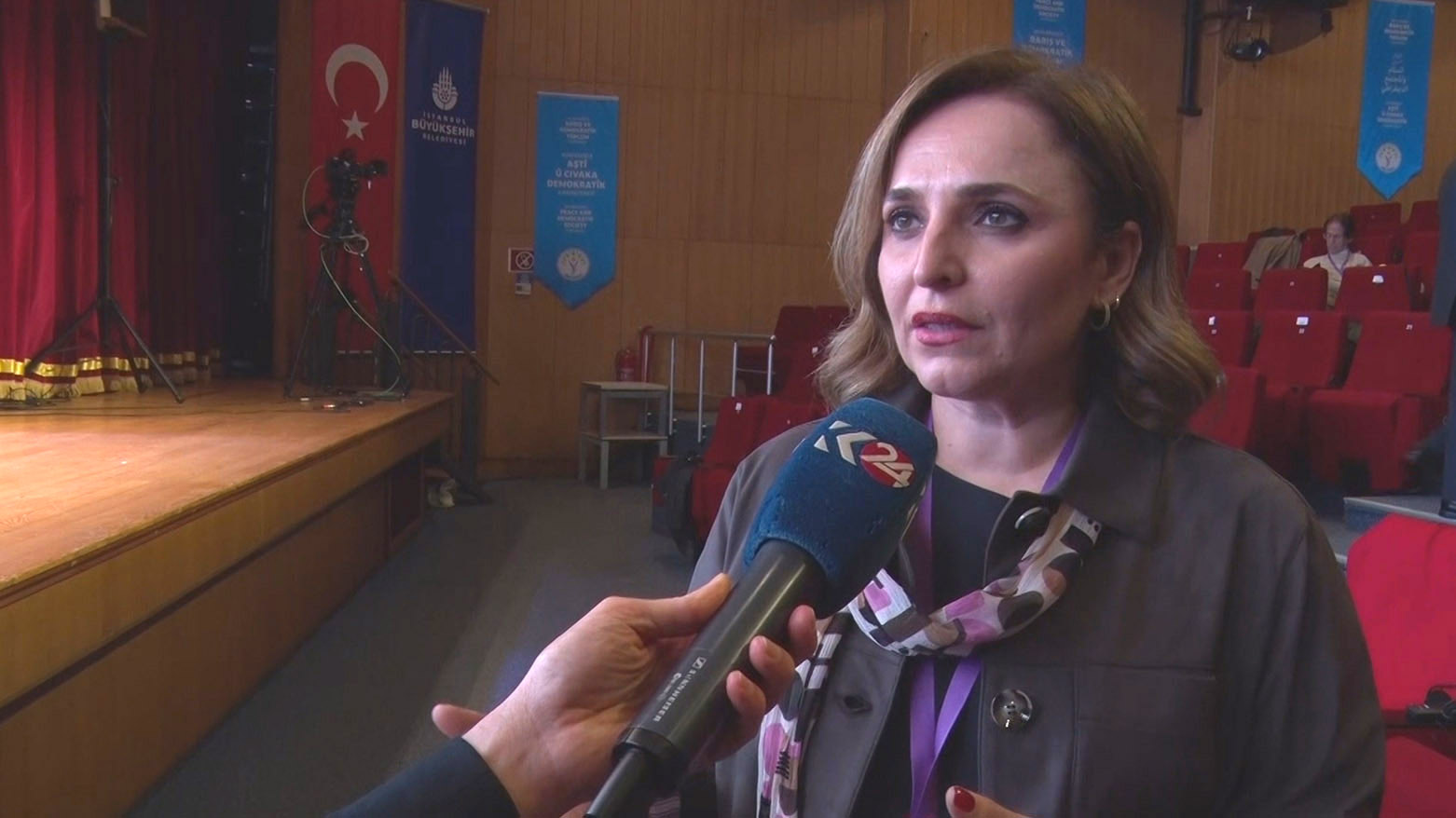
ERBIL (Kurdistan24) – Peoples' Equality and Democracy Party (DEM Party) spokesperson Aysegul Dogan on Monday accused the Turkish government of stalling the latest phase of peace efforts, saying no concrete legal steps have been taken to address the Kurdish issue despite a year having passed since the process began.
In an interview with Kurdistan24 correspondent Murat Akinci, Dogan said the prolonged slowdown has deepened public uncertainty and concern. She stressed that meaningful progress is impossible without legal reforms and official recognition of the identities, beliefs, and languages of Turkey’s diverse communities.
Former Justice and Development Party (AK Party) MP Ahmet Faruk Unsal also weighed in, arguing that the current initiative is fundamentally a state-led project, with the Nationalist Movement Party (MHP) playing a central role. According to Unsal, the AK Party and MHP have adopted complementary positions, with the MHP tasked with managing potential backlash from nationalist constituencies.
Political observers in North Kurdistan (southeastern Turkey) note that despite PKK leader Abdullah Ocalan’s February 27 call for the group to shift from armed struggle to political and civil engagement, the government has made no institutional moves—such as forming a commission or oversight mechanism—to support a viable peace framework.
The new phase between Ankara and Kurdish representatives was triggered in October 2024, when MHP leader Devlet Bahceli publicly called for Ocalan to appear in parliament. Shortly afterwards, Ocalan’s niece and member of the Turkish parliament, Omer Ocalan, was allowed to visit Imrali Island for the first time in 43 months, ending a prolonged period of isolation. While several indirect meetings have taken place since then, the lack of substantive actions—such as releasing political detainees or advancing constitutional reforms—has eroded confidence in the process.
Analysts say the absence of tangible progress risks undermining public hopes for long-term political resolution and casting doubt on the government’s commitment to the initiative.