Brussels Hails KRG as ‘Exemplary Partner’ in Push for Formal Dialogue
KRG Coordinator Dr. Dindar Zebari met EU Envoy Kajsa Ollongren in Brussels, who praised the KRG as an "exemplary partner" and discussed a formal dialogue mechanism.
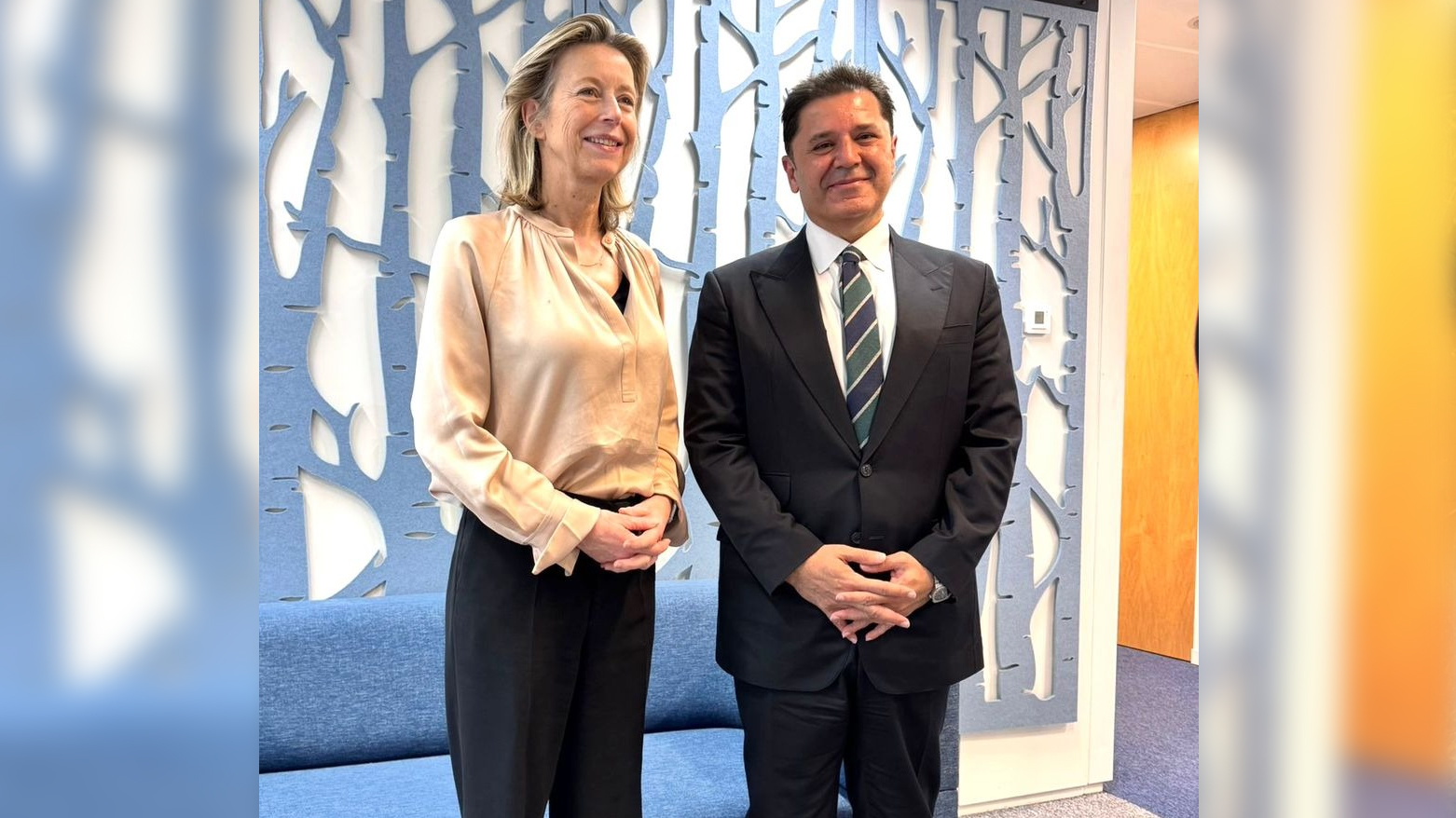
ERBIL (Kurdistan24) – In a significant diplomatic engagement that underscores the European Union’s deepening reliance on the Kurdistan Region as a linchpin of stability in the Middle East, high-level officials from the Kurdistan Regional Government (KRG) and the European External Action Service (EEAS) convened in Brussels on Tuesday to chart a new roadmap for cooperation.
The meeting, held at the EEAS headquarters, marked a pivotal moment in Erbil-Brussels relations, with EU officials explicitly recognizing the Kurdistan Region as an "exemplary and constructive partner" within the complex political landscape of Iraq.
The discussions, which were detailed in a press release issued on Wednesday by the KRG’s Office of Coordinator for International Advocacy, traversed a wide array of critical issues ranging from human rights advancements and women’s empowerment to the urgent security challenges posed by militia violence and energy infrastructure attacks.
Leading the Kurdish delegation was Dr. Dindar Zebari, the KRG’s Coordinator for International Advocacy, accompanied by Dr. Dilawar Ajgeiy, the KRG Representative to the European Union.
They were received by Kajsa Hildur Ollongren, the European Union’s Special Representative for Human Rights.
The atmosphere of the meeting was characterized by a mutual recognition of the strategic alignment between the two entities, particularly regarding the preservation of stability in a volatile region.
Ollongren opened the dialogue with a strong endorsement of the KRG’s recent political strides, formally congratulating the administration on the successful conduct of its parliamentary elections. This acknowledgment from a top EU official serves as a potent validation of the region’s democratic processes and its resilience in maintaining constitutional norms despite broader regional upheavals.
Furthermore, the EU Special Representative highlighted the constructive nature of the ongoing relationship between Erbil and the federal government in Baghdad.
Ollongren’s observations regarding these "strong and constructive efforts" suggest that Brussels views the KRG not merely as a regional actor, but as a stabilizing force essential to the cohesion of the Iraqi state.
She emphasized that the Kurdistan Region remains one of the most stable parts of Iraq, a status that she indicated makes it a prime candidate for expanded cooperation with the European bloc.
This sentiment laid the groundwork for a broader discussion on how to institutionalize this partnership through more formal mechanisms.
A central pillar of the meeting was a comprehensive review of the Kurdistan Region’s human rights portfolio.
Dr. Zebari presented a detailed account of the progress achieved under the current administration, offering concrete statistics that paint a picture of a society undergoing significant progressive transformation.
Addressing the critical issue of women’s empowerment, Dr. Zebari noted that the KRG has achieved notable benchmarks, including a parliamentary makeup where women hold over 30 percent of the seats.
Beyond the legislative branch, he highlighted the growing role of women in the judiciary and law enforcement, citing the appointment of more than 69 female judges and the recruitment of hundreds of women police officers.
These figures were presented alongside a discussion of the robust legislation enacted to protect women from domestic violence, underscoring a systemic commitment to gender equality that aligns with European values.
The dialogue also delved into the administration of justice and the protection of civil liberties. The KRG Coordinator underscored the government’s continued adherence to a moratorium on the death penalty, a policy stance that resonates deeply with European human rights standards.
Additionally, the conversation touched upon the region's pivotal role in the global fight for justice regarding the atrocities committed by the Islamic State (ISIS).
Dr. Zebari highlighted the KRG’s leading role in prosecuting ISIS members and its extensive cooperation with the United Nations Investigative Team to Promote Accountability for Crimes Committed by Da'esh/ISIL (UNITAD).
In a revelation of the scale of this cooperation, it was noted that the KRG has contributed nearly half a million pages of evidence to the UN body, a massive documentation effort that stands as a central commitment to ensuring accountability for genocide and crimes against humanity.
The plight of religious minorities formed another crucial component of the discussions. Dr. Zebari drew attention to the ongoing humanitarian crisis involving the Yazidi community, noting that the Kurdistan Region continues to host more than 102,000 Yazidis.
These displaced individuals remain unable to return to their ancestral homes in Sinjar due to persistent security conditions, a situation that highlights the KRG’s role as a sanctuary for vulnerable populations.
The persistence of this displacement was linked directly to the broader security challenges plaguing the disputed territories, where the interference of militant groups continues to obstruct the normalization of life for minority communities.
Transitioning to hard security and geopolitical threats, the meeting addressed the multifaceted dangers facing the region.
The agenda included a frank assessment of the ongoing drone and missile attacks orchestrated by "supporting actors," as well as the recent and destabilizing strikes on critical energy infrastructure in Khor Mor.
These incidents were framed not just as local security breaches but as threats to the economic stability of the wider region. Dr. Zebari outlined the KRG’s strategic responses to these threats, emphasizing the administration's concerted attempts to unify the Peshmerga forces into a cohesive national defense structure.
He also detailed efforts to strengthen border controls and enhance counter-terrorism operations, measures deemed essential to insulating the region from the chaos that often engulfs its neighbors.
In a point of particular relevance to European security interests, the KRG Coordinator raised the growing issue of psychotropic drug smuggling.
Dr. Zebari stressed that the KRG’s stability and its rigorous border measures contribute directly to regional and European security by acting as a bulwark against extremist infiltration and cross-border criminal activity.
By intercepting narcotics and preventing the movement of terrorists, the Kurdistan Region effectively serves as a forward line of defense for the European continent. This argument for the interdependence of Kurdish and European security appeared to resonate with the EU delegation, reinforcing the rationale for deeper engagement.
The meeting concluded with a forward-looking consensus on the need to elevate the bilateral relationship.
Special Representative Ollongren praised the KRG as an exemplary partner and identified numerous areas where the European External Action Service and the KRG could collaborate more closely.
Crucially, the EU Special Envoy expressed a strong interest in establishing a "more structured dialogue mechanism" between the EEAS and the KRG’s Office of Coordinator for International Advocacy.
This proposal for a structured mechanism represents a significant diplomatic maturation, moving the relationship from ad-hoc cooperation to a more institutionalized and regularized engagement.
To further this agenda, Ollongren welcomed the idea of a future visit to Erbil, a step that would physically reinforce the diplomatic bridges being built in Brussels.
The meeting ended with a mutual agreement to follow up on these discussions, signaling that this high-level encounter was not an isolated event but the beginning of an intensified phase of EU-KRG engagement focused on the pillars of human rights, governance, and regional stability.