KRG Publishes Detailed Report on Four-Phase Escalation Targeting Kurdistan’s Energy Lifelines
The KRG published a report detailing a four-phase escalation of attacks on Kurdistan's energy infrastructure from 2018-2025, culminating in a 2025 assault that cut gas output to zero and power generation by over 3,000 MW.
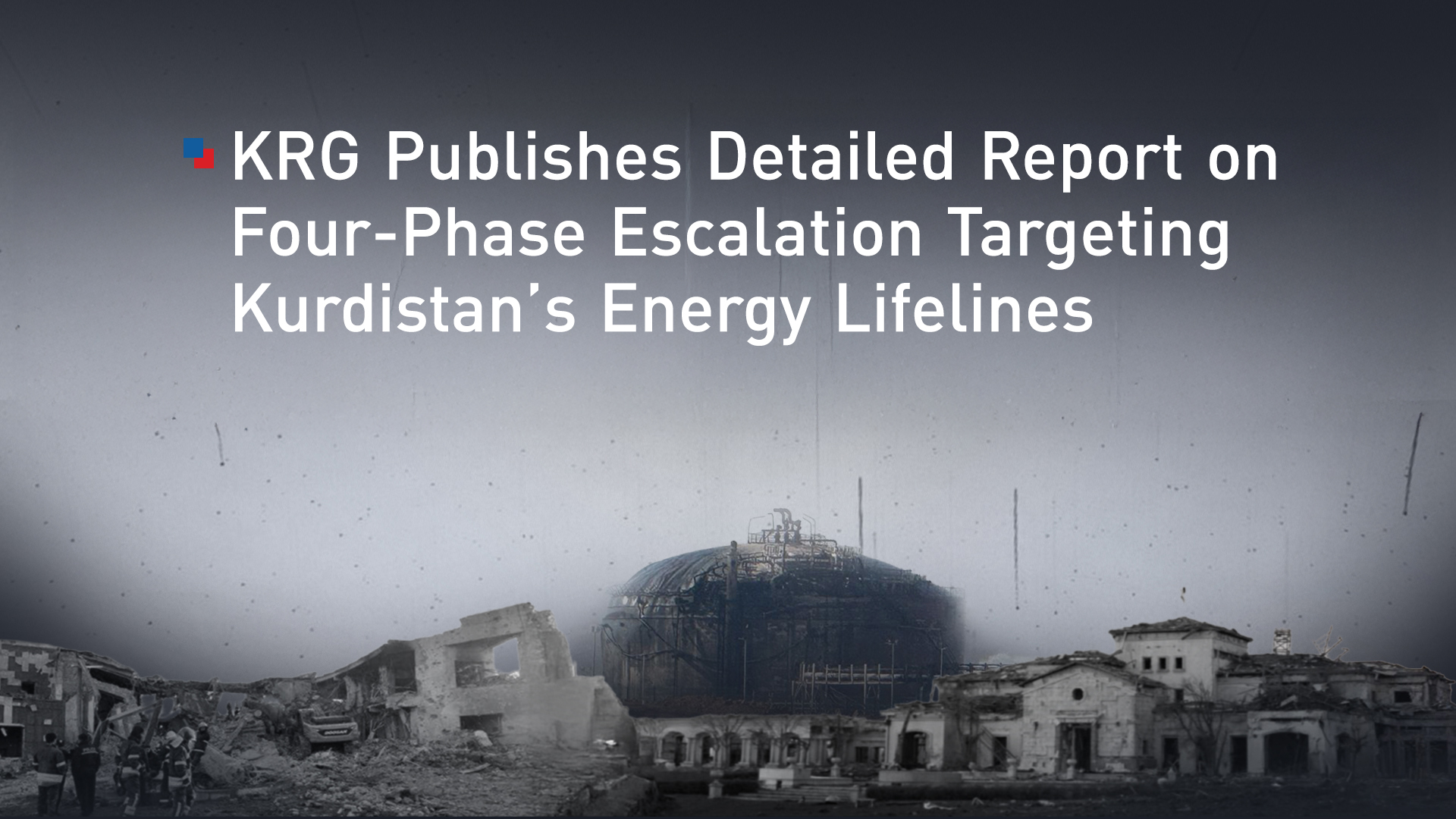
ERBIL (Kurdistan24) - The Kurdistan Regional Government’s Media and Information Directorate has released an extensive report titled “Targeting the Kurdistan Region’s Energy Infrastructure (2018–2025)”, exposing a chain of systematic and technologically advanced attacks that struck the Region’s economic and energy foundations, causing significant material losses and severe humanitarian impact.
According to the report, the nature of the attacks changed dramatically over the past seven years, passing through four increasingly dangerous phases that reshaped the threat facing the Kurdistan Region.
Phase One (2018–2021)
These early attacks were described as scattered and limited, carried out using Katyusha rockets with the aim of harassment and disruption rather than large-scale destruction.
Phase Two (2022)
A major shift occurred in 2022, when attackers directly targeted the homes and assets of key figures in the energy sector. The most notable incident was the bombardment of Sheikh Baz Karim Barzinji’s residence in February 2022 with twelve ballistic missiles. In April and May of the same year, the Kalk Refinery was also struck.
Phase Three (2023–2024)
The pattern escalated further, with attacks aimed at civilian life and operational energy facilities. The report highlights the killing of investor Peshraw Dizayee and members of his family in December 2024, alongside a drone strike on the Khor Mor field that caused the deaths of four foreign workers.
Phase Four (2025): The Most Dangerous Stage
The government identifies 2025 as the year in which the attacks aimed to cripple the Region’s entire oil and electricity sector.
July 2025 – Drone Swarm Attack:
A simultaneous strike targeted five oil fields—Khormala, Sar Sang, Peshkabur, Tawke, and Sheikhan—halting the production of 220,000 barrels of oil in a single day.
26 November 2025 – Strike on Kor Mor:
A precision attack hit the Shli Malkan LPG gas complex, inflicting severe damage.
The report includes a detailed comparison of energy production before and after the late-2025 attacks, revealing sharp declines:
-Gas production: dropped from 750 million cubic feet per day to zero.
-Electricity generation: fell from 4,200 MW to under 1,000 MW—an overall loss exceeding 3,000 MW.
-Power hours: previously 18–24 hours daily, the situation shifted to widespread blackouts across most areas.
-Geographical impact: darkness spread across all provinces of the Kurdistan Region, as well as Kirkuk and Nineveh.
-National grid supply: energy transmission from the Region to Iraq’s national network came to a complete stop.
These losses, the report notes, heavily affected daily life, industrial activity, and public services.
In closing, the Kurdistan Regional Government emphasizes that these attacks constitute a direct threat to national energy security and the broader environment of economic production across Iraq, far removed from any political interpretation. The report warns that protecting the Kurdistan Region’s energy infrastructure is essential to safeguarding stability and the well-being of communities across the entire country.