Zara Mgoyan Extends Her Kurdish Musical Journey with New Release “Heval”
Russian Kurdish artist Zara releases new Kurdish song “Heval,” extending her acclaimed multilingual career and reinforcing her cultural influence.
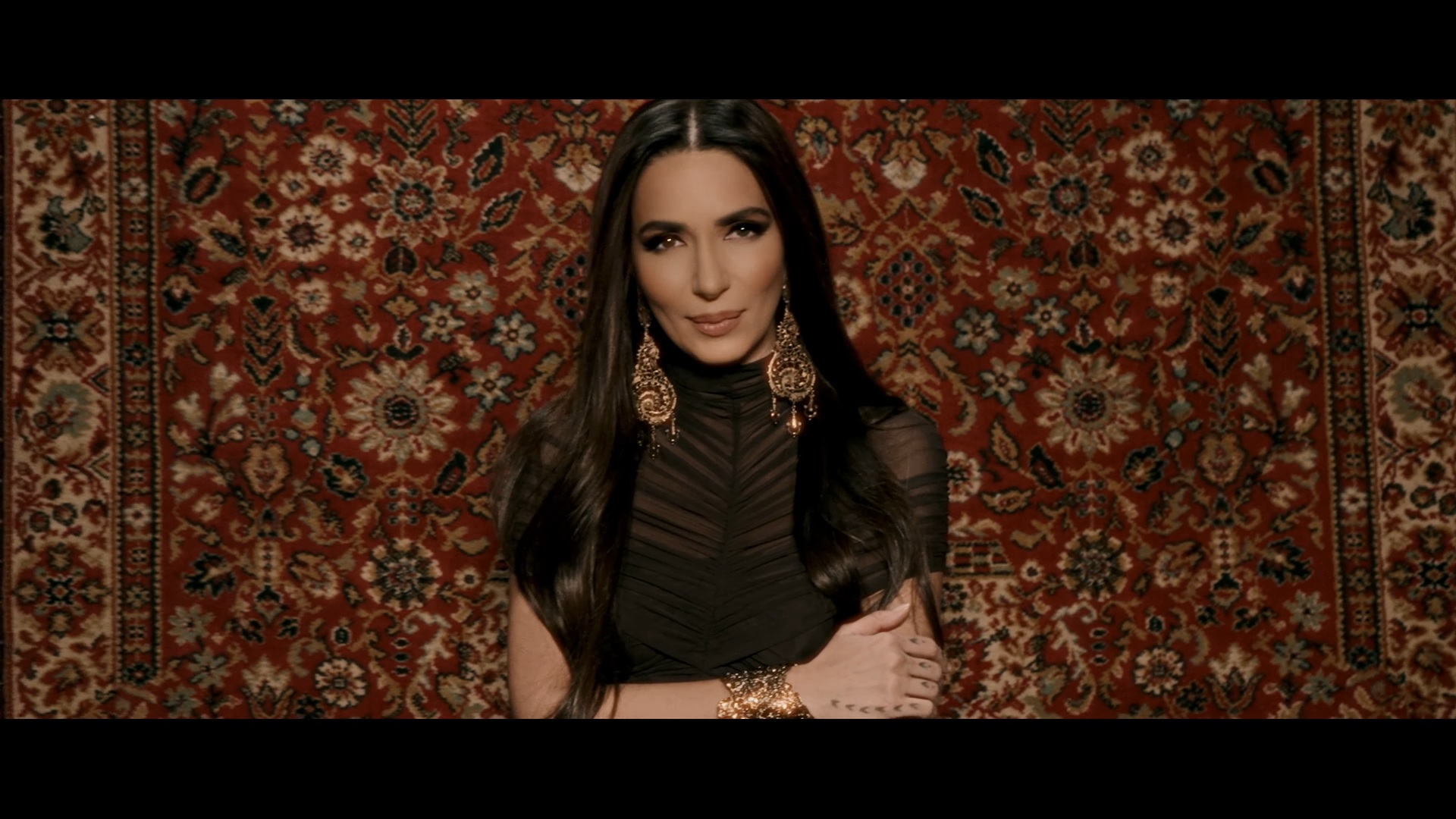
ERBIL (Kurdistan24) — Prominent Russian Kurdish female artist Zara Pashaevna Mgoyan, long celebrated for her multilingual repertoire and cultural reach, has released a new song in the Kurdish language titled “Heval” (Friend), reaffirming her sustained commitment to elevating Kurdish music on the international stage.
The release marks another chapter in a career distinguished not only by artistic versatility but by rare state-level recognition in Russia, where she remains the only Kurdish artist to have received some of the country’s highest cultural honors.
Zara announced that “Heval” features lyrics written by Yasmin Levy and Tara Mamedova, two artists widely respected for their contributions to contemporary world music.
The collaboration expands a pattern evident across Zara’s recent body of work, in which she has engaged closely with Kurdish and international artists to produce pieces that bridge languages, traditions, and audiences.
The new song follows the release of her first album two years ago, a landmark collection titled Klama Dilê Min (The Word of My Heart).
That album featured ten Kurdish-language tracks, including “Keça Kurdim,” “Emanê,” “Dayê,” “Ez Kevokim,” “Ez Berfim,” and “Keynê,” alongside prominent duets with leading Kurdish musicians.
Among these collaborations was “Welatê min,” performed with Şivan Perwer, one of the most influential figures in Kurdish music, as well as “Girê Sîra,” recorded with Tara Mamedova.
The album also included “Lê Lê Rihê” and “Newroz,” further highlighting Zara’s focus on culturally resonant themes and her aspiration to foreground Kurdish identity through a modern musical aesthetic.
Her new single underscores a continuing evolution in that direction. While Zara has built a career on singing in more than ten languages and cultivating an international fan base, her Kurdish repertoire has taken on increasing importance, particularly in recent years as she has dedicated more of her artistic work to the cultures and communities she represents.
“Heval,” in this respect, adds not only to her discography but to a broader body of work that has helped position her as a visible cultural bridge between Russian society and the global Kurdish diaspora.
Zara’s latest release arrives at a moment when her influence is both well-established and widely recognized.
Her place in contemporary Russian cultural life is marked by rare distinctions, including her designation as “Merited Artist of the Russian Federation,” awarded to her at a ceremony in the Kremlin Palace by President Vladimir Putin.
She remains the only Kurdish artist ever to receive this honor, a distinction rooted in what the Russian state has described as her service to the arts and her role in cultural enrichment.
This recognition did not emerge in isolation. One year ago, as part of her continued contributions to cultural diplomacy and artistic outreach, Zara was awarded the Order of Friendship Medal by President Putin.
The medal was presented to her at the Grand Kremlin Palace’s St. Catherine Hall by Sergey Kiriyenko, First Deputy Chief of Staff of the Presidential Executive Office.
In remarks shared after the ceremony, Zara expressed gratitude and pride, acknowledging the personal significance of receiving such an honor. She emphasized that the award reflected not only her creative achievements but her broader commitment to promoting understanding through artistic expression.
“Music has a universal language for me,” Zara said at the time, affirming a message that has defined both her public statements and her artistic practice. “My activities will always serve the unity of the people.”
The sentiment resonates across her multilingual repertoire, her humanitarian efforts, and her consistent emphasis on cultural harmony. Her longstanding engagement with themes of unity and mutual recognition has also shaped her public identity globally, drawing audiences beyond the Russian artistic sphere.
Such recognition builds on an extended trajectory of international acknowledgment. In 2017, she was named the most outstanding artist of the Russian Federation, also by presidential decree, reinforcing her status as a leading figure in Russia’s cultural landscape.
The year prior, UNESCO designated her a Peace Ambassador, a role that honored her charitable and humanitarian contributions and underscored her position as a voice for peace and interconnectedness.
Born in Leningrad during the Soviet era, Zara’s artistic roots draw on both Russian and Kurdish heritage, a dual foundation that has informed her approach to performance and cultural representation.
Her ability to sing in numerous languages has allowed her to reach audiences across continents, while her work in the Kurdish language has provided visibility to Kurdish cultural expression in venues where it had previously been less prominent.
Her recordings, concerts, and artistic collaborations have collectively made her an informal ambassador of Kurdish music, connecting global listeners to a repertoire shaped by resilience, memory, and evolving artistic traditions.
The release of “Heval” extends this mission. While the song stands on its own as a contemporary Kurdish-language work, its context within Zara’s broader catalog situates it as part of a sustained and deliberate engagement with her heritage.
It follows an album that showcased the depth of her connection to Kurdish music and the strength of her partnerships with Kurdish artists. The involvement of Yasmin Levy and Tara Mamedova continues a pattern of collaborative creation that blends individual influences with shared cultural narratives.
For Zara’s global audience, the new song reinforces her reputation as an artist willing to explore diverse musical landscapes while deepening the cultural foundations of her work.
For Kurdish listeners, it offers another contribution from a musician whose achievements have brought unprecedented visibility to Kurdish artistry within major institutions of Russian cultural and political life.
As she releases “Heval,” Zara stands at a point where her artistic trajectory, international recognition, and cultural advocacy converge.
Her Kurdish-language projects continue to grow, shaped by collaborations that draw from both Kurdish and global artistic traditions. Her honors in Russia attest to the scale of her influence and the respect she commands across multiple cultural domains. And her ongoing commitment to unity and intercultural dialogue underscores the purpose that ties her diverse body of work together.
“Heval” represents a continuation of that purpose — a new entry in a career built on bridging worlds, celebrating heritage, and expanding the reach of Kurdish music on the international stage.