BCF Moves Quickly to Restore Homes and Comfort After Chamchamal Floods
The Barzani Charity Foundation (BCF) launched a 3-stage aid plan in flood-hit Chamchamal, clearing mud, providing hot meals, and distributing heaters and fuel.
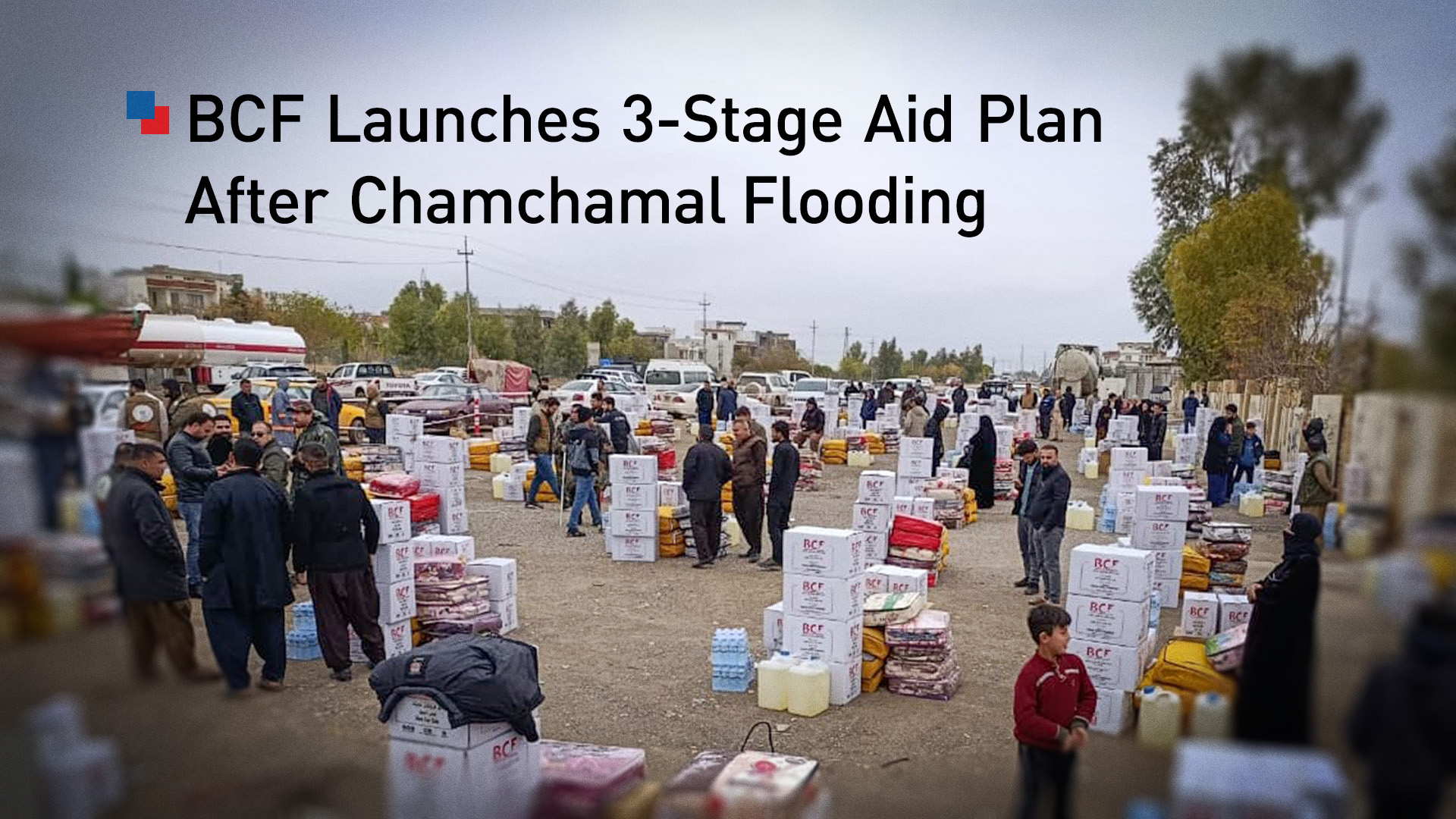
ERBIL (Kurdistan24) – In the immediate and freezing aftermath of the recent floods that has upended life across the district of Chamchamal, the Barzani Charity Foundation (BCF) has mobilized a comprehensive, three-tiered humanitarian intervention designed to stabilize a population left reeling by flash floods.
Amid the anxiety caused by the devastation of nature, the foundation has positioned itself as a critical umbrella for protecting the afflicted, launching a wide-ranging campaign that seeks not merely to clear debris, but to systematically "heal the wounds" of Chamchamal and its surrounding sub-districts.
The operation, which addresses everything from the physical removal of toxic sludge to the provision of heating fuel, represents a desperate race against time as the harsh winter season descends upon families whose homes have been rendered uninhabitable by the water.
The crisis in Chamchamal is the result of a convergence of geographical vulnerability and what observers have described as "angry nature."
The town and its environs recently faced a potent wave of rainfall that overwhelmed local infrastructure, triggering a damaging flood that rushed with little warning into the residential heartlands. The sub-districts of Takiya and Shorish were hit with particular ferocity.
In these areas, the floodwaters breached the sanctity of the home, surging into courtyards and living rooms, destroying household furniture, and leaving behind deep deposits of mud and sludge.
This environmental assault has created a dire humanitarian situation; the destruction comes precisely as the region transitions into its coldest months, making the prospect of staying in wet, unheated structures not just difficult, but physically dangerous for the displaced residents.
Recognizing the multifaceted nature of the catastrophe, the Barzani Charity Foundation has eschewed a simple handout approach in favor of a structured, three-stage operational plan aimed at restoring life and hope.
The first stage of this campaign has already commenced with intensive fieldwork. Teams from the foundation have shouldered the arduous physical task of cleaning up the debris and muck that the floodwaters deposited within private residences.
This phase is critical for public health and safety, as the removal of sludge is a prerequisite for any return to normalcy. By clearing the living environments of the families, the BCF is attempting to reclaim the physical space of the home from the ravages of the storm.
Following the initial cleanup, the foundation has immediately pivoted to the second stage of its plan: ensuring food security for a population that has lost access to kitchens and food stocks.
Understanding that the flood has disrupted the daily rhythms of life, the BCF has established a protocol to prepare and distribute several hot meals daily to the affected families.
This measure serves a dual purpose. Physiologically, it provides necessary nutrition in a cold environment; psychologically, it offers a reassurance of support, ensuring that even in this temporary and chaotic situation, the victims do not feel alone or abandoned by their community.
However, it is the third and final stage of the operation that Rebwar Mohieddin, the head of the Kirkuk office of the Barzani Charity Foundation, describes as the most important part of the process.
According to information provided by Mohieddin, the plan extends far beyond immediate relief into the realm of material restitution and comfort.
Once the emergency teams have successfully recorded the volume of damages through rigorous surveys and assessments, the foundation will begin a targeted program of material compensation. This phase addresses the loss of essential assets that make a house a home.
The BCF prepares to distribute a lifeline of essential household items designed to counter the winter chill.
The distribution list includes mattresses, blankets, and, crucially, heaters and fuel. This logistical effort is aimed at "restoring warmth and comfort to homes" that have been stripped of their insulation and heating capabilities by the water.
By providing the means to heat these cleared spaces, the foundation is enabling families to resume their normal lives in a warm and peaceful atmosphere, rather than facing the winter in damp, empty shells.
The intervention by the Barzani Charity Foundation highlights the critical role of non-governmental actors in bridging the gap between disaster and recovery.
By addressing the hierarchy of needs—from sanitation and hunger to warmth and furniture—the organization is attempting to reverse the despair inflicted by the floods.
As the teams move from house to house in Takiya and Shorish, their work stands as a testament to a commitment to restore dignity to the residents of Chamchamal, proving that while nature may be angry, the human response remains one of solidarity and resilience.
Recent torrential rains and flash floods across the Kurdistan Region have caused widespread destruction, particularly in Sulaimani province, Garmiyan, Chamchamal, and pockets of Erbil and Duhok.
Heavy downpours earlier in the week triggered sudden flooding that destroyed more than 200 fish farms in Erbil’s Taqtaq district, wiping out over 800,000 fish and damaging essential agricultural equipment, public parks, and private gardens.
The disaster inflicted extensive damage on homes and local infrastructure, with preliminary estimates indicating that around 150 houses were affected in Garmiyan alone, while Chamchamal District reported damage to approximately 500 homes and more than 100 shops.
The severe weather also disrupted major road networks—such as Sulaimani-Chamchamal, Kirkuk-Baghdad, Kalar-Rizgari, and Kifri-Rizgari—isolating communities and straining emergency response capacity.
Despite the destruction, the heavy rains delivered a measurable boost to the region’s water reserves.
Officials reported that the Kurdistan Region captured roughly 250 million cubic meters of water, contributing to a broader nationwide increase of 700 million cubic meters in Iraq’s overall reservoirs.
Lakes, dams, and groundwater sources saw significant replenishment, easing long-term concerns over summer water shortages.
Snowfall in Soran, Sidekan, and other high-altitude areas compounded the disruption, triggering landslides, blocking border crossings, and halting trade and travel.
In response, the Kurdistan Regional Government (KRG) has mobilized a comprehensive emergency effort. Prime Minister Masrour Barzani ordered immediate assistance to flood-affected communities and rapid reconstruction of damaged infrastructure, including nearly 40 schools in Chamchamal.
Compensation committees, crisis-response units, and civil defense teams have been deployed across all affected administrations; water-treatment facilities have implemented temporary shutdowns due to high turbidity, with officials urging the public to conserve water.
Charitable organizations—including the Barzani Charity Foundation and the Kurdistan Foundation—have sent aid convoys, distributed supplies, and established temporary shelters for displaced families.