After Assad’s Collapse, Survivors Press the Manhunt for Jamil Hassan
Major General Jamil al-Hassan, Assad’s brutal spy chief, is hunted by the FBI, France, and Syria for war crimes, suspected of hiding in Lebanon.
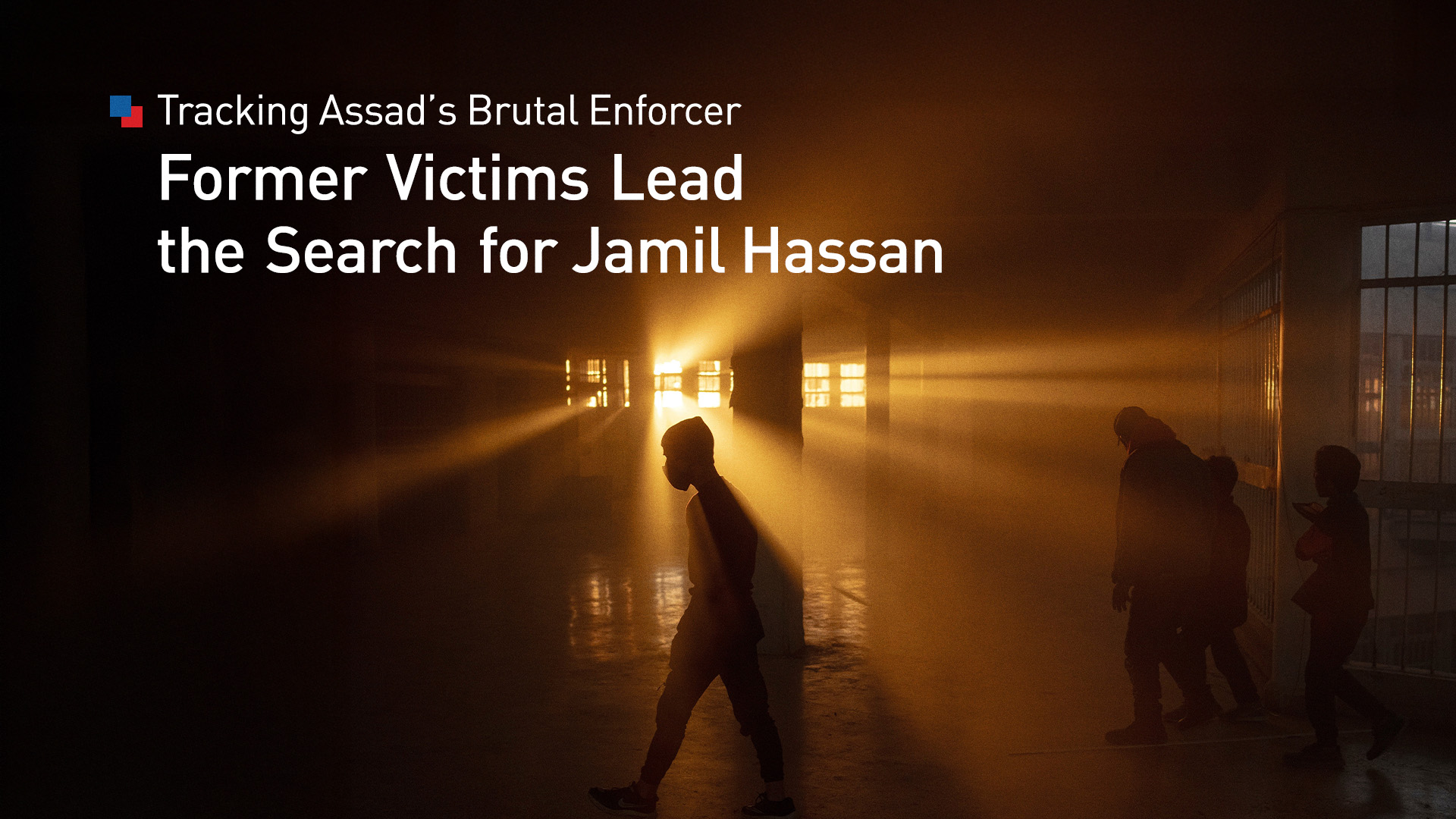
ERBIL (Kurdistan24) – As the dust settles on the ruins of the Assad dictatorship, a high-stakes international manhunt is underway for Major General Jamil al-Hassan, the elusive former head of Syria’s Air Force Intelligence agency, whose name has become synonymous with the darkest chapters of the 21st century's most brutal conflict.
Following the collapse of Bashar al-Assad’s regime last December, Hassan vanished into the shadows, leaving behind a legacy of industrial-scale torture, chemical warfare, and mass disappearances.
Now, Western intelligence agencies, including the FBI, and the new Syrian government are racing to locate the man who once vowed to "kill half the country" to keep his master in power, with suspicion mounting that he is hiding in Lebanon under the protection of a remnant network of regime loyalists.
According to a detailed investigative report by The Wall Street Journal (WSJ), Hassan’s whereabouts have become a focal point for international justice.
Convicted in absentia in France for crimes against humanity and subject to an arrest warrant in Germany, the general is also wanted by the United States for his alleged role in the torture and execution of American citizens, including aid worker Layla Shweikani.
While Assad fled to Russia with his family, Hassan is believed to have scattered across the Middle East with other senior officials. A French official confirmed to the WSJ that both Paris and the new Syrian government have sent formal requests to Lebanese authorities demanding Hassan’s arrest, though Beirut maintains it has no confirmed information on his location.
The urgency of the hunt reflects the sheer scale of the atrocities attributed to Hassan’s command.
As the head of Air Force Intelligence from 2009 until 2019, he oversaw a security apparatus that was described by analysts as the "innermost sanctum" of the regime’s power. Under his orders, the agency approved the bombing of civilian neighborhoods, played a pivotal role in the country’s chemical weapons program, and disappeared tens of thousands of Syrians into a labyrinth of dungeons.
The WSJ investigation details harrowing accounts from survivors who were stripped naked, strung up from ceilings, burned with acid, and beaten until they could no longer stand within the walls of the Mezzeh air base headquarters.
Hassan’s tactic of governance was rooted in absolute ruthlessness, a stance he reportedly urged upon Bashar al-Assad from the earliest days of the uprising.
Shadi Haroun, a protest leader arrested in 2011, recounted a four-hour interrogation with the general to the WSJ, during which Hassan chillingly declared, "I will keep killing to keep Bashar Assad in power." This was not idle rhetoric.
Documents collected by the Commission for International Justice and Accountability (CIJA) show that Hassan explicitly ordered security forces to fire on peaceful protests and later approved the bombing of hospitals.
In a 2016 interview with a Russian news agency, Hassan praised the Tiananmen Square massacre as a "wise" model for crushing dissent, arguing that greater bloodshed at the start would have saved the regime trouble later.
The search for Hassan is seen as a litmus test for Syria’s fragile transition.
The new government under President Ahmed al-Sharaa has established a National Commission for Transitional Justice to address the grievances of a nation scarred by 13 years of war. Abdulbaset Abdullatif, the head of the commission, told the WSJ, "Every Syrian, including me, would be happy if he is arrested. His hands are covered in Syrian blood."
This sentiment is echoed by international advocates like Mouaz Moustafa of the Syrian Emergency Task Force, who compared Hassan to "Eichmann to Assad’s Hitler," emphasizing his role as the bureaucratic architect of the genocide.
The evidence against Hassan is overwhelming.
Forensic photos smuggled out by the whistleblower "Caesar" documented the deaths of 352 individuals inside Air Force Intelligence facilities between 2011 and 2013 alone. The agency operated its own military field courts and mass graves, sites that are now being excavated by investigators.
For survivors like Dina Kash, who was detained and forced to cook for agents occupying her home, the memory of Hassan is visceral. She testified to the FBI that he personally prescribed specific psychological and physical tortures for detainees.
Yazan Awad, a student who survived a death sentence only through bribery, described cells packed with over 100 men sleeping "like noodles" on the floor, their screams echoing through the corridors of Mezzeh.
As the net tightens, the capture of Jamil al-Hassan represents more than the apprehension of a fugitive; it is a necessary step towards reckoning with a system that turned a state against its own people. Whether he faces a tribunal in Damascus, Paris, or Chicago, his trial would bring face-to-face the architect of Syria’s nightmare with the victims who survived it.