First Group of Thalassemia Patients Returns to Kurdistan After Successful Surgeries Abroad
First 3 Thalassemia patients return to Kurdistan after free, KRG-funded bone marrow transplants abroad, with 172 more citizens currently undergoing treatment.
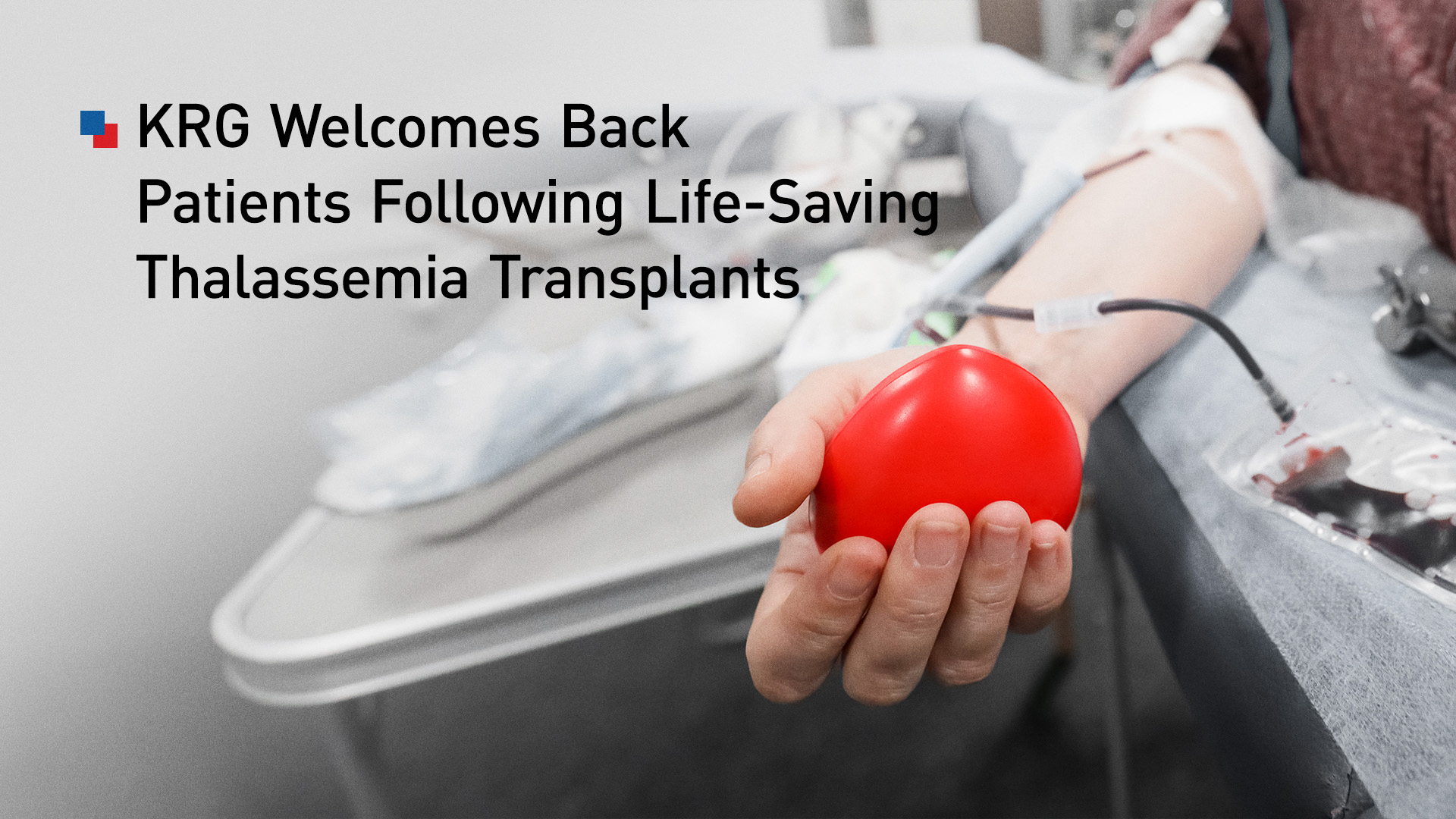
ERBIL (Kurdistan24) – In a poignant milestone for the Kurdistan Regional Government’s ambitious public health initiative, the first cohort of Thalassemia patients has returned home, marking the initial success of a strategic state-funded program designed to eradicate the genetic blood disorder through high-stakes medical intervention abroad.
After nearly 100 days of complex treatment in foreign hospitals, a period defined by delicate surgical procedures and rigorous recovery, three patients touched down in the Kurdistan Region on Friday, December 12, 2025.
Their return, characterized by health officials as the beginning of the project's fruition, offers the first tangible evidence that the government’s comprehensive plan to end the suffering of families afflicted by Thalassemia is yielding life-saving results.
The arrival of these patients signifies the successful completion of the first loop in a major humanitarian chain initiated upon the direct recommendation of Prime Minister Masrour Barzani.
The project, which was launched to address the chronic medical needs of the region's Thalassemia community, involves sending patients to advanced medical centers overseas for bone marrow transplant surgeries—procedures widely recognized by the medical community as the only definitive cure for the disease.
For the families reunited with their loved ones on Friday, the event was not merely a medical discharge but a restoration of life, as patients returned to the embrace of their relatives in good health and with a renewed future, free from the debilitating cycle of the illness.
The Ministry of Health of the Kurdistan Regional Government officially confirmed the safe return of the first group, framing the event as a victory for both the patients and the administration’s long-term health strategy.
In a formal statement released to mark the occasion, the Ministry underscored that this step represents the realization of a "major project" aimed at eradicating Thalassemia once and for all from the region.
The initiative is being treated as a priority at the highest levels of governance, with the Ministry noting that the entire operation has been executed under the close supervision and "direct support and concern" of Prime Minister Barzani.
Reflecting on the significance of the day, the Minister of Health issued a message expressing profound happiness for the safety and recovery of the returning citizens. The Minister extended thanks and appreciation to the Prime Minister, attributing the success of the initiative to his leadership.
"This humanitarian project began with the direct support and concern of the Prime Minister and has become a source of restoring hope and life to hundreds of families who have been suffering from the pain of this disease for years," the Minister stated.
This sentiment highlights the dual nature of the program: while technically a medical operation, it functions socially as a mechanism to alleviate the long-standing emotional and financial burdens borne by households managing chronic illness.
The scope of the government’s commitment to this project is exhaustive. The Kurdistan Regional Government has assumed full responsibility for the expenses and the complex management of the process, ensuring that no financial barriers stand between the patients and their cure.
The Ministry of Health clarified that this national campaign extends far beyond the simple purchasing of airline tickets. It is structured as a "comprehensive health package" in which the government covers every facet of the journey.
This includes the costs of preliminary medical examinations and preparations, the procurement of visas, air travel, and accommodation for both the patient and their necessary companions.
Furthermore, the "special budget" allocated for the initiative covers the substantial costs of the bone marrow transplant surgeries themselves, as well as the essential medications required for post-operative care and recovery.
The scale of the operation is significant and ongoing. While the return of the first three patients serves as a proof of concept, they represent only a fraction of the citizens currently benefiting from the program.
According to data provided by the Ministry of Health, a total of four groups have already been dispatched abroad.
Currently, 172 citizens of the Kurdistan Region are overseas under the auspices of this project.
This figure includes the patients undergoing treatment, the marrow donors whose participation is critical for the transplants, and the companions supporting them through the process. All remain under strict medical observation and treatment as they navigate the path to recovery.
The momentum of the initiative shows no signs of slowing.
The Ministry of Health revealed that preparations are already underway to expand the program further. In the coming days, a fifth group of patients and their companions is scheduled to be sent off for the same purpose, continuing the steady flow of citizens accessing world-class care.
This rolling deployment of patients underscores the government's resolve to work through the waiting list and provide relief to as many eligible individuals as possible.
For the families involved, the government's intervention is viewed as a lifeline. Bone marrow transplants are medically complex and prohibitively expensive, putting them out of reach for the vast majority of the population. By providing this treatment for free and ensuring it meets global standards, the KRG has positioned the project as an "umbrella of hope."
The successful return of the first group validates this hope, demonstrating that the logistical, financial, and medical hurdles have been cleared. As the first three patients settle back into their lives in Kurdistan, their recovery stands as a testament to a policy that prioritizes the health of the individual as a cornerstone of national well-being.