Duhok Commemorates 35th Anniversary of 1991 Uprising Against Ba'ath Rule
Saturday’s anniversary marks 35 years since residents and Peshmerga fighters in Duhok seized control of the city from the Ba'ath regime during the uprising of March 14, 1991.
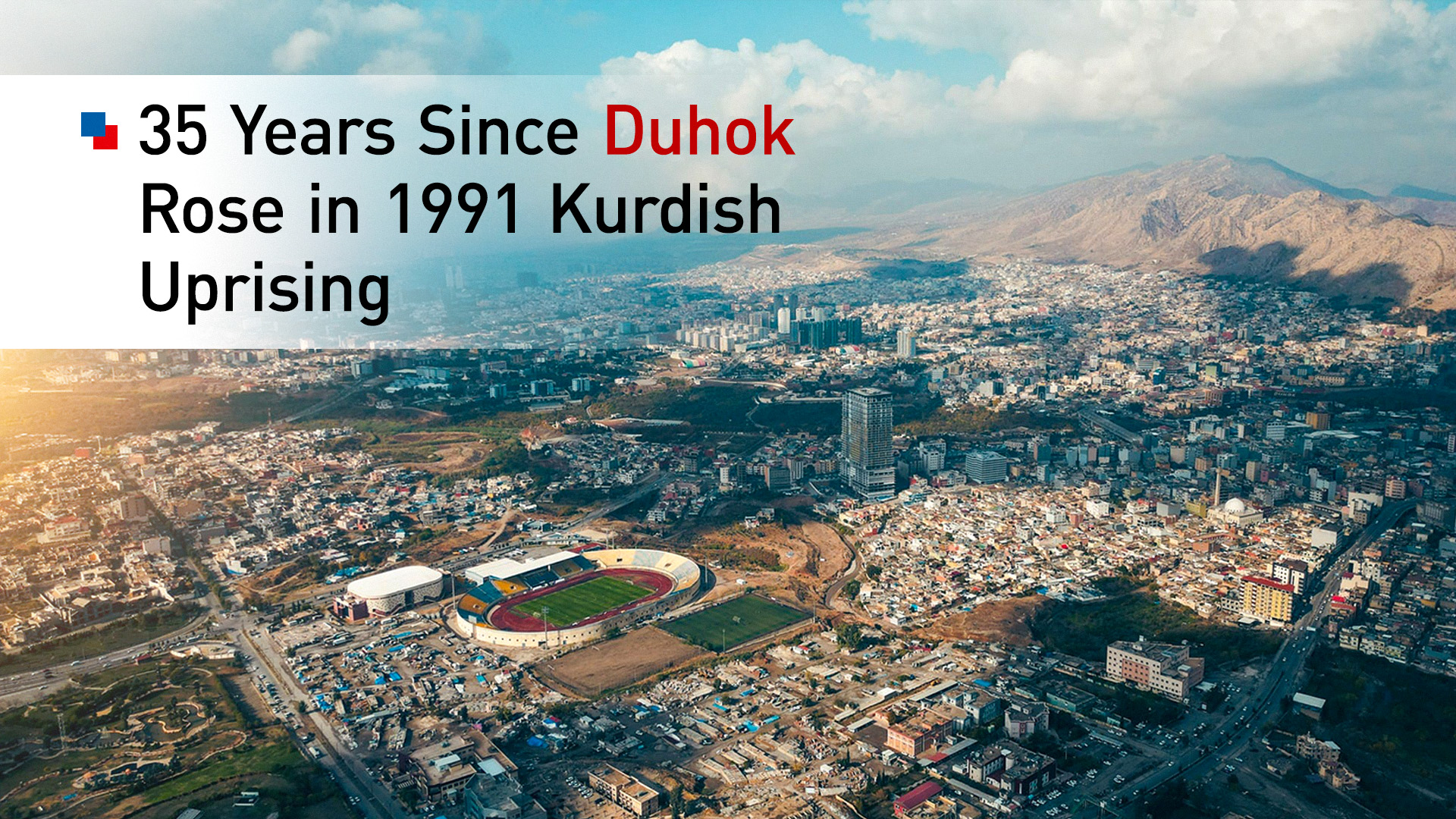
ERBIL (Kurdistan24) - Residents of Duhok and across the Kurdistan Region on Saturday marked the 35th anniversary of the 1991 uprising in the city, when local residents and Peshmerga forces seized control from the Iraqi Ba'ath regime after coordinated actions that began in the early hours of March 14, 1991.
The anniversary commemorates the events that unfolded during the wider Kurdish uprising known as the Raperin, when people across several cities in the Kurdistan Region rose against the government of Saddam Hussein. According to historical accounts of the events, the Duhok uprising was launched following preparations by local residents and Peshmerga fighters who organized coordinated actions aimed at taking control of key security installations in the city.
Plans for the operation were formulated on the evening of March 13, 1991, when residents and Peshmerga commanders established a strategy to move against the Ba'ath regime’s security apparatus. The eastern districts of Duhok, including Şindoxa (Shindokha) and Geli Duhok, were designated as the initial areas from which the uprising would begin.
According to accounts of the events, 4:00 a.m. on March 14 was set as the “zero hour” for the operation. At dawn that day, residents across the city mobilized in coordination with Peshmerga fighters to target security bases and government installations controlled by the regime.
The uprising coincided with the anniversary of the birth of Kurdish national leader Mulla Mustafa Barzani, a development that participants in the uprising said strengthened morale among those involved in the operation.
Residents from across Duhok — including men, women, and youth — joined the uprising against the Ba'ath regime’s security forces, according to accounts of the events. Within hours of the initial actions, several government and security facilities in the city had been taken over by those participating in the uprising.
Although regime forces resisted in certain institutions, clashes during the day resulted in casualties among both Peshmerga fighters and civilians involved in the uprising. Despite the resistance, participants in the uprising succeeded in gaining control of the city by the evening of March 14.
Accounts of the events state that by the end of the day the uprising forces had taken control of the main security centers and administrative headquarters that had previously been used by the Ba'ath authorities in Duhok.
The fall of the regime’s security infrastructure in the city had wider implications for surrounding areas, according to historical accounts. The outcome of the uprising in Duhok reportedly weakened the morale of government forces stationed in nearby districts and sub-districts.
As a result, several surrounding areas surrendered control without extended confrontation following the developments in the city, according to accounts describing the uprising.
The events in Duhok were part of the broader Kurdish uprising that began earlier that month. The uprising first erupted on March 5, 1991, in the town of Ranya, often described as the starting point of the wider revolt across the Kurdistan Region.
Following the events in Ranya, demonstrations and armed confrontations spread rapidly to other cities and towns, including Sulaimani, Erbil, and Duhok.
The developments in Duhok formed one stage of the broader movement that continued across the region during March 1991. The uprising expanded as local residents and Peshmerga fighters moved to seize control of government institutions and security facilities previously held by the Ba'ath authorities.
According to accounts of the events, the progress of the uprising continued in the days following the capture of Duhok. The broader campaign reached a significant milestone later that month when control of additional cities shifted during the uprising.
Historical accounts state that the momentum of the uprising continued through March and culminated with the liberation of the city of Kirkuk on March 21, when the Newroz celebration was marked by the lighting of what participants described as the torch of victory across Kurdistan.
The events of March 1991 remain a central moment in the modern history of the Kurdistan Region. The uprising involved coordinated action between local communities and Peshmerga forces and unfolded during a period of broader unrest across Iraq following the Gulf War.
Each year, the anniversary of the uprising in Duhok is commemorated by residents and institutions across the Kurdistan Region as part of a wider remembrance of the events of 1991.
For many in the region, the date marks the moment when residents of Duhok took coordinated action to challenge the authority of the Ba'ath regime’s security apparatus in the city.
Accounts of the uprising emphasize the participation of residents from across the community, including men and women of different ages who joined the efforts alongside Peshmerga fighters.
Clashes during the day of March 14 resulted in the deaths of several participants in the uprising, including Peshmerga members and civilians, according to accounts of the events. Those killed are commemorated as martyrs in the annual remembrance ceremonies marking the anniversary.
The developments in Duhok also had broader psychological effects on the conflict in the surrounding areas. According to accounts of the uprising, the collapse of the regime’s positions in the city contributed to weakening the confidence of Ba'ath security forces in nearby districts.
This development helped facilitate the spread of the uprising to additional areas where local residents and Peshmerga units moved to assert control.
The events of March 1991 unfolded during a period of widespread unrest across Iraq, when uprisings took place in several regions of the country. In the Kurdistan Region, the uprising became a defining moment in the struggle against the Ba'ath regime’s authority.
Participants in the uprising and later historical accounts describe the events in Duhok as a significant link in the broader chain of uprisings that took place across the region during that period.
The capture of the city by the uprising forces on March 14 represented one stage in the broader series of developments that continued throughout the month.
The anniversary observed on Saturday marks 35 years since those events, with residents and institutions recalling the actions taken by local communities and Peshmerga fighters during the uprising.
The commemoration reflects the historical significance attributed to the uprising in Duhok as part of the wider events of March 1991 across the Kurdistan Region.