Children’s Acts of Giving Illuminate Chamchamal’s Flood Relief Effort
Two young girls led relief efforts with toys and cash, while the BCF deployed 60 staff to deliver high-quality heaters and aid to Chamchamal victims.
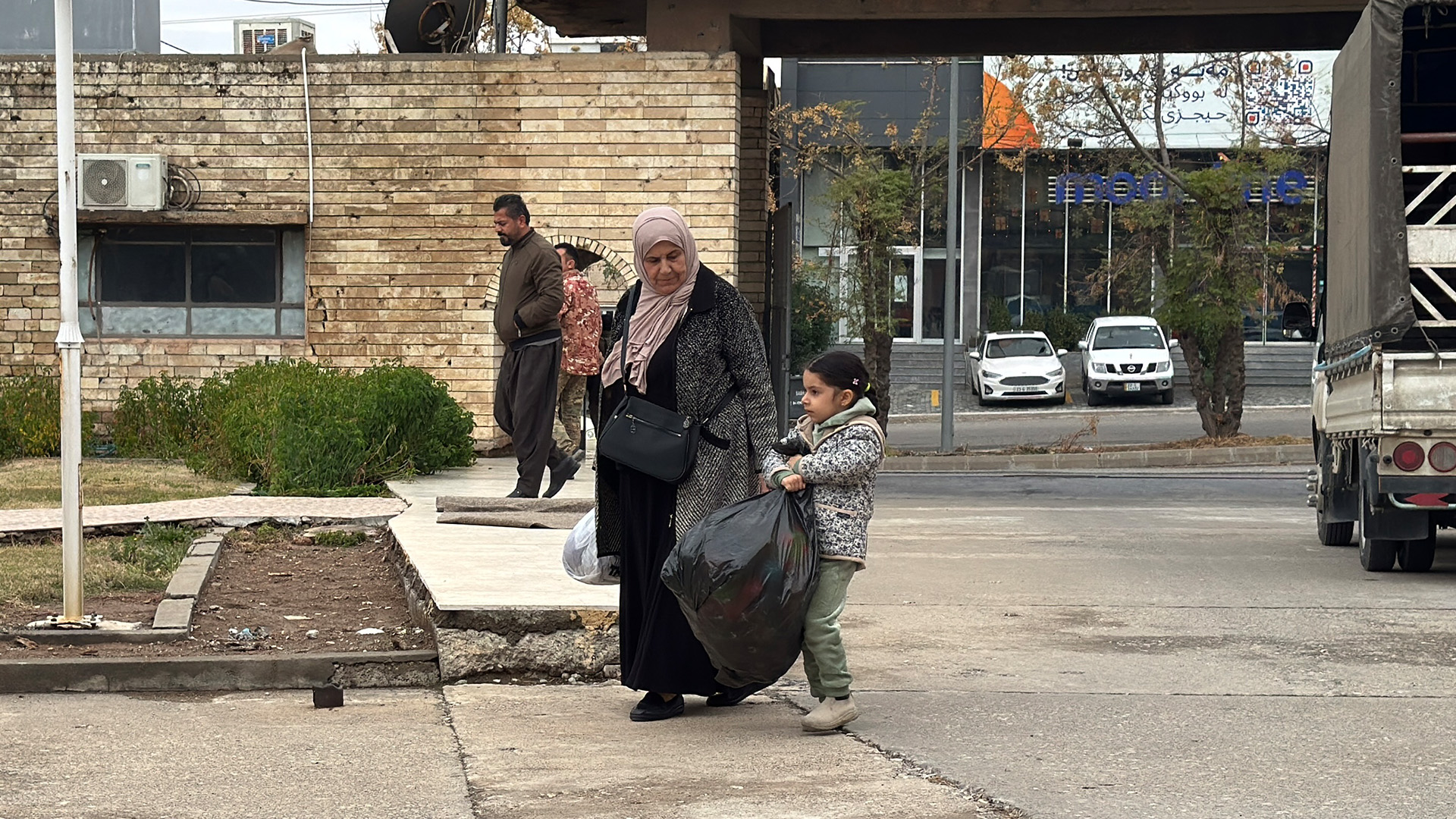
ERBIL (Kurdistan24) – In the midst of a mobilized relief campaign designed to alleviate the suffering of the Chamchamal district, a profound and quiet resilience has emerged, not solely from government decrees or international aid convoys, but from the smallest members of Kurdish society.
As the region rallies to support those affected by the catastrophic flooding of December 9, the atmosphere of the humanitarian drive has been defined by two singular acts of altruism involving young girls.
Their contributions—one a heavy bag of cherished toys, the other a significant financial donation—have transcended the material value of the aid, offering a stirring testament to the enduring culture of empathy and the "day of effort and giving" that has gripped the community.
These gestures of innocence have coincided with a massive logistical escalation by the Barzani Charity Foundation (BCF), which has deployed specialized teams to deliver high-quality heating and housing supplies to families facing a harsh winter in the wreckage of their homes.
The scenes unfolding at the collection centers have captured the raw emotional core of the relief effort.
Among the stream of adults delivering supplies, a young girl named Midya arrived, her small frame struggling under the weight of a burden she insisted on carrying herself. The reporter on the scene described the visual impact of the moment with striking clarity, noting that the child was lugging a bag that was "practically as big as she is."
This physical struggle to deliver aid was not merely a logistical necessity but a physical manifestation of her determination.
Accompanied by her mother, Midya approached the collection point not with the detachment of someone discarding unwanted items, but with the solemnity of someone making a personal sacrifice for the well-being of strangers.
When the reporter approached Midya, inquiring about the contents of her heavy load, the dialogue that followed revealed a depth of compassion rare even in adults. "Toys," Midya responded simply. The reporter, seeking to understand the motivation behind the gesture, asked the young girl if she had brought the aid specifically for Chamchamal.
Midya confirmed her intent. The interaction then pivoted to the specific items within the bag, as the reporter pulled out a plush animal to show the camera.
There was a brief moment of gentle confusion regarding the identity of the toy—whether it was a bear or a rabbit. "It’s a rabbit," Midya clarified, correcting the reporter with the certainty of a child who knows every detail of her possessions.
The poignancy of the exchange lay in what the donation represented for Midya personally. The reporter pressed gently on the implications of her gift, asking, "You want them to play with it... so you won't play with them anymore?" The question highlighted the permanence of the loss for the child.
Midya, without hesitation, answered "Yes." The reporter continued, probing the emotional cost: "You like them too, but you gave them up for them, right?" Again, the young girl affirmed her decision.
This was not a donation of surplus; it was a donation of affection. Midya was voluntarily parting with objects she loved to "make their hearts happy," a phrase used by the reporter to encapsulate the mission of the young donor.
The reporter, visibly moved by the display of selflessness, offered a prayer for the child: "Bless your heart, may there be many like you," before describing her to the audience as "an example of a beautiful and intelligent child."
Parallel to this donation of personal treasures was another act of remarkable generosity involving a different young girl, whose contribution was measured in financial terms but carried equal emotional weight.
At the same relief campaign, a male speaker took to the microphone to announce a substantial donation that had just been handed over.
"This beautiful girl has brought $100 today for our campaign," the voice boomed over the public address system. In the context of a child’s world, where such a sum often represents entire life savings or accumulated gifts, the donation was a massive gesture of solidarity.
While the spirit of the relief effort was being buoyed by these children, the logistical machinery of the response was being driven by the Barzani Charity Foundation.
Recognizing the multifaceted nature of the catastrophe, the foundation eschewed a simple handout approach in favor of a structured, three-stage operational plan aimed at restoring life and hope.
Rebwar Mohieddin, the head of the Kirkuk office of the Barzani Charity Foundation, emphasized the strategic discipline guiding the relief effort.
Speaking to Kurdistan24, Mohieddin noted that during natural disasters, "work needs to be done step by step, and we at the Barzani Charity Foundation follow this strategy in our operations." To implement this strategy effectively, the foundation dispatched a robust team of 60 personnel who traveled directly from Erbil and its surroundings to reinforce local efforts on the ground.
The first stage of this humanitarian campaign began with intensive fieldwork immediately following the disaster on Tuesday. Teams from the foundation shouldered the arduous physical task of cleaning up the debris and muck that the floodwaters deposited within private residences.
Mohieddin described this initial step as essential, stating, "Our team helped people clean their homes and provided water and cleaning supplies."
This phase was critical for public health and safety, as the removal of sludge was a prerequisite for any return to normalcy. By clearing the living environments of the families, the BCF attempted to reclaim the physical space of the home from the ravages of the storm.
Following the initial cleanup, the foundation immediately pivoted to the second stage of its plan: ensuring food security for a population that had lost access to kitchens and food stocks.
Understanding that the flood had disrupted the daily rhythms of life and left residents physically drained, the BCF established a protocol to prepare and distribute hot meals directly to the homes of the affected. "We believed that these people are exhausted, so we provided hot food for them," Mohieddin explained.
This measure served a dual purpose: physiologically providing necessary nutrition in a cold environment, and psychologically offering a reassurance of support.
However, it is the third and final stage of the operation, which Mohieddin confirmed commenced on Friday, that represents the most significant investment in the long-term recovery of the families.
This phase moves beyond emergency stabilization into material restitution.
"The third stage, which we started today, consists of providing bedding, heaters, kerosene, and food boxes," Mohieddin told Kurdistan24. The distribution list is comprehensive, including clothes and additional cleaning supplies, but the inclusion of heaters and "white oil" (kerosene) is particularly vital for restoring warmth to damp, freezing homes.
Crucially, Mohieddin stressed that the foundation is committed to maintaining the dignity of the recipients through the standard of aid provided.
"All the items we have prepared for the affected families of Chamchamal are of high quality," he asserted. By ensuring that the bedding, heaters, and supplies are of a superior standard, the BCF is signaling that its support is not a token gesture but a substantive effort to enable families to resume their normal lives in a warm, safe, and respectable atmosphere.
Since the beginning of the disaster, which claimed the lives of several citizens and inflicted significant damage on homes in Sulaymaniyah and Garmian, the Barzani Charity Foundation has been at the forefront of the aid convoys.
As the 60-person team moves from house to house distributing high-quality items, and as young girls like Midya hand over their most prized possessions, the response in Chamchamal stands as a testament to a society where the institutional strength of organizations like the BCF is matched only by the individual kindness of its children.
Together, they are working to ensure that hearts are made happy and homes are made warm in the wake of tragedy.