PM Barzani, French Officials Emphasize Cross-Border Efforts to Contain ISIS
PM Masrour Barzani and French Brigadier General Francois Tricot agreed to sustain support for Peshmerga forces to counter ISIS threats in Iraq and Syria.
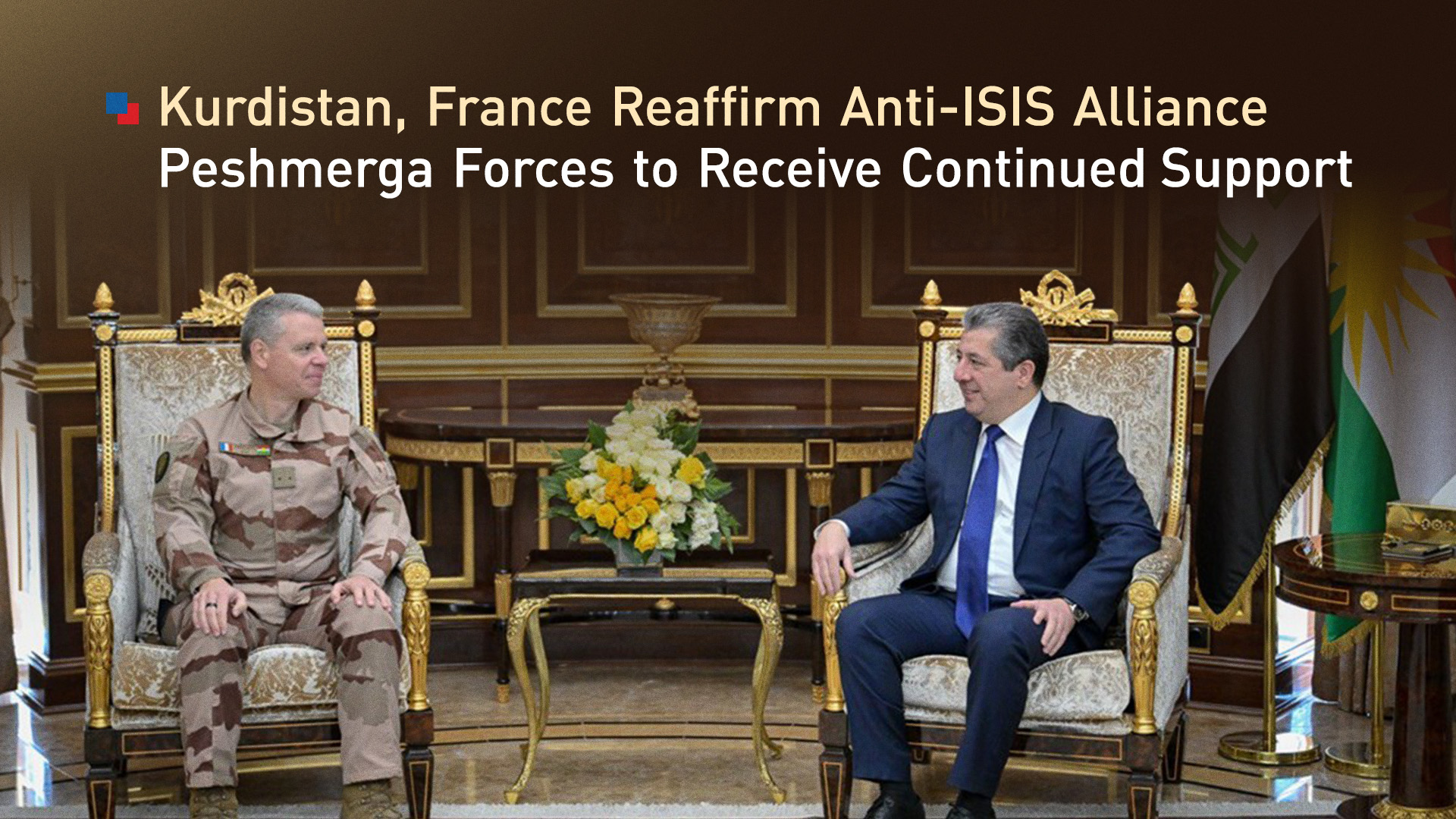
ERBIL (Kurdistan24) – In a significant diplomatic and security convening that underscores the enduring volatility of the regional landscape, Kurdistan Regional Government (KRG) Prime Minister Masrour Barzani met with Brigadier General Francois Tricot, France's High Representative to the International Coalition Against ISIS, on Monday to address the persistent and trans-border dangers posed by terrorist networks.
The discussions, which took place in Erbil, served as a critical platform for reaffirming the strategic military alignment between the Kurdistan Region and the French Republic, highlighting a mutual determination to confront the evolving threats of the Islamic State in both Iraq and neighboring Syria.
The meeting was characterized by a comprehensive review of the security architecture currently in place across the region.
Joined by Yann Braem, the French Consul General in the Kurdistan Region, Prime Minister Barzani and Brigadier General Tricot engaged in a detailed dialogue regarding the development of bilateral relations. However, the primary focus of the engagement remained firmly on the security situation in Iraq and the urgent necessity of countering the resurgence of extremist violence.
The two sides examined the complex dynamics of the current battlefield, acknowledging that the fight against terrorism is far from over and requires a sustained, multi-faceted approach to prevent a security vacuum that could be exploited by radical groups.
Central to the discussions was the specific threat posed by ISIS, which continues to operate as a destabilizing force despite territorial defeats in previous years.
Both the Prime Minister and the French High Representative emphasized that the dangers of terrorism are not confined within a single national border but represent a regional crisis spanning Iraq and Syria.
By addressing the threat in both theaters, the officials underscored the interconnected nature of regional security, recognizing that stability in the Kurdistan Region and Iraq is inextricably checking the maneuverability of terrorist cells operating in the broader Levant.
The conversation reflected a deep understanding that the security of the Kurdistan Region is a linchpin for the stability of the wider Middle East.
A pivotal outcome of the meeting was the solidification of the partnership between the International Coalition and the Kurdistan Regional Government’s Peshmerga forces. Both sides reached a consensus on the absolute importance of continuing robust support for the Peshmerga forces.
The Peshmerga, having served as the primary ground force in the war against the Islamic State, remain a critical component of the anti-ISIS coalition. The agreement reached on Monday reinforces the commitment to ensure these forces are adequately equipped and supported to maintain their operational readiness.
The coordination between the International Coalition and the Kurdistan Region was identified as a paramount strategic priority, essential for effectively confronting terrorism and preserving the hard-won security gains of the last decade.
The Monday meeting follows a deadly attack in Tadmur (Palmyra) in Syria’s central Homs province on Saturday, which claimed the lives of two U.S. soldiers and a civilian interpreter. Three additional American troops and two Syrian security personnel were wounded, according to reports from the Pentagon and Syrian state media.
While ISIS has not formally claimed the assault, Syrian Interior Ministry spokesperson Noureddine al-Baba told state-run al-Ikhbariya TV that preliminary investigations from December 10 indicate the attacker may have had extremist ties.
In response, U.S. President Donald Trump pledged “very serious retaliation” against those responsible.
The attack highlights the persistent threat posed by extremist groups in Syria, demonstrating the region’s continuing volatility.
Furthermore, the visit by Brigadier General Tricot is emblematic of the deep, historic, and strategic relationship that exists between Paris and Erbil.
France serves as a key member of the international coalition against ISIS, and its involvement in the Kurdistan Region has been characterized by a consistent and high-level engagement that transcends standard diplomatic ties.
In recent years, Paris has played an instrumental role in the professionalization and strengthening of the region's defense capabilities. This has included the provision of extensive training programs for Peshmerga forces, as well as the delivery of vital military and logistical assistance.
These efforts have been designed not only to bolster the region's immediate defenses but to support long-term stability across the entire area.
The discussions on Monday reinforced the notion that France views the Kurdistan Region not merely as a beneficiary of aid, but as an essential partner in the global fight against terror.
The presence of Consul General Yann Braem alongside the military envoy highlighted the synchronized diplomatic and military approach that France has adopted toward the KRG.
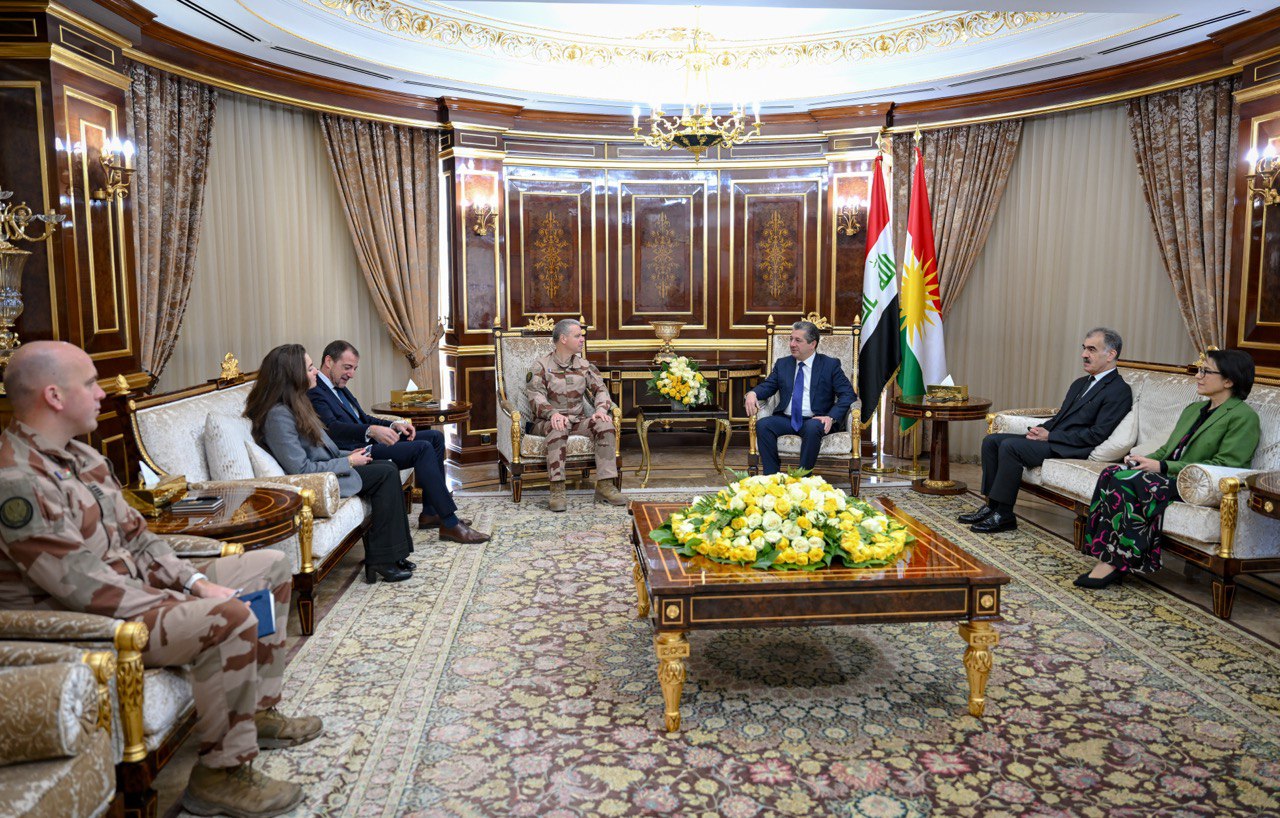
By integrating political support with military cooperation, the French government continues to demonstrate a long-term investment in the security of the Kurdistan Region.
As the meeting concluded, the consensus between Prime Minister Barzani and Brigadier General Tricot sent a clear signal regarding the future of counter-terrorism operations in the region. There is a shared recognition that the mission to defeat ISIS requires vigilance, updated strategies, and unwavering international cooperation.
The renewed pledge to support the Peshmerga and enhance coordination mechanisms ensures that the Kurdistan Region will remain a fortified barrier against the spread of extremism, backed by the continued resolve of its strategic allies in Paris.
The engagement stands as a testament to the enduring alliance between the Kurdish and French peoples, united by a common history of cooperation and a shared vision for a stable, secure Middle East.