Shiite Coordination Framework Meets to Decide Iraq’s Next Prime Minister
Parallel talks among Sunni and Kurdish forces highlight a broader push to resolve top state posts ahead of constitutional deadlines.
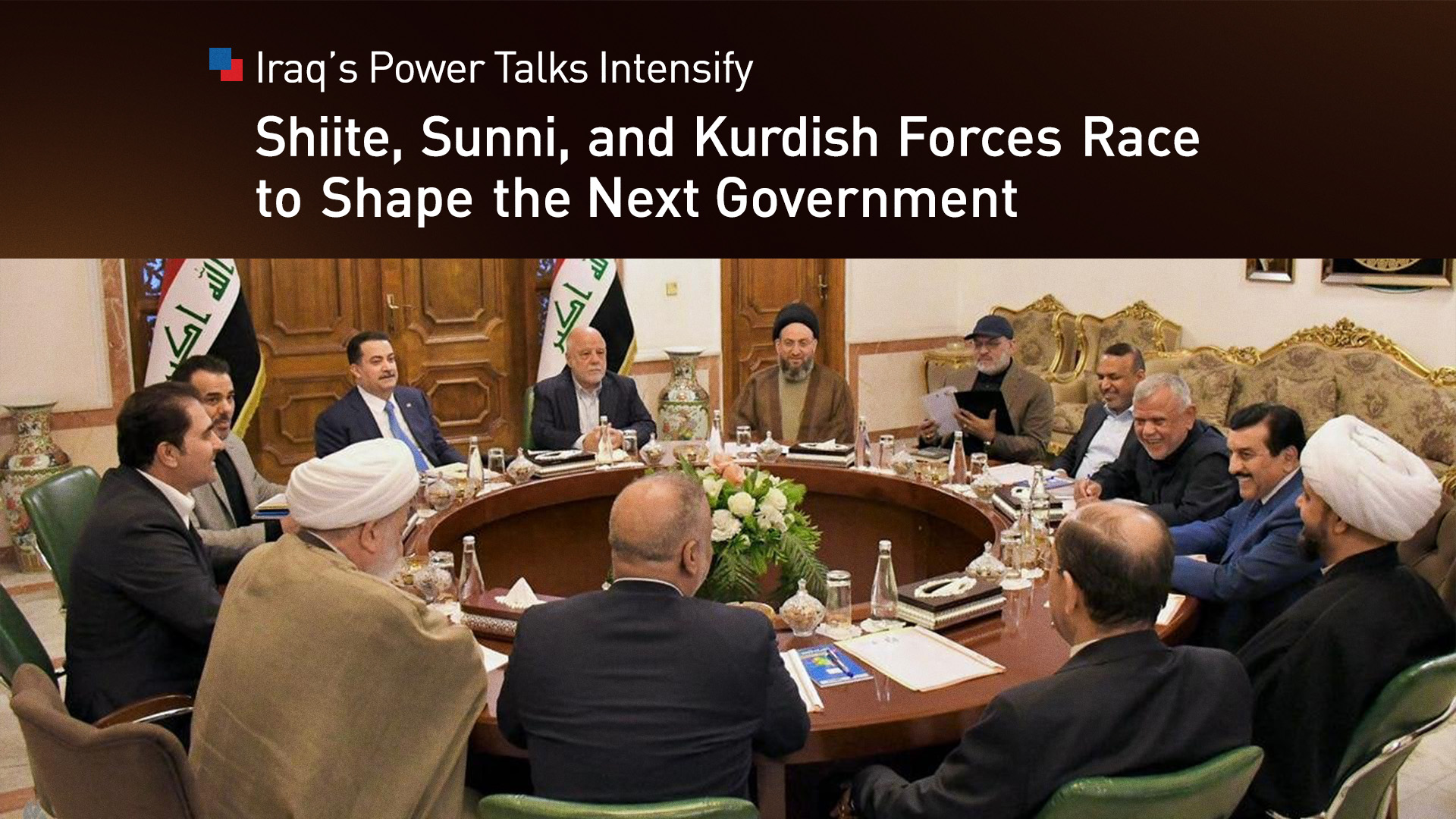
ERBIL (Kurdistan24) — Iraq’s Shiite Coordination Framework is set to convene on Monday, in a critical meeting aimed at unifying its position on a single candidate for the post of prime minister, as parallel negotiations continue among Sunni and Kurdish political blocs over other senior state positions.
According to sources within the Shiite Coordination Framework, the meeting will focus on narrowing differences and agreeing on a consensus nominee for the premiership.
If a final agreement cannot be reached on one name, three candidates will be put forward for an internal vote, with one ultimately selected through balloting.
Among the leading contenders is incumbent Prime Minister Mohammed Shia al-Sudani, who is widely viewed as the frontrunner. His “Reconstruction and Development” alliance has formally endorsed him, although sources say he has yet to secure full consensus from all factions within the framework.
The selection of Iraq’s next prime minister has dominated internal discussions within the Shiite Coordination Framework for months. Previous meetings resulted in the establishment of criteria for candidates, emphasizing administrative competence, integrity, and the ability to manage state institutions effectively.
A specialized committee has also been formed to assess nominees, with a preliminary list reportedly ranging from four to nine candidates.
A senior figure within the framework said political forces are keen to finalize the prime ministerial nominee before the end of the constitutional timeframe, raising the possibility that an official announcement could emerge from Monday’s meeting.
These Shiite deliberations come amid intensified talks among Sunni political forces, who in recent weeks have held a series of meetings to agree on a unified candidate for the speaker of parliament.
Sunni blocs, fragmented since the last electoral cycle, are seeking to avoid internal competition by rallying around a consensus figure capable of securing broad parliamentary backing and reasserting Sunni influence in the legislative branch.
At the same time, Iraq’s Kurdish political landscape has seen renewed coordination between the Kurdistan Democratic Party (KDP) and the Patriotic Union of Kurdistan (PUK). The two ruling parties in the Kurdistan Region have held multiple meetings to discuss the formation of the next Kurdistan Regional Government (KRG) cabinet, alongside negotiations over a joint Kurdish position on the federal presidency of Iraq.
The presidency, traditionally held by a Kurdish figure, remains a key bargaining chip in the wider government-formation process in Baghdad.
Under Iraq’s political roadmap, agreement must first be reached on the speaker of parliament, followed by the election of the president. The president then formally tasks a nominee with forming the next federal government.
Confirmed seat results (final and certified):
- Reconstruction and Development Coalition (RDC), led by PM Mohammed Shiaa al-Sudani: 46 seats — the most of any coalition.
- State of Law Coalition (Nouri al-Maliki): 29 seats.
- Sadiqoun Bloc led by Qais al-Khazali (head of the Asaib Ahl al-Haqq militia): 28 seats.
- Kurdistan Democratic Party (KDP): 27 seats.
- Taqaddum (Progress) Party (Sunni, Mohammed al-Halbousi): 27 seats.
- Patriotic Union of Kurdistan (PUK): 18 seats.
These figures derive from the final certified count affirmed by Iraq’s Supreme Federal Court, which also reported the overall sectarian grouping in parliament: Shiite parties altogether hold 187 seats, Sunnis 77, Kurds 56, and minorities 9.
The KDP ran independently in the election (not as part of a broader alliance) and secured 27 seats, making it one of the strongest individual party results, although it did not surpass the RDC in total seats.
The KDP also received over one million votes, positioning it as one of the most popular single parties on the national ballot.
With Shiite, Sunni, and Kurdish blocs all engaged in parallel negotiations, the coming days are expected to be decisive in determining whether Iraq can break its political deadlock and move toward forming a new government.