Bipartisan Vote Signals New U.S. Strategy for Postwar Syria
U.S. Congress repeals Caesar sanctions on Syria to spur reconstruction and counter ISIS/Iran, opening the door for investment under President al-Sharaa.
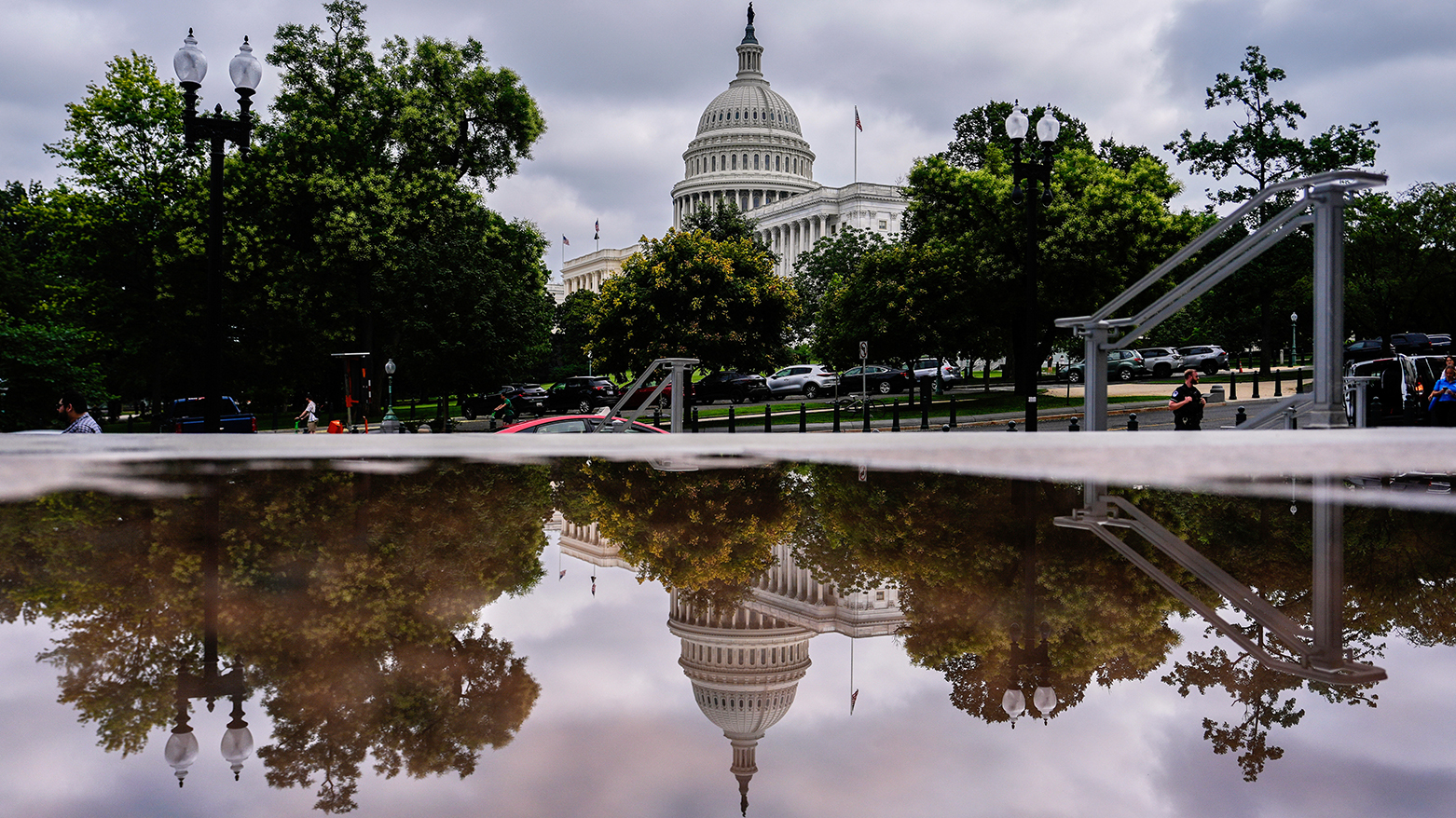
ERBIL (Kurdistan24) — In a landmark legislative maneuver that signals a fundamental shift in American foreign policy toward the Levant, the United States Congress has voted to repeal the Caesar Syria Civilian Protection Act, sweeping away the stringent sanctions regime that had isolated the Syrian economy for half a decade. The repeal, embedded within the sprawling annual National Defense Authorization Act (NDAA) passed this week, represents a rare moment of bipartisan consensus driven by a new strategic reality: the fall of the Assad dictatorship has rendered the old instruments of economic pressure obsolete, transforming them from tools of punishment into obstacles to recovery.
The legislative breakthrough was confirmed in a joint video statement released on Friday by Democratic Senator Jeanne Shaheen of New Hampshire and Republican Congressman Joe Wilson of South Carolina, two senior lawmakers who have championed the policy pivot.
In their joint video statement, they framed the repeal not merely as an economic measure, but as a national security imperative designed to deny safe havens to ISIS and prevent adversaries like Iran and Russia from exploiting a failed state.
"Today, we're speaking to you in a moment of real change and generational opportunity for Syria and for America's role in the region," Senator Shaheen declared in the video, posted to Congressman Wilson's X account. She emphasized that while the lawmakers hail from different parties, they have "worked across the aisle in a bipartisan fashion to support America's national security and stability in the Middle East."
The Caesar Act, enacted in 2019 and named after a military defector who smuggled thousands of photographs documenting torture out of Syria, was originally designed to choke off resources to the regime of Bashar al-Assad.
It targeted any entity worldwide that did business with the Syrian government, effectively freezing the country out of the global financial system. However, following the collapse of the Assad regime and the ascent of a transitional government led by President Ahmed al-Sharaa, the continued enforcement of these broad restrictions became increasingly untenable.
Congressman Wilson, a long-time hawk on Syrian policy, acknowledged the original intent of the sanctions while arguing that the geopolitical landscape has shifted irrevocably. "The sanctions were designed to isolate the previous Assad dictatorship and punish those responsible for mass murder," Wilson stated. "They signaled that the United States would not be bankrolling brutality."
Yet, both lawmakers argued that maintaining the blockade now risks suffocating the very nascent democracy Washington hopes to foster.
"Since the fall of the Assad regime, these broad restrictions are making rebuilding Syria impossible," Shaheen noted. The Senator underscored that economic growth is now "vital to promoting stability in Syria and the region and helping to combat terrorism."
This assessment was bolstered by a recent congressional delegation to Damascus in August, where Shaheen and Wilson met with government officials, citizens, and religious leaders.
According to Wilson, they witnessed firsthand the "reforms being made in Syria under the leadership of President al-Sharaa," but also observed how "outdated" sanctions were slowing progress toward a safe and prosperous future.
The repeal comes as part of the $900 billion defense policy bill approved by the Senate on Wednesday and the House of Representatives last week. President Donald Trump is expected to sign the legislation into law imminent.
The move follows months of diplomatic maneuvering, during which the Trump administration issued two six-month waivers on enforcement to test the waters for re-engagement.
The administration urged Congress to move toward full repeal after Syrian officials and U.S. allies in Europe and the Middle East warned that uncertainty over the sanctions' status was deterring the massive capital investment needed for reconstruction.
According to the Financial Times, the United Nations estimates that Syria requires more than $200 billion to repair thousands of kilometers of shattered infrastructure, remove unexploded ordnance, and restore basic services after 14 years of civil war.
While temporary waivers provided some relief, Senator Shaheen told the Financial Times that "serious investors and partners will not commit billions under continued uncertainty, which is why Congress moved forward with full repeal."
The legislative text of the repeal includes provisions to ensure that the lifting of sanctions does not equate to a lack of oversight. The new law requires the U.S. President to report to Congress every six months on the Syrian government’s progress in security and governance.
These reports must verify steps taken to "eliminate the threat posed by ISIS" and measures to protect the rights of ethnic and religious minorities. This conditional approach aims to balance the need for economic opening with continued vigilance regarding human rights and security commitments.
Congressman Wilson highlighted the commercial implications of the repeal, framing it as an opportunity for American influence to re-enter the Syrian market.
"For U.S. investors and companies, this is an opening to compete, to set standards, and to lead with transparency," he said.
This perspective aligns with the broader U.S. strategy of countering Iranian and Russian influence through economic integration rather than isolation. As cited by the Financial Times, Senator Shaheen added that providing Syrians with an opportunity to rebuild would "pre-empt Iran’s ability to exploit a failed state."
However, the path to repeal was not without opposition. The Israeli government and several Republican lawmakers initially opposed the measure, arguing that fully removing the sanctions would limit Washington’s leverage over President al-Sharaa.
A former rebel leader with a complex past involving Islamist factions, al-Sharaa has nevertheless impressed Western officials with his pragmatic governance and stated commitment to a united, pluralistic Syria. Yet, his administration faces severe challenges, including bouts of sectarian fighting, territorial claims by powerful militias, and a persistent ISIS insurgency.
The security volatility was underscored just days ago when the White House confirmed that ISIS militants killed three U.S. military personnel during a patrol in the central Syrian city of Palmyra.
President Trump defended al-Sharaa following the attack, describing him as a "strong man" who was not responsible for the violence, which occurred in an area where central government control remains tenuous.
Despite this defense, the administration has maintained certain protective measures; notably, Syrians were included in a recent proclamation expanding the list of foreign nationals subject to entry bans, citing the lack of adequate screening capabilities in postwar Syria.
Despite these challenges, the repeal marks a definitive turning point. "Accountability tools are still on the table," Shaheen assured, emphasizing that the United States will remain actively engaged to ensure progress toward a "stable, representative, and prosperous Syria."
The repeal effectively removes the last major legal hurdle to foreign investment, potentially unlocking a wave of reconstruction funds from the Gulf and Europe that had been held back by fears of triggering U.S. penalties.
The bipartisan message from Shaheen and Wilson was clear: the era of punishing Syria to hurt Assad is over. The focus has shifted to building a state capable of standing on its own, resisting extremism, and providing for its people. "This has been a team effort and a bipartisan effort to advance the national security of America and to benefit the citizens of Syria," Wilson concluded.