Iraq Receives Warnings of Imminent Military Strikes Amid Pressure to Disarm Militias
Messages from an Arab state and a Western intelligence service accelerate political moves to restrict weapons to state control, Asharq Al-Awsat reports.
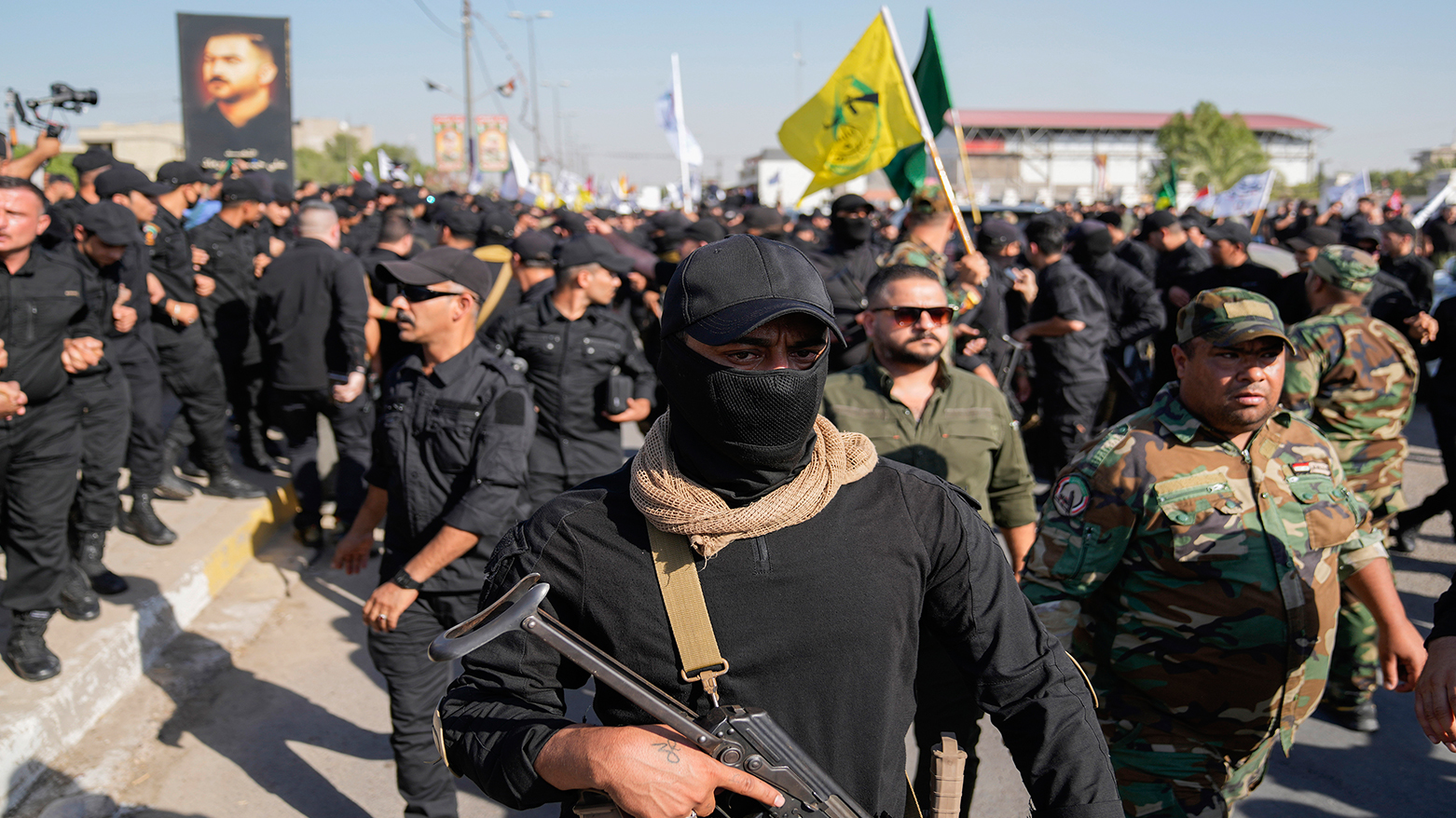
ERBIL (Kurdistan24) — Iraq’s government and key political actors have received unprecedented warning messages over the past two weeks, cautioning of imminent, large-scale military strikes inside the country, according to Asharq Al-Awsat. The warnings, delivered by an Arab state and a Western intelligence service, contained what were described as “serious” and detailed assessments of escalating threats, prompting swift political reactions from Shiite armed factions.
Citing informed sources, Asharq Al-Awsat reported that a senior Iraqi official confirmed Baghdad had been alerted by a “friendly country” to the nature of the threat, which was followed by rapid concessions from Shiite factions on the issue of weapons control.
Potential targets of the strikes were said to include government institutions linked to armed factions and the Popular Mobilization Forces (PMF), influential financial and military figures, as well as sites and depots housing drones, missiles, and training camps.
According to the report, the warnings helped accelerate a wave of political statements by factions calling for “restricting weapons to the state,” though many simultaneously requested additional time and freedom of action within what they termed a “national framework” to dismantle their military capabilities. This approach remains a point of contention among leaders of the Coordination Framework, the ruling Shiite alliance.
Asharq Al-Awsat said the first warning came from an Arab country maintaining good relations with both Washington and Tehran. The message cautioned that Baghdad was close to facing a swift military strike similar to the targeting of Hamas’s political office in Doha in September 2025.
The message reportedly told Iraqi officials and politicians that the threat level was “extremely serious,” and that Israel was discussing having received a green light from the United States to act independently in the Iraqi theater.
Iraq has been viewed as a potential target for Israeli strikes since the Oct. 7, 2023 developments, but Iraqi politicians told Asharq Al-Awsat in recent months that Washington had previously restrained Israel from operating in Iraq while pressing Baghdad to address the risks posed by weapons outside state control.
A Western diplomat was quoted as saying U.S. officials felt Iraqi leaders did not fully grasp the gravity of the situation and grew increasingly frustrated by what they perceived as weak responses.
Days after the Arab warning, Iraqi officials reportedly received a “massive file” from a Western intelligence service containing detailed lists prepared by an Israeli security agency on Iraqi armed factions.
Sources said the breadth and precision of the information stunned Iraqi officials, describing the timing of its delivery as decisive. The data reportedly included extensive details on faction leaders, covert operatives, financial and commercial networks, and government institutions used as fronts for militia influence.
The Western intelligence service reportedly warned that Israel was close to launching a wide-ranging operation following the exposure of the factions’ operational and financial capabilities, including their deep military infrastructure. Some Shiite politicians were said to have recalled the pager explosions in Lebanon after reviewing parts of the intelligence file.
A senior Shiite figure within the Coordination Framework told Asharq Al-Awsat that the two messages “changed the balance” and pushed party leaders to move quickly on the issue of factional weapons, though deep disagreements persist over the mechanism and trusted authority to oversee the transition.
He said an initial phase would involve handing over ballistic missiles and drones and dismantling strategic camps north and south of Baghdad, followed by the removal of faction-affiliated officials from the PMF leadership, pending the U.S. response.
A senior official in the State of Law coalition said an agreement on relinquishing heavy weapons had already existed among Coordination Framework leaders before U.S. pressure intensified. However, sources noted that disputes now center on which state institution would oversee disarmament, amid U.S. mistrust of security bodies perceived to be under factional influence.
The report also highlighted political complications tied to government formation. Shiite factions are wary of pursuing disarmament amid protracted negotiations over the next prime minister. Prime Minister Mohammed Shia al-Sudani is seeking a second term after winning the largest share of seats within the Coordination Framework, while former Prime Minister Nouri al-Maliki opposes his bid and favors a consensus candidate.
At the same time, armed factions reject appearing to submit to foreign pressure. A Shiite leader said groups have asked for “freedom of action” and more time to adapt to regional changes, including dismantling their military capacities.
These factions secured seats in the new parliament elected on Nov. 11, 2025, and are seeking roles in the next government, while also trying to persuade non-participating groups to join the weapons-restriction plan.
Asharq Al-Awsat reported that the intelligence warning coincided with the arrival in Iraq of Col. Stephanie Bagley, the new head of the U.S. Office of Security Cooperation. U.S. congressional approval of the 2025 defense budget introduced conditions tying security cooperation funding to Iraq’s ability to verifiably reduce the operational capacity of Iran-aligned armed groups not integrated into state forces, strengthen the prime minister’s command authority, and investigate militia members operating outside official chains of command.
Western diplomatic sources told Asharq Al-Awsat that Bagley is expected to seek a clear and verifiable timeline from Iraqi officials for implementing these measures. The report noted that Bagley met twice in October 2025 with Iraqi Army Chief of Staff Lt. Gen. Abdul Amir Yarallah to discuss enhancing the army’s combat capabilities.
A former Iraqi government official said Washington has repeatedly demanded a timetable to dismantle militia influence, particularly ahead of 2026, when the agreement ending the U.S.-led coalition’s mission in Iraq is set to be completed.
According to Asharq Al-Awsat, a U.S. State Department spokesperson reaffirmed that Washington will continue pressing for the disarmament and dismantling of Iran-backed militias that undermine Iraq’s sovereignty, threaten Iraqis and Americans, and divert the country’s resources in favor of Tehran.