Loud Explosions and Aircraft Sounds Reported in Caracas Amid Heightened Tensions
Explosions and aircraft sounds rocked Caracas early Saturday amid U.S. threats. Trump recently claimed a strike on a docking area, escalating pressure.
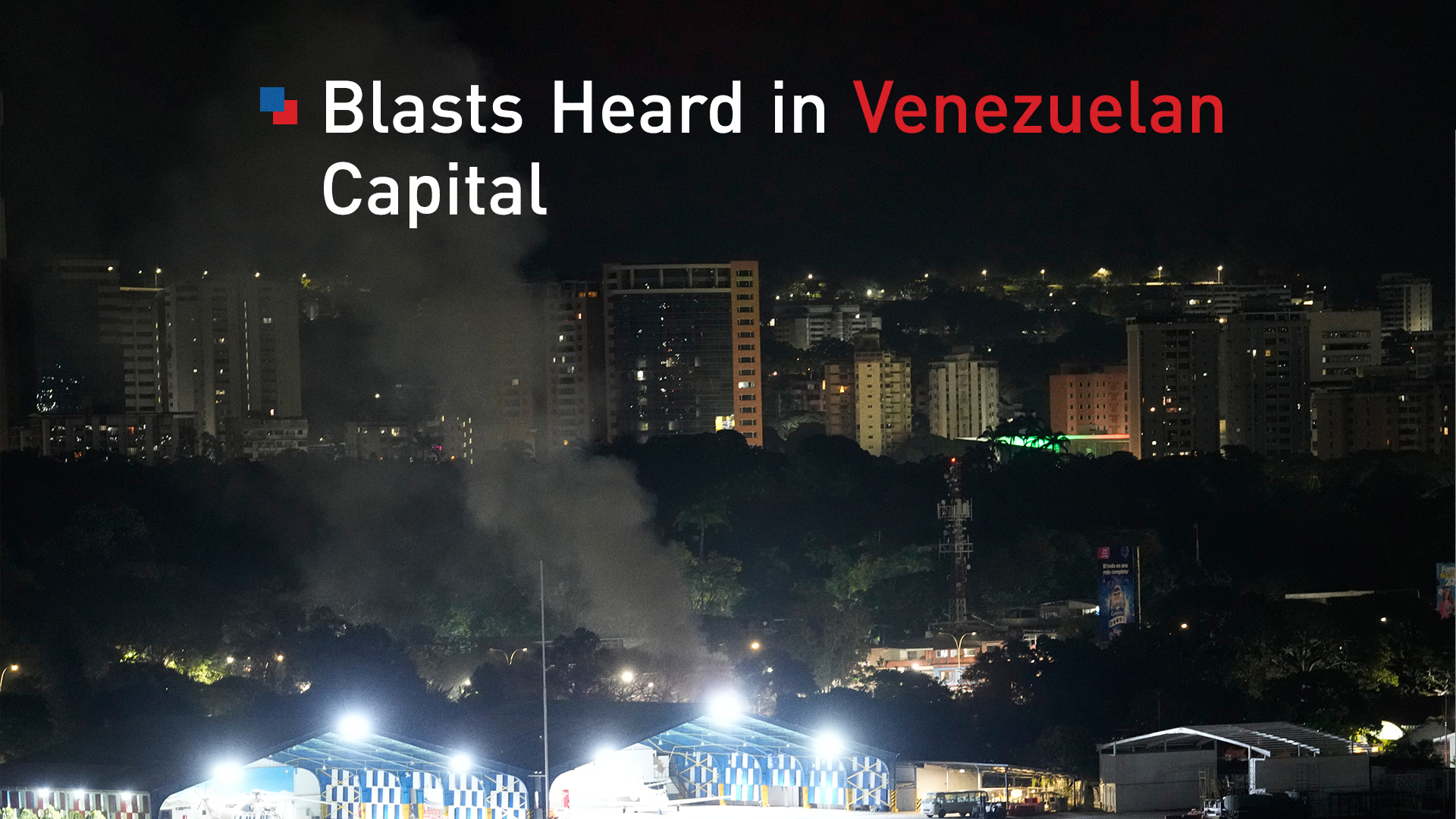
ERBIL (Kurdistan24) — Loud explosions accompanied by sounds resembling aircraft flyovers were reported in the Venezuelan capital early Saturday morning, according to an Agence France-Presse (AFP) journalist present in the city. The incident, which occurred around 2:00 a.m. local time (0600 GMT), marks a potential escalation in the security situation as the United States intensifies its military posture in the region.
The blasts were heard at a time when the administration of U.S. President Donald Trump has deployed a navy task force to the Caribbean and explicitly raised the possibility of conducting ground strikes against targets within Venezuela.
The AFP journalist reported that the sounds of explosions continued to be heard in the capital until at least 2:15 a.m. While the audio evidence was distinct, the exact location of the detonations remained unclear in the immediate aftermath of the event.
The disruptions in Caracas follow a week of heightened rhetoric and claimed military action by the United States. On Monday, President Trump stated that U.S. forces had hit and destroyed a docking area that was allegedly being used by Venezuelan drug boats.
The President described the location of that strike only as being "along the shore," declining to specify whether the operation was conducted by the U.S. military or the Central Intelligence Agency. If confirmed, Monday’s operation would represent the first known land strike on Venezuelan soil since the beginning of the current pressure campaign.
The Saturday morning explosions also occur against a backdrop of mixed diplomatic signals. Venezuelan President Nicolas Maduro has maintained a conspicuous silence regarding the specific strike claimed by Trump on Monday, neither confirming nor denying that such an attack took place.
However, on Thursday, Maduro signaled a potential shift in diplomatic tone, stating that he was open to cooperation with Washington despite weeks of mounting U.S. military pressure.
The strategic rationale provided by the Trump administration for its increased activity in the region centers on narcotics trafficking. Washington has accused Maduro of heading a drug cartel and has framed its recent maneuvers as a crackdown on illicit trafficking routes.
The Trump administration has maintained that it is necessary to intervene to stop the flow of drugs. Conversely, the leftist leader in Caracas has vehemently denied any involvement in the narcotics trade. Maduro contends that Washington’s true objective is to overthrow his government to gain control over Venezuela's oil resources, which are the largest known reserves on Earth.
To leverage this pressure, Washington has employed a multifaceted strategy. In addition to the naval deployment, the U.S. has informally closed Venezuela's airspace to traffic, imposed additional rounds of sanctions, and ordered the seizure of tankers loaded with Venezuelan crude.
For weeks, President Trump has threatened that ground strikes against drug cartels in the region would start "soon." The strike on the docking area claimed on Monday appears to be the first apparent example of this shift from threats to kinetic action on land.
While the events in Caracas on Saturday remain under investigation, they fit a pattern of increasing U.S. military activity in the nearby maritime theater. Since September, U.S. forces have carried out a deadly maritime campaign in both the Caribbean Sea and the eastern Pacific Ocean.
According to information released by the U.S. military, these operations have resulted in at least 30 strikes targeting vessels that Washington identifies as drug smugglers.
The human toll of this maritime interdiction campaign has been significant. Military data indicates that the strikes have killed at least 107 people since September. However, the operations have generated substantial debate regarding their legality.
The Trump administration has provided no evidence to the public that the specific boats targeted in these lethal strikes were involved in drug trafficking. This lack of transparency has prompted questions about the rules of engagement and the legal framework under which the U.S. is operating in international and territorial waters.
As the sounds of explosions echoed through Caracas on Saturday, the potential for the conflict to transition from a maritime interdiction campaign to a ground-based conflict appeared to be increasing.
With the U.S. Navy positioned in the Caribbean and the President openly discussing land strikes, the ambiguity surrounding the source of the Saturday blasts serves to heighten the sense of vulnerability in the Venezuelan capital.
This article was updated on Saturday Jan. 3, 2026, at 10:13am; adding new information.