Duhok Governor Reaffirms Shared Destiny as Foundation Stone Laid for Assyrian Genocide Memorial
Ceremony in Semel recalls the 1933 massacre and underscores Kurdish-Assyrian unity amid the shared history of persecution.
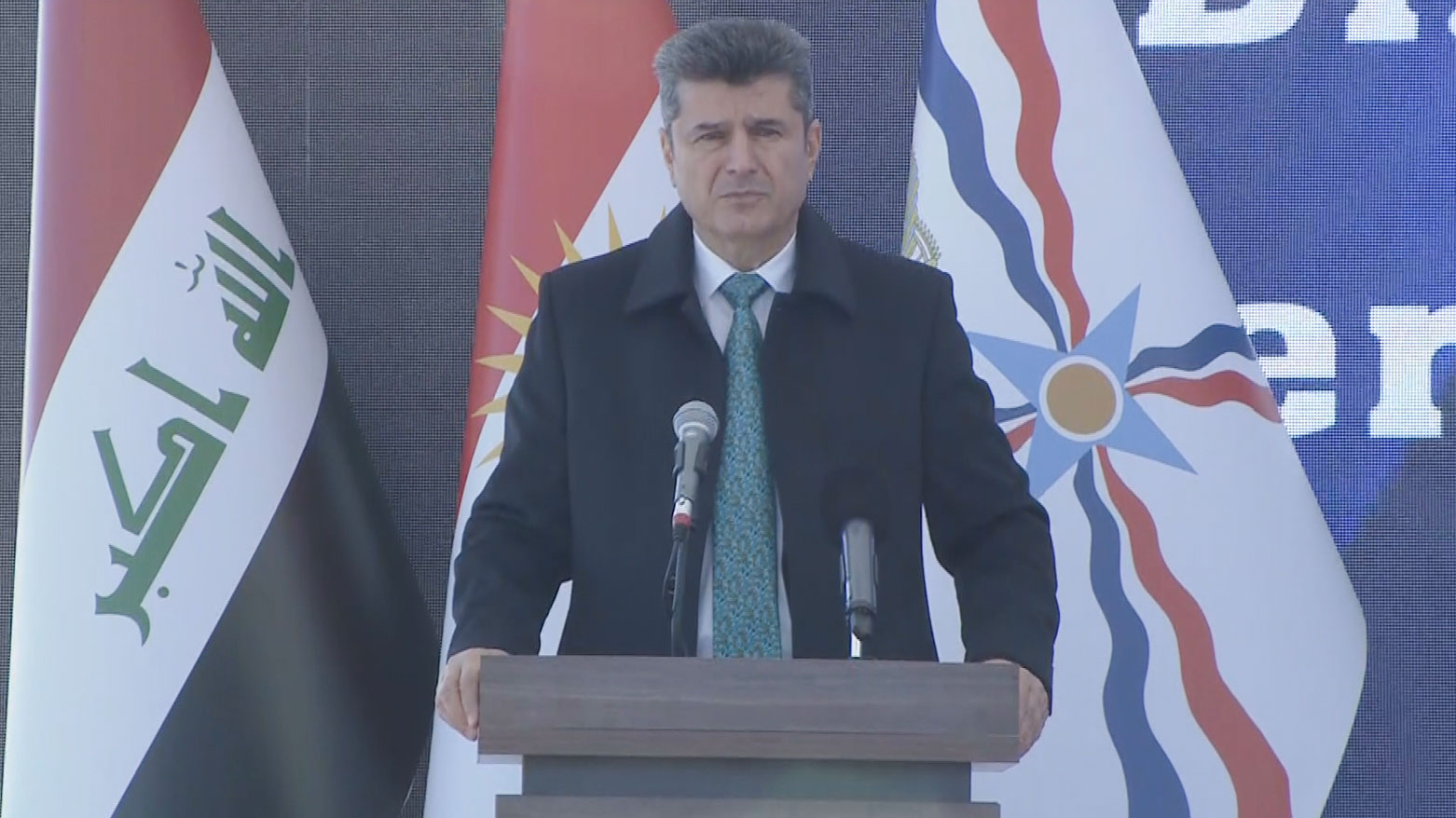
ERBIL (Kurdistan24) — Duhok Governor Ali Tatar on Sunday emphasized the shared destiny and long history of collective sacrifice among the peoples of Kurdistan, calling for unity and mutual protection as the foundation stone was laid for a memorial commemorating Assyrian victims of the 1933 Semel massacre.
The ceremony, held in the town of Semel, took place under the supervision of President Masoud Barzani and in the presence of His Holiness Mar Awa III, Patriarch of the Assyrian Church of the East, alongside senior party, government, military, and parliamentary officials.
“This is a shared fate,” Tatar said in his address. “Our joys and sorrows have been collective, and we must together safeguard our brotherhood and our existence.”
The memorial is intended to honor the victims of the mass killings carried out against the Assyrian people in 1933 by the then-Iraqi government, an event widely regarded as one of the earliest genocidal crimes in modern Iraqi history.
The Semel massacre resulted in the deaths of thousands of Assyrians and left a lasting scar on communal relations and minority protection in Iraq.
A shared history of oppression and genocide
Placing the 1933 events within a broader historical context, Tatar traced a pattern of systematic violence against the region’s indigenous communities. He referred to decrees issued against the Badinan population in 1914 during the era of Sheikh Abdul Salam Barzani.
He also cited military campaigns launched against the Barzanis in 1931 and 1932, stressing that “only a year later, another decree was issued against the Assyrians.” According to Tatar, the same chauvinistic and racist mentality underpinned these crimes.
The governor highlighted the role of Bakr Sidqi, the Iraqi army commander who oversaw both the military operations against the Barzanis and, a year later, the Semel massacre. He said successive Iraqi governments pursued policies targeting the region’s indigenous peoples, a trajectory that continued through to the Anfal campaign of the late 1980s.
Tatar described August as a “month of catastrophes” for the region, recalling three major genocides that occurred during that period: the genocide of the Yazidis in Sinjar in early August 2014; the Assyrian genocide in Semel from August 7 to 11, 1933; and the final phase of the Anfal campaign on August 25, 1988, which targeted Kurds—Muslims, Yazidis, and Christians alike—in Badinan.
“In this single month, all three core components of the Badinan region were subjected to genocide by successive regimes and the same destructive mentality,” he said. “This is our shared destiny.”
“Assyrian martyrs are martyrs of Kurdistan.”
Tatar reaffirmed that the Kurdistan Regional Government (KRG) and the Kurdish people regard Assyrian victims as martyrs of Kurdistan. “They are martyrs of the Assyrian people, but they fell on this land, and we consider them an integral part of our own martyrs,” he said.
He described the memorial project as an extension of the “deep-rooted and historic brotherhood” between Kurds and Assyrians, stressing the Kurdistan Region’s commitment to preserving coexistence and protecting diversity despite repeated attempts to undermine communal harmony.
Concluding his remarks, the Duhok governor called on all indigenous communities of the region to strengthen unity in the face of any threat that endangers peaceful coexistence or their continued presence on their ancestral land.