Yezidis Mark Eid Khidr Elias with Traditional Rituals and Communal Celebrations
The festival holds deep religious significance and features a range of rituals, most notably the preparation of a special ceremonial dish known as “pakhun” or “kichka.”
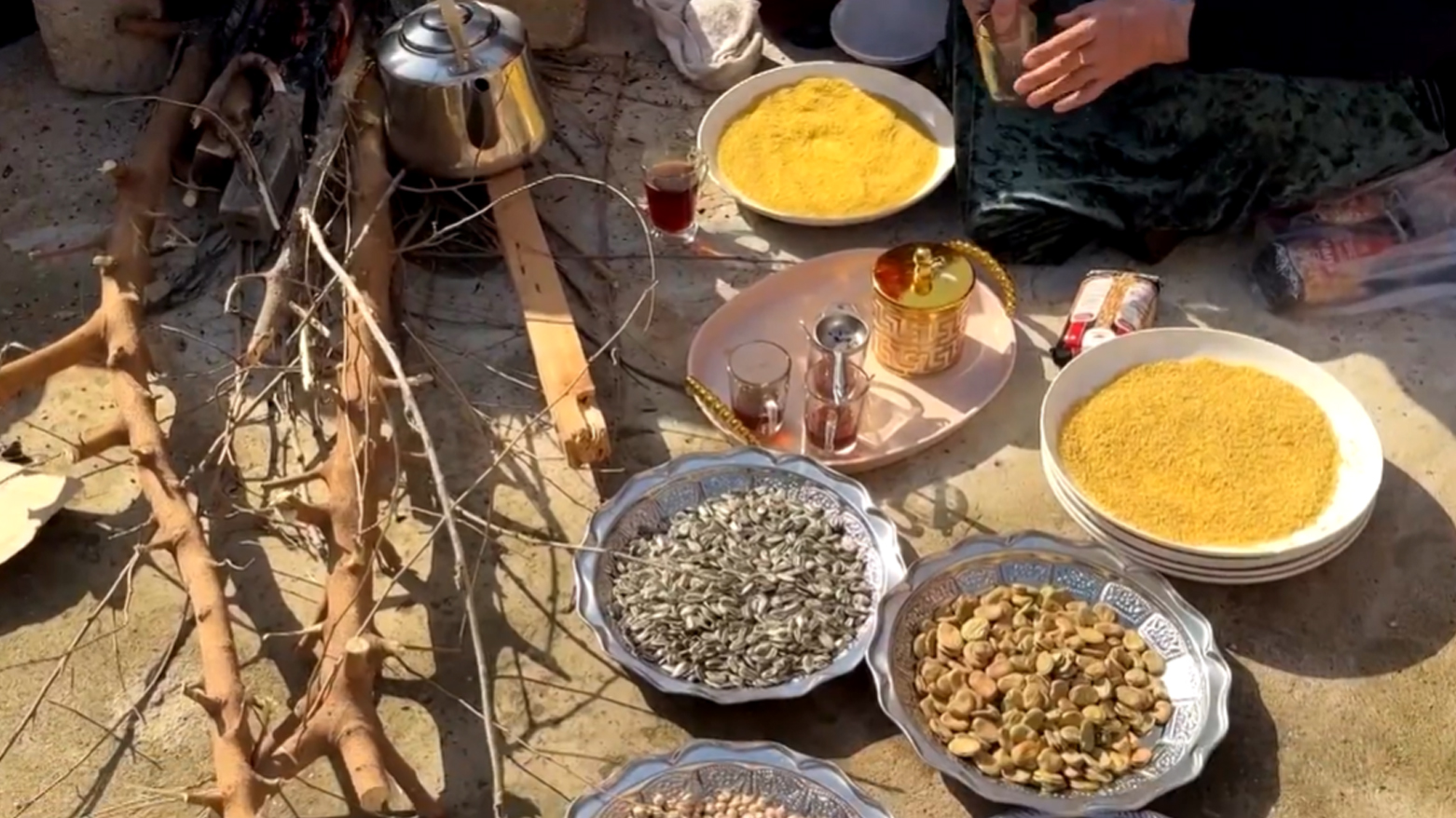
ERBIL (Kurdistan24) – Mid-February brings one of the most cherished annual celebrations for the Yezidi community: Eid Khidr Elias, a holiday marked by spiritual reflection, traditional foods, and social gatherings that reinforce cultural identity and unity.
The festival holds deep religious significance and features a range of rituals, most notably the preparation of a special ceremonial dish known as “pakhun” or “kichka.” Women gather in home courtyards to prepare the mixture, which includes roasted grains and dried fruits. Wheat forms the base, combined with chickpeas, lentils, broad beans, maize, pumpkin seeds, and sunflower seeds. The ingredients are roasted in a large wok, dried, and later served during the festivities.
In the days leading up to the holiday, Yezidi followers observe a three-day fast. The celebration is also described as a “bloodless” festival, reflecting a tradition of refraining from slaughtering animals or consuming meat, a practice rooted in respect for life and the sanctity of the occasion.
“We have been observing these ceremonies for over 40 to 50 years. Every year we roast the grains and pray that Eid Khidr Elias will bless our families, children, and the entire world,” said Turko Khidr, one of the women preparing the dish, in an interview with Kurdistan24.
On the day of Eid, families visit relatives and neighbors, sharing the prepared food alongside tea. Beyond its religious meaning, the celebration serves as a time to strengthen social bonds and revive traditions preserved by the Yezidi community for centuries.