Colombia’s Petro Rejects Trump’s Drug Trafficking Accusations and Military Threats Against Colombia
Trump described Colombia as “very sick” and alleged it was “run by a sick man who likes making cocaine and selling it to the United States.”
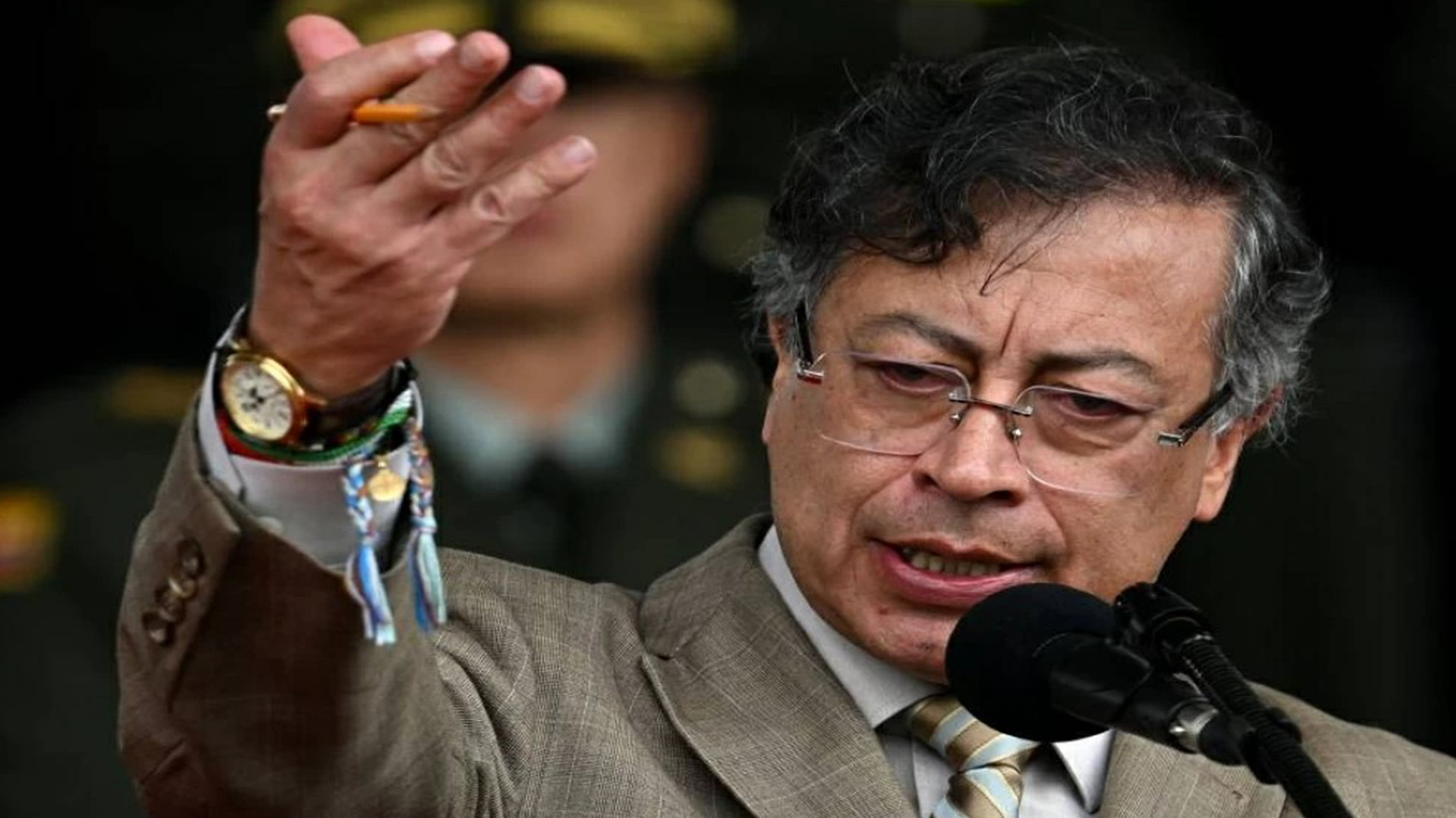
ERBIL (Kurdistan24) — Colombian President Gustavo Petro on Sunday rejected threats and accusations leveled by U.S. President Donald Trump, who accused him of drug trafficking and suggested that military action against Colombia could be considered, following a U.S. operation in neighboring Venezuela.
The sharp exchange came after U.S. forces carried out a surprise military operation in Caracas early Saturday, bombing military targets and removing Venezuelan President Nicolas Maduro from power in what Washington described as a decisive intervention to assert control over the oil-rich South American country.
Speaking to reporters aboard Air Force One on Sunday, Trump extended his confrontational rhetoric beyond Venezuela, warning that Colombia could also face U.S. military action.
He described the country as “very sick” and alleged it was “run by a sick man who likes making cocaine and selling it to the United States.”
“He has cocaine mills and cocaine factories and is not going to be doing it very long,” Trump said. Asked whether an intervention similar to Venezuela’s was possible in Colombia, Trump responded: “It sounds good to me,” claiming that drug violence justified such measures.
President Petro swiftly rejected the allegations, saying his “name does not appear in court records” and accusing Trump of slander. “Stop slandering me, Mr. Trump,” Petro wrote on the social media platform X. “That’s not how you threaten a Latin American president who emerged from the armed struggle and then from the people of Colombia’s fight for peace.”
Petro has been a vocal critic of the Trump administration’s recent military actions in the region, accusing Washington of abducting Maduro “without legal basis.” In a later post on Sunday, he added: “Friends do not bomb.”
Colombia’s foreign ministry also pushed back strongly, calling the U.S. president’s remarks “unacceptable interference” and demanding respect for Colombia’s sovereignty.
The diplomatic confrontation has also reverberated among Colombia’s armed groups operating along the volatile border with Venezuela. On Sunday, left-wing guerrilla organizations vowed to resist what they described as Washington’s “imperial plans” following the U.S.-led ouster of Venezuelan President Nicolas Maduro, signaling the potential for heightened instability in border regions already plagued by violence and illicit trafficking.
The National Liberation Army (ELN), Colombia’s most powerful remaining guerrilla group and a key player in cocaine trafficking routes along the Venezuelan frontier, called on “all patriots” to confront U.S. actions in Venezuela and across the Global South.
The group has long maintained rear bases inside Venezuelan territory, arrangements that were largely tolerated under Maduro’s rule. Dissident factions of the former FARC rebel army, which compete with the ELN for control of drug-producing areas near the border, issued similar threats, declaring on social media that they were prepared to fight the United States “to the last drop of blood.”
The latest exchange comes against the backdrop of a historically close but increasingly strained relationship between Colombia and the United States. For decades, Bogotá has been Washington’s most important security partner in South America, particularly through cooperation under the U.S.-backed “Plan Colombia,” which focused on counterinsurgency and anti-narcotics operations.
That partnership significantly weakened leftist guerrilla groups but also drew criticism over human rights abuses and the militarization of Colombia’s internal conflict.
President Gustavo Petro, a former leftist guerrilla who took office in 2022, has sought to recalibrate Colombia’s relationship with Washington. His administration has prioritized a comprehensive peace policy, renewed talks with armed groups, and a shift away from the U.S.-centric “war on drugs,” arguing that decades of militarized anti-narcotics efforts have failed to curb cocaine production or trafficking.
Petro has instead called for alternative development, drug regulation debates, and shared international responsibility for drug consumption.
Tensions have intensified under U.S. President Donald Trump’s second term, as the two leaders have clashed over trade tariffs, migration enforcement, and security policy.
Trump has repeatedly framed drug trafficking as a national security threat, justifying hardline measures, while Petro has warned against foreign military interventions in Latin America, citing a long history of U.S. involvement that, he argues, has undermined regional sovereignty and stability.
The dispute has been further inflamed by Washington’s recent military operation in Venezuela, which Petro condemned as unlawful and destabilizing.