U.S. VP Accuses Denmark of Failing Greenland’s Security as US Revives Arctic Focus
US Vice President JD Vance accused Denmark of underinvesting in Greenland’s security and people during a speech at Pituffik Space Base, saying the failure explains President Trump’s renewed Greenland policy amid mounting Arctic tensions.
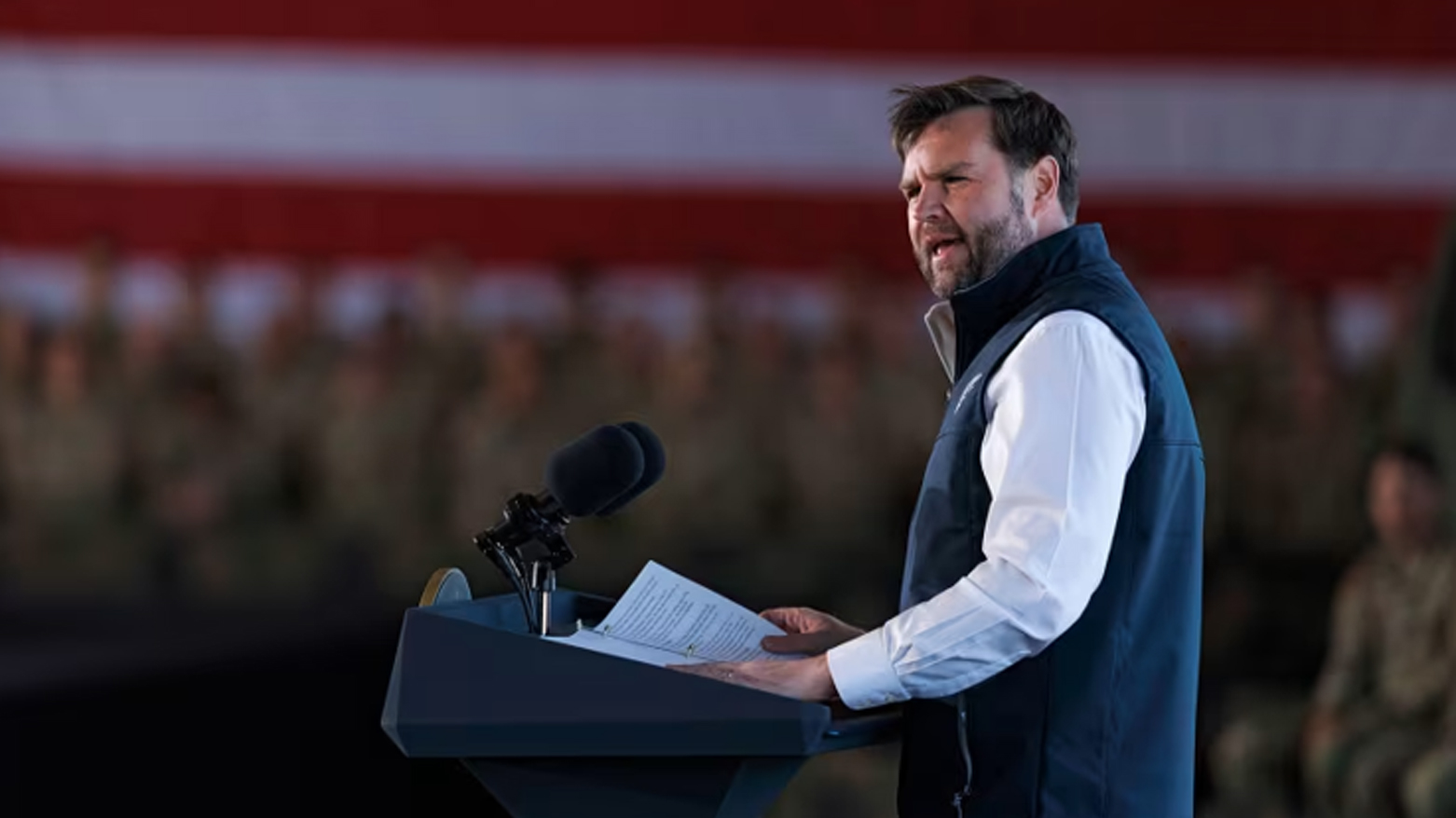
ERBIL (Kurdistan24) - Speaking from the icy expanse of Pituffik Space Base in Greenland, US Vice President JD Vance delivered a sharp message to Denmark, accusing it of failing to adequately protect and invest in Greenland, while portraying renewed US interest in the Arctic as a matter of shared security rather than coercion.
In remarks that reignited a transatlantic dispute, Vance said criticism from Denmark and others within Europe would not obscure what he described as an obvious reality: that Copenhagen has underperformed in safeguarding Greenland and supporting its population.
“There was a lot of criticism from Denmark, a lot of attacks at the Trump administration, at the President, at me, at others in our administration for saying the obvious,” Vance said. “Which is that Denmark hasn’t done a good job at keeping Greenland safe.”
Addressing Danish objections that point to past military cooperation, Vance acknowledged the sacrifices made by Danish forces alongside the United States during the war on terror, while insisting that historical alliances do not preclude present disagreements.
“We obviously honor the sacrifice of our Danish friends in the war on terror twenty years ago, just as, for example, the French honor the sacrifice of Americans in Normandy eighty years ago,” he said. “But recognizing that there are important security partnerships in the past does not mean that we can’t have disagreements with allies in the present about how to preserve our shared security for the future.”
Vance rejected accusations of pressure or intimidation, asserting that Washington’s position is rooted in concern for Greenland’s future.
“There is no amount of bullying, no amount of obfuscating, no amount of confusing the issue,” he said. “Our message to Denmark is very simple: you have not done a good job by the people of Greenland, you have under-invested in the people of Greenland, and you have under-invested in the security architecture of this incredible, beautiful landmass filled with incredible people. That has to change.”
He added that this failure, as described by the Trump administration, underpins the current US approach toward Greenland. “And because it hasn’t changed, this is why President Trump’s policy in Greenland is what it is,” Vance said.
The vice president’s remarks come as US President Donald Trump has renewed assertions that Greenland should become part of the United States, citing national security needs in the Arctic. Speaking aboard Air Force One, Trump said Greenland is needed “from the standpoint of national security” and argued that Denmark would be unable to manage the territory.
Greenland’s Prime Minister Jens Frederik Nielsen rejected the comments, writing on social media: “That’s enough now. No more pressure. No more insinuations. No more fantasies of annexation. We are open to dialogue and discussions, but this must happen through proper channels and with respect for international law.”
Denmark’s Prime Minister Mette Frederiksen condemned Trump’s statements as “absolutely absurd,” urging Washington to stop “threatening its historical ally,” and stressing that Denmark and Greenland are NATO members protected by alliance guarantees. France voiced support for Denmark, with Foreign Ministry spokesman Pascal Confavreux saying borders cannot be changed by force and that Greenland’s future belongs to Greenlanders and Danes.
Trump has repeatedly cited the presence of Russian and Chinese vessels near Greenland’s coast to justify US concerns. Chinese authorities rejected that rationale, urging Washington to stop using “the so-called China threat” as a pretext for territorial ambitions. Nordic leaders, including those of Finland, Sweden, and Norway, echoed the position that Greenland’s future must be determined solely by Greenland and Denmark.
The debate intensified after an image of Greenland colored as a US flag was posted online by former Trump aide Katie Miller, prompting Nielsen to call the gesture disrespectful. Denmark’s ambassador to Washington, Jesper Moeller Soerensen, responded by highlighting Denmark’s strengthened Arctic security and emphasizing cooperation with the United States.
As Washington presses its case in the Arctic and Copenhagen pushes back, Vance’s remarks underscore how Greenland has become a focal point of broader disputes over security, sovereignty, and alliance politics in a region of growing strategic importance.