With 81 Candidates, KDP Urges Kurdish Unity to Secure Iraq’s Presidency
Head of KDP Faction in Iraqi parliament, Shakhawan Abdullah, states dialogue on the Iraqi presidency remains open despite the deadline, warning that without Kurdish consensus, Shiite and Sunni blocs will decide the outcome.
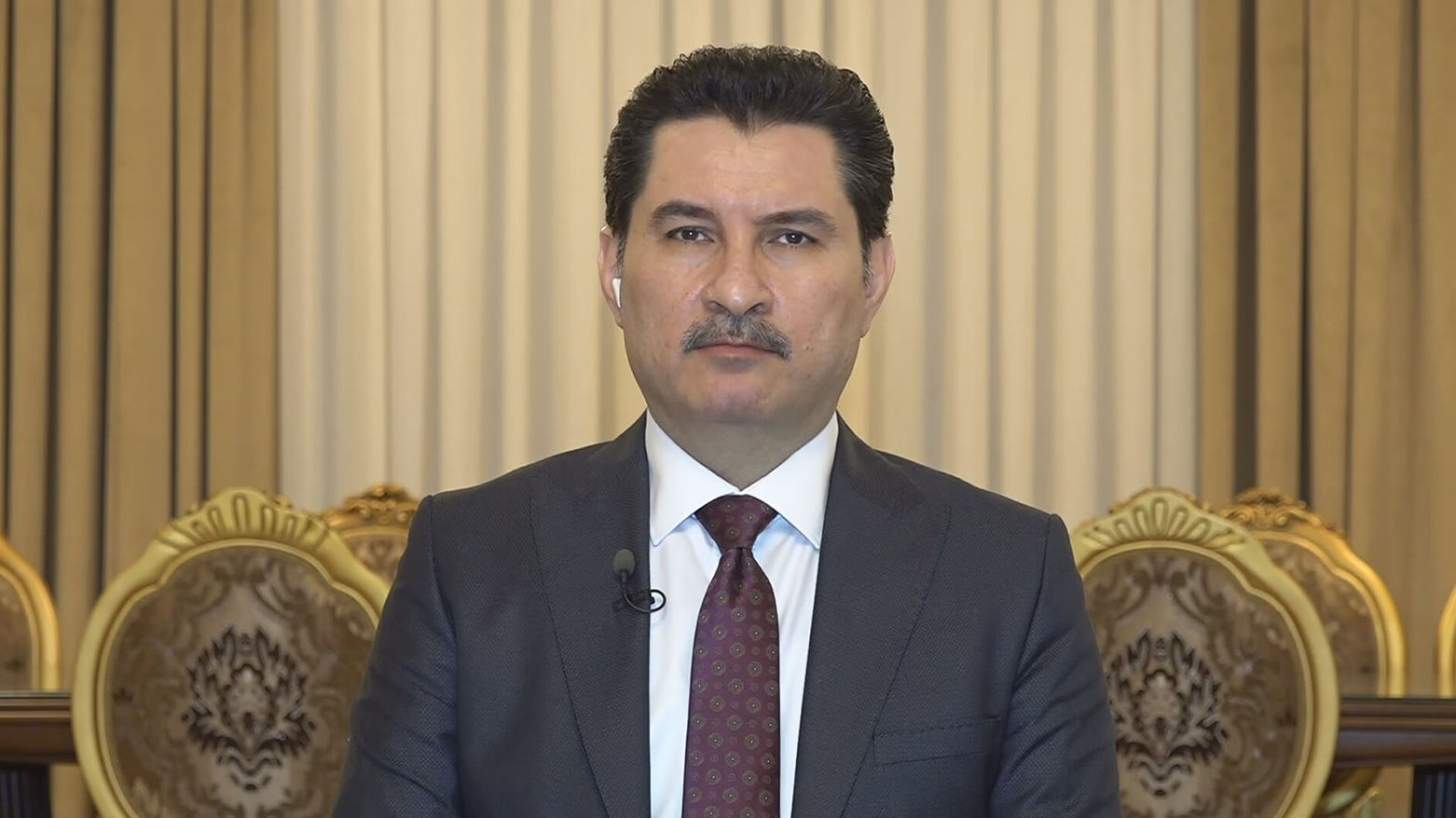
ERBIL (Kurdistan24) — The head of the Kurdistan Democratic Party (KDP) faction in the Iraqi Parliament signaled on Monday that high-level negotiations regarding the selection of the next President of the Republic of Iraq remain active, despite the expiration of the official timeline for self-nomination.
Shakhawan Abdullah, speaking during a televised appearance, emphasized that while the procedural window for filing candidacies has closed, the political door for a consensus agreement between the Kurdistan Region’s ruling parties—specifically the KDP and the Patriotic Union of Kurdistan (PUK)—remains open.
However, he issued a stark warning that the absence of a unified Kurdish front could result in the presidency being determined by the country’s Shiite and Sunni blocs rather than Kurdish representatives.
Speaking on the Kurdistan24 program Basi Roj on January 5, 2026, Abdullah outlined the complexities currently facing the Kurdish political leadership in Baghdad.
The fractured nature of the nomination process has resulted in a crowded field of competitors, a development Abdullah described as a direct consequence of the lack of internal Kurdish consensus.
He noted that the sheer number of applicants—totaling 81 individuals—poses a strategic risk to Kurdish interests. "Unfortunately, the lack of Kurdish consensus on a candidate has caused the number of candidates to be high," Abdullah said.
He cautioned that such fragmentation "creates the risk that in the future, external interference will be imposed on the person who becomes President of the Republic."
The parliamentary leader indicated that the legislative body in Baghdad is scheduled to convene on Tuesday to begin the process of vetting and reducing the list of 81 hopefuls through internal evaluations and discussions. This procedural thinning of the field comes as the political leadership faces pressure to consolidate its position.
Abdullah expressed certainty that a resolution to the candidate surplus could be achieved rapidly if the two main Kurdish parties align. "I am certain that whenever those two parties reach an agreement, resolving the issue of candidates will be easy, whether through withdrawal or by agreeing on a joint candidate," he stated.
A central theme of Abdullah’s remarks was the potential forfeiture of Kurdish agency if the KDP and PUK fail to present a united front. He delineated the parliamentary arithmetic required to secure the presidency, noting that electing a President is procedurally more difficult than electing the Speaker of Parliament.
Under the Iraqi constitution, a candidate must secure 220 votes in the first round of voting to win.
Abdullah warned that if the Kurdish parties remain divided, the decision will inevitably fall to a "third party," explicitly referring to the Shiite Coordination Framework and Sunni political forces. In such a scenario, the candidate who secures the parliamentary majority from these non-Kurdish blocs would ascend to the presidency, bypassing the preferences of the Kurdish leadership.
While discussing the mechanics of the federal government formation, Abdullah asserted the KDP’s political entitlement to the presidency based on electoral majorities, drawing a parallel to the distribution of other sovereign posts among Iraq’s ethno-sectarian components.
He argued that just as the Shiite component determines the Prime Minister based on their majority status, and the Sunni component selects the Speaker of Parliament, the KDP, as the holder of the Kurdish majority, theoretically possesses the right to determine the President of the Republic. However, he qualified this stance by affirming that the party remains ready for dialogue "for the sake of public interest and Kurdish unity."
Abdullah also linked the federal negotiations to the stalled government formation process within the Kurdistan Region itself. He revealed that the KDP has formally requested that the PUK move to form the Kurdistan Regional Government (KRG), designating this local issue as the paramount concern.
"For us, the Kurdistan Regional Government is the highest priority," Abdullah said, expressing strong disapproval of the delays that have plagued the process. He termed it "unacceptable" that the Regional Government has not yet been formed a year after the election, criticizing a political focus on the institutions of the federal government in Baghdad while the regional administration remains unsettled.
The faction head pushed back against the perception that the Iraqi presidency is a purely ceremonial role, arguing that the position holds significant constitutional power that has been underutilized in previous administrations.
Abdullah contended that the absence of a forceful figure in the presidency has historically led to the erosion of the Kurdistan Region’s constitutional rights. He cited specific violations related to the federal budget and the implementation of Article 140, which governs disputed territories.
"The Party wants someone to go there who can defend constitutional rights," he said, attributing past failures to the lack of a "strong person" in the office.
Beyond the immediate mechanics of the election, Abdullah described a broader geopolitical environment hostile to the emergence of a robust Iraqi state. He suggested the existence of an "external hand" that actively opposes the establishment of a strong President, Parliament, and Council of Ministers.
According to his assessment, foreign actors view a strong Iraq as a threat to their own interests and prefer a weakened state apparatus to maintain their ability to benefit from the Iraqi economy.
Addressing the KDP’s relationships with other major Iraqi political players, Abdullah noted that the Shiite Coordination Framework has also conveyed a preference for the Kurds to arrive in Baghdad with a single, agreed-upon candidate.
He provided an update on the KDP's relationship with Speaker of Parliament Haibەt Al-Halbousi, clarifying that previous tensions over administrative issues and land disputes have been resolved, and that current relations are "normal."
However, the outlook for the selection of a Prime Minister remains clouded. Abdullah reported that the Coordination Framework has not yet settled on a candidate for the premiership, observing that internal disagreements within the Shiite bloc are "deepening day by day." He cited the intervention of both external and internal parties as complicating factors.
Abdullah predicted that if the deadlock persists, the Coordination Framework might be forced to resort to a compromise candidate. He further noted that this internal discord within the Shiite leadership has reduced the immediate pressure on the Kurdish parties to finalize the presidency, as the broader government formation package remains incomplete.