U.S. CG Green Highlights Urgent Need to Uphold Iraqi Sovereignty, Protect Critical Infrastructure
CG Green discussed Halabja’s development as a new province with Governor Nuxsha Nasih, focusing on how Kurdish partners can bolster Iraqi sovereignty and advance U.S. commercial interests.
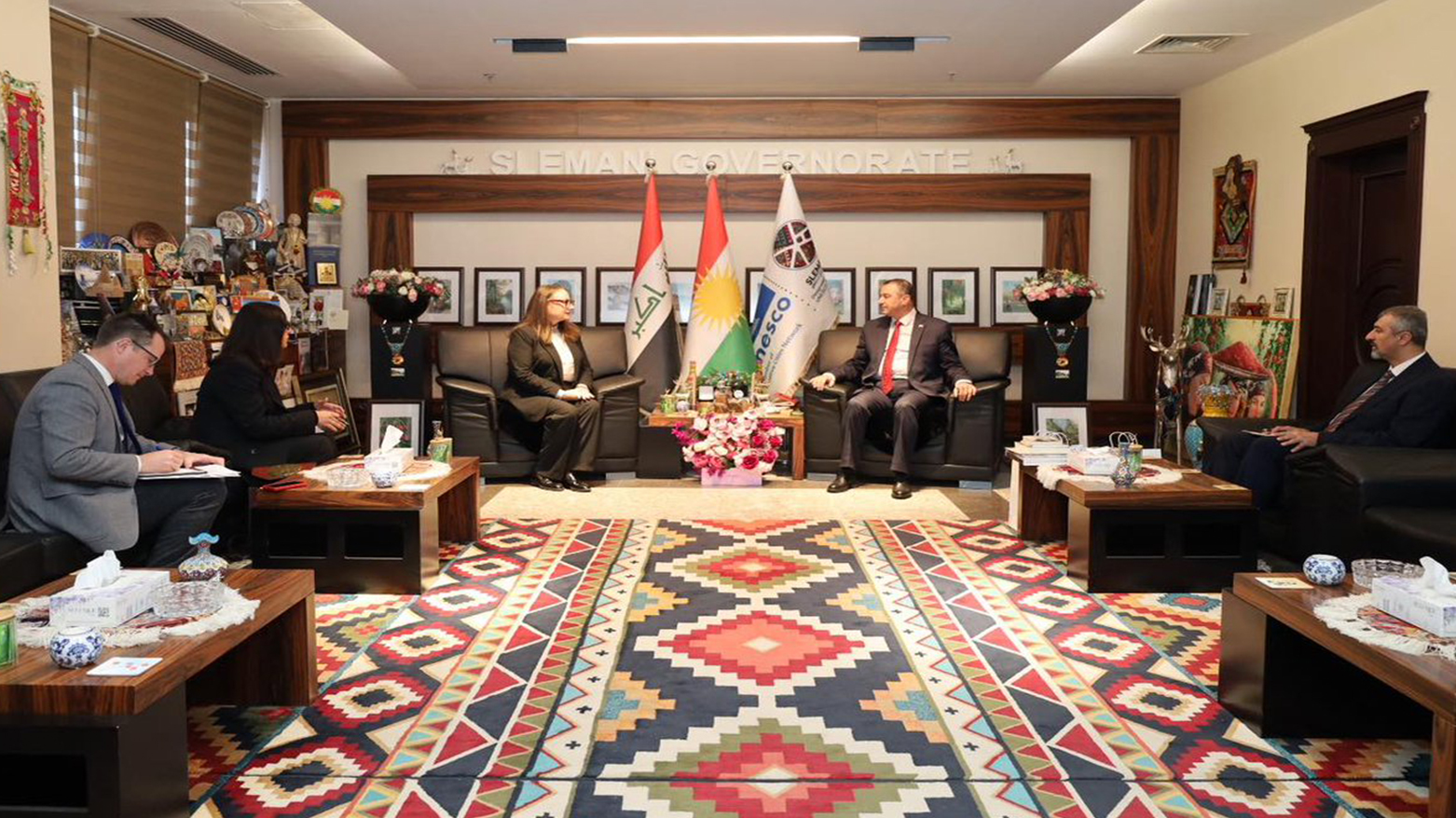
ERBIL (Kurdistan24) — The United States has emphasized the urgent need to uphold Iraqi sovereignty and protect critical infrastructure from attacks by Iran-aligned militias, as part of renewed diplomatic engagement with local authorities in the Kurdistan Region, according to statements released by the U.S. Consulate General in Erbil.
In a post on X, the U.S. Consulate General said Consul General Wendy Green met with Sulaimani Governor Haval Abubakir "to discuss shared U.S.–Iraqi Kurdistan Region (IKR) interests, including the urgent need to uphold Iraqi sovereignty and protect critical infrastructure from attacks by Iran-aligned militias."
The discussions highlighted growing concerns over repeated threats to energy facilities and other strategic assets that are critical to Iraq and the Kurdistan Region’s economic stability and national security.
Framed by Consul General Green as a matter of urgency, the issue underscores the significant attention the United States is paying to continued attacks by Iran-aligned armed groups on energy infrastructure in the Kurdistan Region, which undermine state authority, weaken investor confidence, and pose risks to both local communities and international partners operating in Iraq.
In a separate statement, the U.S. Consulate General said Green also met with Halabja Governor Nuxsha Nasih "to discuss Halabja’s progress as a new province and ways our Kurdish partners can meet this moment to bolster Iraqi sovereignty and advance U.S. commercial interests in eastern Iraq."
The U.S. emphasis on sovereignty and infrastructure protection comes amid a series of attacks on energy and logistics facilities attributed to Iran-aligned militias, which Washington says operate outside state control.
These groups have been accused of targeting assets linked to Western and regional partners, exacerbating tensions between Baghdad, the Kurdistan Regional Government, and Iran-backed factions.
For the Kurdistan Region, stability and infrastructure security are central to maintaining its role as a hub for energy production and foreign investment.
U.S. officials have consistently argued that empowering legitimate state and regional institutions, while curbing the influence of armed non-state actors, is key to preserving Iraq’s sovereignty, supporting economic recovery, and ensuring long-term security across the country.
Over the past year, the Kurdistan Region has faced a series of drone and missile attacks targeting key oil and gas facilities, underscoring persistent vulnerabilities in Iraq’s sovereignty and lack of state control on Iraqi armed militias. Several major fields, including Khurmala, Sarsang, Tawke, and the Khor Mor gas field, have been struck, forcing temporary shutdowns, reducing production, and disrupting gas supplies used for electricity generation across the region.
The repeated targeting of these sites has heightened concerns over energy security, economic stability, and the safety of local communities and international companies operating in the Kurdistan Region.
Kurdish and Iraqi security officials have largely attributed the attacks to Iran-aligned armed groups operating outside state control. While no faction has formally claimed responsibility, authorities have pointed to the sophistication of the drones and the launch locations as evidence of militia involvement.
The strikes have not only damaged physical infrastructure but have also undermined investor confidence at a time when the Kurdistan Region and Iraq more broadly are seeking to expand foreign investment in the energy sector.
In response, the Iraqi federal government has condemned the attacks and ordered a series of investigations to determine those responsible. A joint investigative committee comprising federal security institutions and Kurdistan Regional Government authorities was established to investigate the incidents, assess the damage, and determine the origins of the attacks.
Federal officials have publicly reaffirmed the government’s responsibility to protect critical infrastructure across all Iraqi territory and to hold perpetrators accountable. However, while preliminary findings have indicated the involvement of non-state armed groups, the investigations have yet to result in public prosecutions or the dismantling of networks believed to be behind the attacks.
The United States has reacted strongly to the assaults on energy infrastructure in the Kurdistan Region, issuing repeated statements condemning the attacks and warning that they undermine Iraqi sovereignty and economic recovery.
U.S. officials have stressed that continued strikes by Iran-aligned militias weaken state authority, threaten civilian safety, and deter international companies from investing in Iraq’s energy sector. Washington has urged the federal government to assert greater control over armed groups, strengthen air defense and infrastructure protection measures, and ensure accountability for those responsible.
U.S. diplomatic messaging has consistently linked the protection of oil and gas facilities to broader efforts to reinforce Iraqi sovereignty and promote long-term stability. American officials have emphasized that safeguarding energy infrastructure is essential for Iraq’s fiscal health, electricity supply, and credibility as a destination for foreign investment, particularly in the Kurdistan Region, which plays a central role in the country’s oil and gas production.