Mazloum Abdi Condemns Aleppo Attacks, Warns of War Crimes and Demographic Change
Abdi also warned that attempts to storm Kurdish neighborhoods in Aleppo—particularly Sheikh Maqsud and Ashrafiyeh—while negotiations are underway could undermine any prospects for dialogue and mutual understanding.
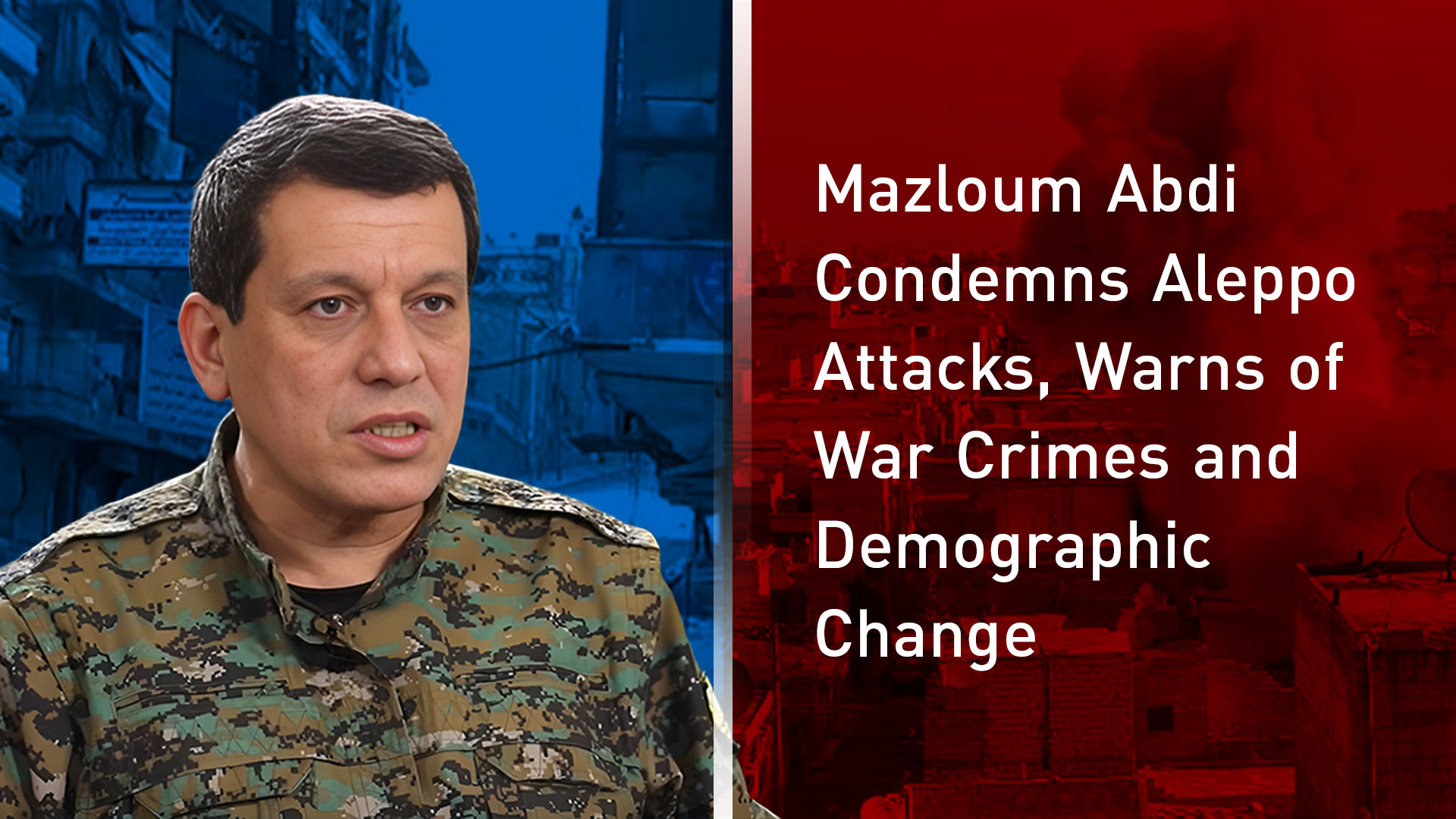
ERBIL (Kurdistan24) – Mazloum Abdi, the commander-in-chief of the Syrian Democratic Forces (SDF), on Thursday strongly condemned the ongoing military escalation in Aleppo, warning that the use of heavy weapons and war rhetoric to impose unilateral solutions risks serious human rights violations.
In a statement posted on social media platform X, Abdi said the continued reliance on combat tactics has previously resulted in massacres amounting to war crimes, citing incidents along the Syrian coast and in Suwayda. He stressed that the deployment of tanks and artillery in Aleppo’s residential neighborhoods, along with the shelling of unarmed civilians and their forced displacement, poses a grave threat to civilian lives.
Abdi also warned that attempts to storm Kurdish neighborhoods in Aleppo—particularly Sheikh Maqsud and Ashrafiyeh—while negotiations are underway could undermine any prospects for dialogue and mutual understanding. Such actions, he said, could lead to “dangerous demographic changes” and expose civilians trapped in these areas to the risk of mass atrocities.
Reaffirming the SDF’s support for residents of the targeted neighborhoods, Abdi said his forces have been working for several days with all relevant parties to bring an end to the attacks. He expressed solidarity with the people of Sheikh Maqsud and Ashrafiyeh and reiterated the calls for an immediate halt to the violence.
Abdi concluded by offering condolences to the families of those killed in the recent attacks and wishing a speedy recovery to the wounded, underscoring the urgent need to protect civilians and prevent further escalation.
Abdi’s statement comes amid escalating military tensions in northern Aleppo. Earlier Thursday, the SDF’s internal security forces, known as Asayish, announced that they had successfully repelled a large-scale land and air assault launched by Damascus government factions against Sheikh Maqsud and Ashrafiyeh.
According to Asayish, the attack followed three consecutive days of intense shelling using tanks and BM-21 Grad missiles and involved more than 60 tanks and armored vehicles, thousands of fighters, and support from suicide drones. Security forces reported strong resistance on the Ashrafiyeh front, resulting in significant losses among the attacking forces, including the destruction of a tank and five military vehicles, the downing of seven suicide drones, and dozens of fatalities, forcing the attackers to retreat.
Asayish described the assault as lacking any legal or military justification and held the Syrian government responsible for the escalation and its impact on civilians. The forces said they would remain on high alert to counter any further attempts to seize populated areas by force.
Meanwhile, public anger over the attacks has spread beyond Syria. On Thursday, a mass demonstration was held in Diyarbakir, where protesters condemned the actions of the Damascus government factions against the Kurdish neighborhoods in Aleppo.
The situation in northern Aleppo remains tense, with residents of Sheikh Maqsud and Ashrafiyeh continuing to face the consequences of ongoing military developments.