Ahmed Sharaa Bears Responsibility for Massacres in Aleppo’s Kurdish Districts: SOHR Director
SOHR director Rami Abdulrahman blames Ahmed al-Sharaa for Aleppo massacres, comparing gunmen's tactics to ISIS and condemning the shelling of the area's lone hospital.
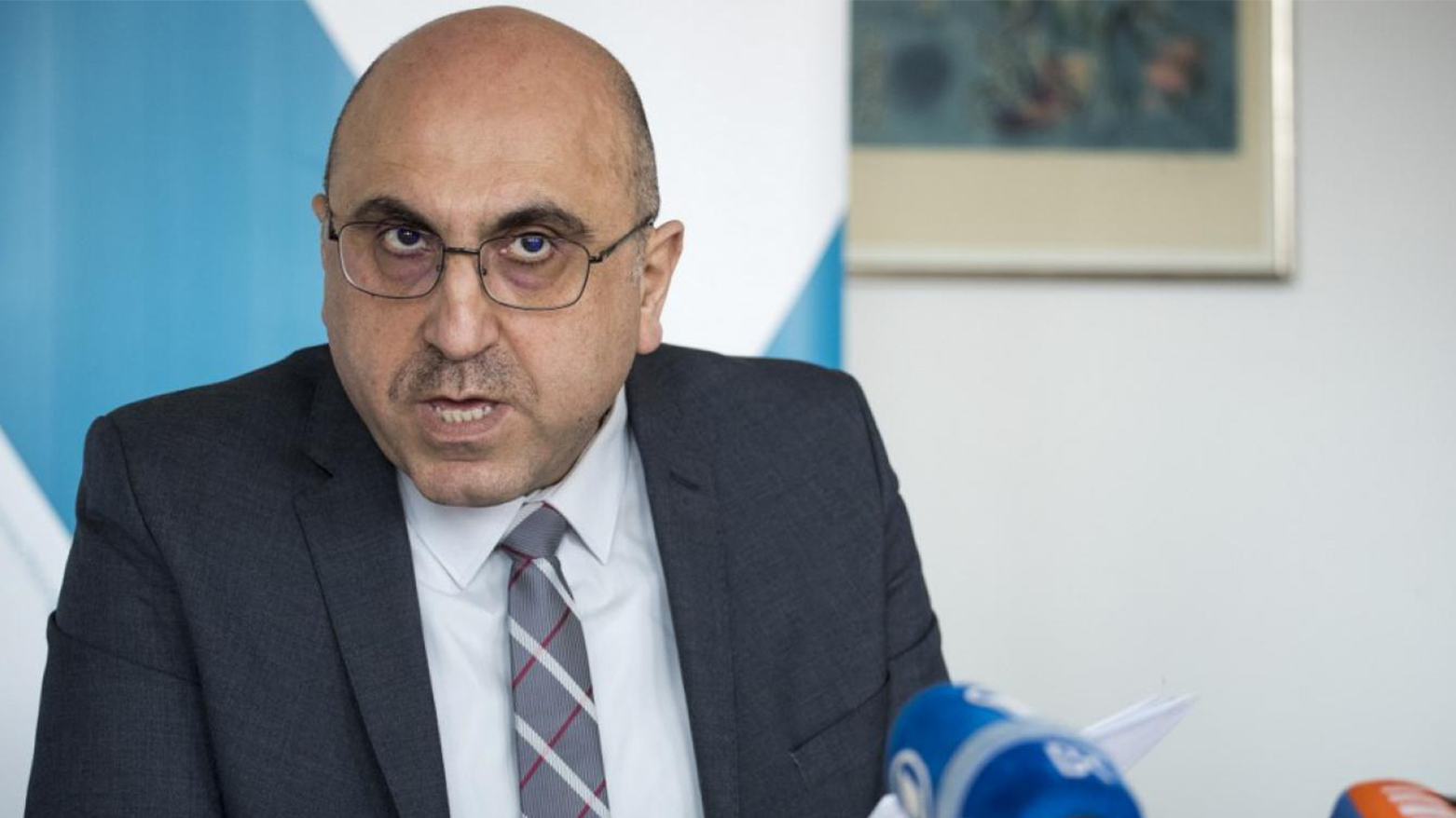
ERBIL (Kurdistan24) — Rami Abdulrahman, the Director of the Syrian Observatory for Human Rights (SOHR), explicitly attributed responsibility for the ongoing violence and reported massacres in the Kurdish neighborhoods of Aleppo to Ahmed al-Sharaa on Friday.
In a statement addressing the escalating military offensive in Sheikh Maqsud and Ashrafiyeh, Abdulrahman asserted that the current campaign represents a continuation of the policies of the previous regime, targeting a population that was instrumental in the fight against the Islamic State (ISIS).
Speaking to Kurdistan24 on Friday, Abdulrahman provided a stark assessment of the security dynamics in northern Syria, characterizing the Kurdish population as the victims of a broader "regional agreement."
His comments come amidst reports of intensifying bombardment by the Syrian Arab Army and affiliated armed groups, which local councils allege are aimed at forcing a demographic shift in the historic districts.
"Ahmed al-Sharaa is responsible for all massacres," Abdulrahman stated, drawing a direct parallel between the current operations against the Kurds and previous atrocities committed against other minority groups in Syria.
"What was done against the Alawites and Druze was a major crime, and now the same thing is being done again against the Kurds," he added.
Allegations of ISIS-like Tactics
The SOHR director drew disturbing comparisons between the conduct of the current attacking forces and the behavior of ISIS militants who previously terrorized the region. Abdulrahman pointed to video evidence emerging from the besieged neighborhoods as proof of systematic abuse.
"In the videos, it appears how the gunmen harass and humiliate the girls and boys of Sheikh Maqsud and Ashrafiyeh; these same words were heard from ISIS gunmen," Abdulrahman said.
He emphasized the moral contradiction of displacing a community that had borne the brunt of the war against the extremist group. "It is not right that those who fought ISIS should now be displaced," he added.
Abdulrahman also questioned the demographic implications of the offensive, asking, "Why should the residents of those neighborhoods leave their areas, while foreign gunmen come to those areas?"
He urged the Syrian Democratic Forces (SDF) to appeal directly to the international community to halt the assaults, framing the intervention as a test of global humanitarian commitment. "If humanity exists within the international community, it must prevent these attacks," he noted.
Infrastructure Targeting and Civilian Toll
The allegations of systematic targeting were corroborated by a statement released Friday by the Council of the Sheikh Maqsud and Ashrafiyeh neighborhoods.
The Council reported that forces affiliated with the Syrian Arab Army, supported directly by armed groups, have engaged in the bombardment of civilian infrastructure, including mosques, schools, and homes.
Abdulrahman specifically highlighted the destruction of medical facilities, noting that "the hospital has been shelled, and those working inside the hospital have been killed and there are wounded." This aligns with reports from the ground regarding the collapse of the district's healthcare system.
According to background information previously reported by Kurdistan24, the Khalid Fajr Hospital—the only operating medical facility serving the two neighborhoods—has been rendered completely out of service due to heavy bombardment.
The closure of the hospital has created a catastrophic situation for the wounded, with the local council reporting that dozens of women, children, and civilians are left without options for medical treatment.
The human toll of the offensive has risen sharply since heavy weapons attacks commenced on January 6.
Ground reports indicate that 23 citizens have lost their lives and 64 others have been injured in the span of three days.
The Council of the Sheikh Maqsud and Ashrafiyeh neighborhoods has characterized the military operation as an intentional effort to alter the demography of the area, stating that the attacks violate all agreements made on April 1 and prior understandings regarding the security of the districts.
"Stay and Defend"
Despite the intensification of the assault and the degradation of essential services, local leadership has refused to capitulate.
The governing council of the neighborhoods issued a proclamation on Friday announcing a collective decision by residents and defending forces to "stay and defend" their homes.
Rejecting demands from the attacking forces for the surrender of the internal security forces (Asayish) and the evacuation of the population, the Council stated it would not accept forced displacement.
The Council’s statement detailed that the offensive is utilizing heavy weapons to target service centers and residential areas, compounding a humanitarian crisis already exacerbated by winter conditions and a siege-induced shortage of basic necessities.
Diplomatic Maneuvering Amidst Violence
While Abdulrahman holds Ahmed al-Sharaa responsible for the violence, the Syrian leader remains a central figure in high-level diplomatic engagements regarding the crisis.
On Friday morning, the official Syrian news agency, SANA, reported that Syrian President Ahmed al-Sharaa received separate telephone calls from French President Emmanuel Macron and Turkish President Recep Tayyip Erdogan.
In his conversation with Macron, the two leaders discussed bilateral cooperation and the situation in Aleppo, with Macron emphasizing the importance of continued coordination between Paris and Damascus.
Simultaneously, Turkish President Erdogan spoke with al-Sharaa to discuss efforts to establish peace and strengthen security, highlighting the importance of "joint coordination" to confront mutual threats.
These diplomatic overtures contrast with the growing condemnation from other international and domestic bodies.
The Kurdistani Diaspora Confederation (KDC) has issued an urgent appeal for United Nations intervention, describing the military actions as "racist attacks" and calling for the protection of Kurds in Western Kurdistan.
Domestically, the Supreme Islamic Alawite Council in Syria and the World issued a statement demanding an immediate halt to the "massacre," warning that a "policy of cleansing" threatens to dismantle the Syrian national fabric entirely.
Western diplomatic representatives, including Gregory Galligan, the Canadian Ambassador to Syria and Lebanon, have expressed deep concern over the fighting, advocating for a political resolution and the resumption of dialogue between the Syrian government and the SDF.
However, with the bombardment continuing and the casualty count rising, the gap between diplomatic discourse and the reality on the ground in Aleppo continues to widen.