USS Gerald R. Ford Arrives in Crete Amid U.S. Naval Buildup in Middle East
The USS Gerald R. Ford has docked at Souda Bay, reinforcing the U.S. naval presence in the Middle East amid tensions over Iran’s nuclear activities.
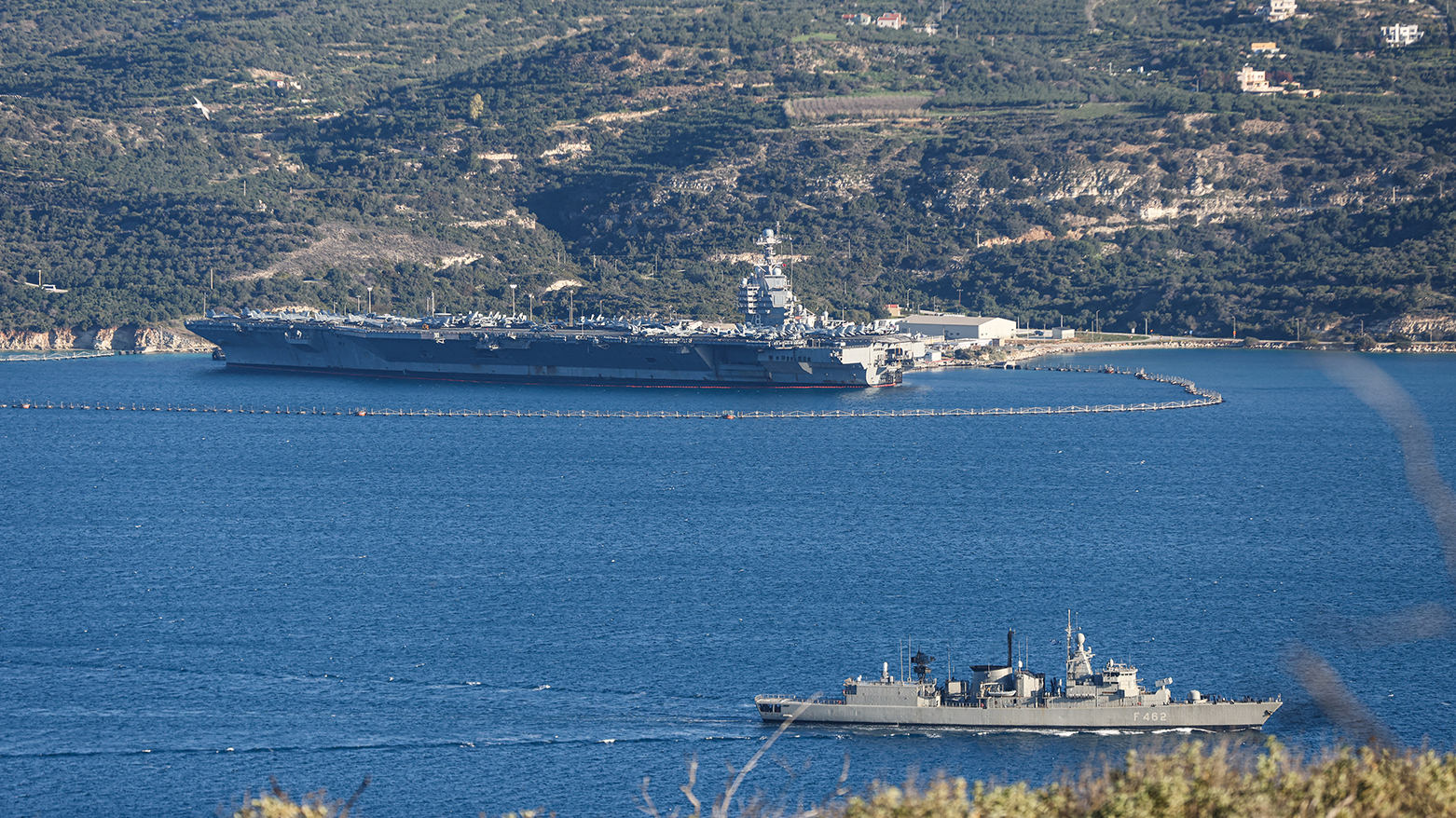
ERBIL (Kurdistan24) - The USS Gerald R. Ford, the world’s largest aircraft carrier, arrived at the U.S. naval base at Souda Bay on the Greek island of Crete on Monday, February 24, 2026, as part of an ongoing U.S. military deployment in the Middle East.
The carrier’s arrival was documented by an AFP photographer, while Greek defense authorities declined to comment and the U.S. embassy in Athens did not immediately respond to inquiries.
The deployment places the Gerald R. Ford alongside the USS Abraham Lincoln and more than a dozen other U.S. warships already stationed in the region, including nine destroyers and three littoral combat ships.
U.S. Naval Support Activity Souda Bay, where the carrier is berthed, hosts approximately 1,000 personnel, including active-duty military, civilian employees, contractors, and family members, according to the report.
The presence of two aircraft carriers in the Middle East is rare, with the last such occurrence in June of the previous year coinciding with U.S. airstrikes on Iranian nuclear facilities during Israel’s 12-day military campaign against Iran.
The Gerald R. Ford is en route to join a broader U.S. military buildup amid heightened tensions over Iran’s nuclear program. President Donald Trump, who ordered strikes on Iranian targets last year, has repeatedly warned Tehran of additional action unless a new nuclear agreement is reached.
According to the report, Trump’s administration has expressed concerns that Iran’s nuclear program could be directed toward developing a weapons capability, though Iran maintains it is for peaceful purposes.
The U.S. withdrawal from the 2015 nuclear deal during Trump’s first term led to Iran resuming uranium enrichment at higher levels, reportedly up to 60 percent, approaching weapons-grade thresholds, the report noted.
A prior round of nuclear negotiations collapsed last year following Israel’s military action against Iran, further complicating diplomatic efforts to resolve the standoff.
The Gerald R. Ford is the largest and most technologically advanced aircraft carrier in the U.S. Navy, capable of carrying dozens of warplanes and supporting thousands of sailors.
Its deployment underscores Washington’s intent to maintain a visible naval presence in the Middle East amid ongoing concerns over Iran’s nuclear ambitions and regional security dynamics.
The Greek defense ministry’s decision not to comment on the carrier’s arrival, combined with the U.S. embassy’s delayed response, reflects the sensitivity surrounding military movements in the Eastern Mediterranean.
Souda Bay’s strategic location has historically made it a key logistical hub for U.S. naval operations, enabling rapid deployment to the Middle East and North Africa.
The current positioning of the Gerald R. Ford alongside existing U.S. assets represents the largest concentration of American aircraft carriers in the region since last year’s combined deployment.
Analysts and officials have highlighted the operational complexity and resource demands involved in coordinating multiple carriers and supporting vessels in active theaters of potential conflict.
The carrier’s presence also coincides with ongoing diplomatic and military pressures on Iran, as Washington continues to seek negotiations over the country’s nuclear program while maintaining readiness for potential contingencies in the region.